To keep your pomegranate juice less astringent, use a seed-safe pressing method. First, cut the fruit carefully and gently score the skin without damaging the seeds. Apply firm, even pressure with a manual press or citrus juicer, avoiding seed crushing to prevent bitterness. Strain the juice through a fine mesh to remove seed fragments for clarity. By controlling pressure and handling seeds gently, you’ll enjoy brighter, flavor-rich juice. Keep exploring to learn more about perfecting this technique.

Get kitchen staples and gadgets delivered free with Prime
- Fast, free delivery on millions of items
- Prime Video, Amazon Music and more included
- Member-only deals all year
Key Takeaways
- Gently score the skin before pressing to access seeds without damaging them.
- Use controlled, firm pressure with a manual press or citrus juicer to prevent seed rupture.
- Avoid crushing seeds to minimize tannin release and bitterness in the juice.
- Strain the juice through fine mesh or cheesecloth to remove seed fragments and pulp.
- Proper seed-safe pressing preserves clarity, flavor, and reduces astringency for a better-tasting juice.
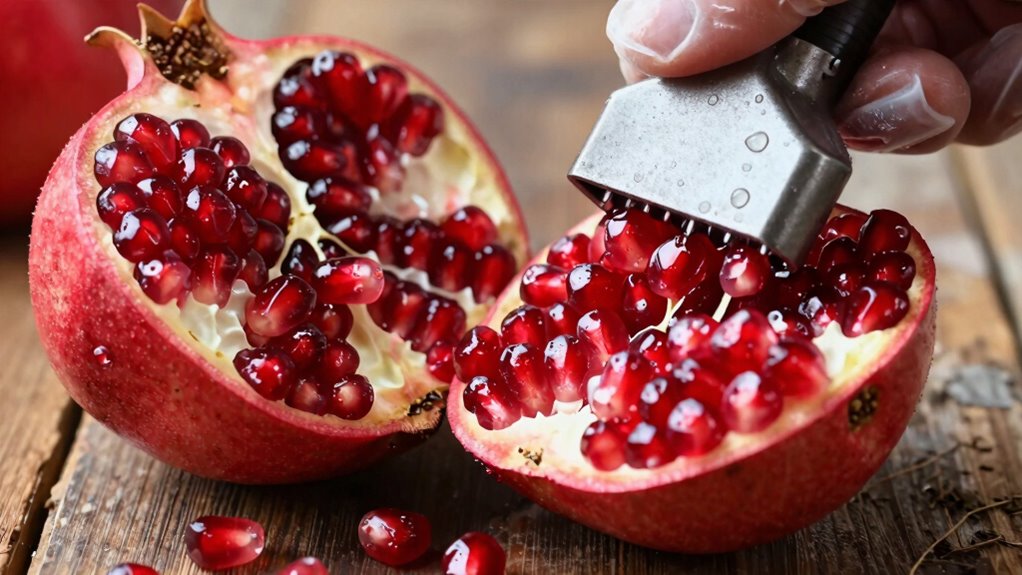
Pomegranate pressing is a simple yet vital step in extracting the juice from these vibrant, ruby-red fruits. When you press a pomegranate correctly, you guarantee that the seed extraction process is efficient and that the resulting juice maintains ideal clarity. Proper pressing minimizes the release of bitter compounds found in some parts of the fruit, leading to a cleaner, more appealing beverage. If you’re aiming for a smooth, less astringent juice, understanding the nuances of pressing is essential.
Proper pressing ensures clear, flavorful pomegranate juice by minimizing bitterness and seed damage.
First, focus on preparing your pomegranate properly. Cut the fruit in halves or quarters, depending on its size, and gently score the skin without piercing the seeds. This approach helps you access the seeds easily while avoiding unnecessary damage that can release bitter components. The goal is to extract the seeds intact, as crushing them can release tannins and other bitter substances, which cloud the juice and make it more astringent. When you apply firm, even pressure during pressing, you facilitate seed extraction without breaking the seeds open prematurely, preserving juice clarity and flavor integrity.
Using a manual press or a citrus juicer designed for larger fruits can give you better control over the pressing process. As you press, pay attention to the amount of pressure applied—too much can crush the seeds, releasing unwanted bitterness, while too little may not extract enough juice. The ideal pressure helps you get the maximum amount of juice while keeping it clear and free from seed fragments. Straining the juice afterward through a fine mesh or cheesecloth further enhances clarity, catching any residual seed particles or pulp fragments.
This seed-safe method not only produces clearer juice but also enhances flavor by reducing bitterness. When seeds are crushed, they release tannins that contribute to astringency, making your juice less enjoyable. By gently pressing and carefully extracting the seeds, you preserve the delicate balance of sweetness and acidity while keeping the juice visually appealing. Proper seed extraction also helps prevent cloudiness, giving your drink a vibrant, translucent appearance that’s more inviting. Additionally, adopting gentle pressure techniques can further improve juice quality and reduce waste.
Frequently Asked Questions
How Long Does Fresh Pomegranate Juice Last Without Preservatives?
Fresh pomegranate juice typically lasts 3 to 5 days in the fridge without preservatives. To maximize storage longevity and prevent spoilage, keep it in an airtight container and cold storage. You should also check for signs of spoilage, like off smells or mold, before drinking. For longer storage, consider freezing the juice, which can extend its freshness for up to a month while still preventing spoilage effectively.
Can Pressing Methods Affect the Nutritional Content of the Juice?
Pressing methods can definitely impact your juice’s nutritional content. When you focus on juice concentration and pulp retention, you unseal more antioxidants and vitamins, but aggressive pressing might degrade delicate nutrients. Imagine squeezing every drop, balancing pulp to preserve fiber and nutrients while avoiding over-extraction that diminishes quality. Your technique determines whether your juice stays vibrant and nourishing or loses key benefits, so choose your pressing method wisely to maximize health benefits.
Is There a Difference Between Manual and Electric Pomegranate Presses?
You’ll notice a difference between manual and electric pomegranate presses in pressing efficiency. Manual presses require more effort but give you more control over juice extraction, which can help reduce seed damage and astringency. Electric presses are faster and more convenient, often producing higher yields quickly. However, they may sometimes generate more heat, potentially affecting juice quality. Choose based on your priorities for control, speed, and ease of use.
What Are the Best Tools for Removing Pomegranate Seeds Efficiently?
For efficient seed extraction, you should compare tools like a pomegranate deseeder and a citrus spoon. A deseeder quickly separates seeds from membranes with minimal mess, making it ideal for large quantities. A citrus spoon allows gentle scraping, preserving seed integrity. Your choice depends on your needs—if speed is key, opt for a deseeder; for delicate handling, use a citrus spoon. Both tools improve seed extraction compared to manual methods.
How Can I Store Pressed Pomegranate Seeds for Later Use?
To store pressed pomegranate seeds, you should focus on seed preservation by placing them in airtight storage containers. Keep these containers in the refrigerator for up to a week, or freeze them for longer storage, usually up to three months. Make sure the seeds are dry before sealing to prevent mold. Proper storage containers prevent flavor loss and maintain seed freshness, making them ready for later use in smoothies, salads, or desserts.
Conclusion
By pressing pomegranates carefully, you preserve the juice’s sweetness and minimize bitterness. This gentle method supports the idea that less aggressive extraction keeps the seeds intact, reducing astringency. Imagine the seeds as tiny guards, releasing their flavor slowly when pressed tenderly—much like a gentle squeeze that preserves their essence. So, embrace this seed-safe technique to enjoy a smoother, less tangy juice, proving that patience and care truly make a flavorful difference in your pomegranate experience.
Halloween Picks
halloween
As an affiliate, we earn on qualifying purchases.