Potassium in vegetable juices like carrot, beet, and tomato helps support your muscle, heart, and kidney health by maintaining proper electrolyte balance. Carrot juice provides around 400 mg, beets have about 500 mg, and tomato juice offers 300-400 mg per cup, making them great natural sources. Incorporating these juices can boost your daily potassium intake and promote overall well-being. Keep exploring to discover more about how these tasty drinks benefit your health.
Key Takeaways
- Carrot juice contains approximately 400 mg of potassium per cup, offering natural sweetness and antioxidants.
- Beets provide about 500 mg of potassium per cup and support blood flow with nitrates.
- Tomato juice offers 300-400 mg of potassium per cup, rich in lycopene for cardiovascular health.
- Regular consumption of these juices helps meet daily potassium needs naturally and supports electrolyte balance.
- Proper potassium levels are essential for kidney health and overall bodily functions, but caution is advised for those with kidney issues.
Vegetable juices are a popular way to boost your intake of essential nutrients, especially potassium, which plays a crucial role in maintaining proper muscle function and heart health. When you sip on juices made from carrots, beets, or tomatoes, you’re not only getting a delicious beverage but also supporting your body’s electrolyte balance. Potassium is a key electrolyte that helps regulate fluid levels, nerve signals, and muscle contractions. Making sure adequate potassium intake through these vegetable juices can help prevent muscle cramps and arrhythmias, keeping your cardiovascular system in top shape.
Vegetable juices boost potassium, supporting muscle, heart, and overall electrolyte health.
But it’s not just about muscle and heart health. Potassium also has a noteworthy impact on kidney health. Your kidneys are responsible for filtering excess sodium and maintaining electrolyte balance, and they rely heavily on proper potassium levels to function efficiently. Consuming potassium-rich vegetable juices can aid your kidneys in balancing the body’s fluids and electrolytes, reducing the strain on these essential organs. Proper potassium intake may also help prevent kidney stones by inhibiting calcium buildup in the urinary tract, which is a common cause of kidney stones. Additionally, proper potassium levels are vital for supporting overall kidney function and preventing related health issues.
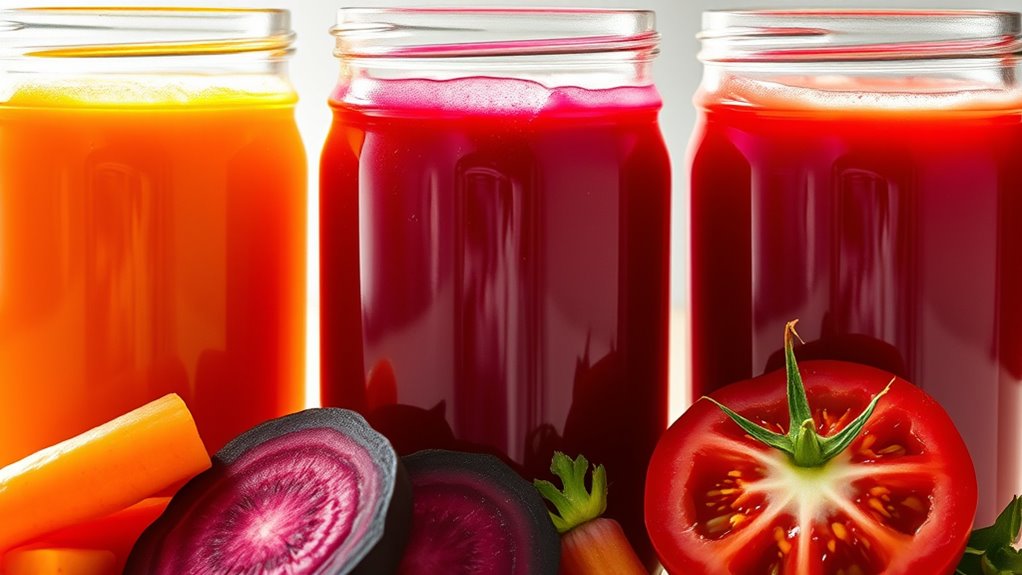
Carrot juice, for example, is packed with potassium, providing about 400 mg per cup. Its natural sweetness makes it an appealing choice for those looking to increase their potassium intake without added sugars. Carrots also contain antioxidants like beta-carotene, which support overall health. Beets, on the other hand, are rich in potassium—roughly 500 mg per cup—and contain nitrates that can help improve blood flow and lower blood pressure. Drinking beet juice regularly can contribute to your electrolyte balance and promote better cardiovascular health. Tomatoes, whether fresh or in juice form, are another excellent source of potassium, offering around 300-400 mg per cup. They also provide lycopene, an antioxidant linked with reducing inflammation and supporting heart health.
Incorporating these vegetable juices into your diet can be a simple, delicious way to ensure you’re meeting your potassium needs. Just keep in mind that if you have kidney problems or other health concerns, you should consult your healthcare provider before increasing your potassium intake greatly. Proper kidney function is essential for maintaining electrolyte balance, and too much potassium can be problematic for those with compromised kidney health. Overall, by enjoying a variety of vegetable juices, you support your body’s natural processes, promote healthy electrolyte levels, and contribute to your overall well-being.
Frequently Asked Questions
How Does Potassium Content Vary Between Homemade and Store-Bought Juices?
You’ll find that homemade juices usually have higher potassium content because they’re fresher, maintaining better potassium stability than store-bought ones. Store-bought juices often lose some potassium during processing and storage due to exposure to light and air, which affects juice freshness. So, if you want maximum potassium, making your own juice guarantees you get the most nutritional benefit, while store-bought options might have slightly reduced potassium levels over time.
Are There Specific Storage Tips to Preserve Potassium Levels in Vegetable Juices?
To preserve potassium levels in your vegetable juices, store them properly. Use airtight containers to minimize oxidation and prevent nutrient loss. Refrigerate your juices promptly using effective refrigeration methods, ideally at or below 40°F (4°C). Consume the juice within 24-48 hours for maximum potassium retention. Avoid leaving it out at room temperature, as prolonged exposure can degrade nutrients, including potassium, reducing the juice’s health benefits.
Can Boiling or Heating Vegetable Juices Affect Their Potassium Content?
Like a trusty steed, heat stability in vegetable juices is key for potassium retention. Boiling or heating can reduce potassium levels, as it’s water-soluble and leaches out during cooking. To preserve maximum potassium, you should avoid high heat or prolonged boiling. Instead, gently heat or consume juices fresh to keep the nutrients intact. Your juice’s potassium content depends on how carefully you handle it during preparation.
How Does Potassium in Juice Compare to Eating Whole Vegetables?
You get less potassium from juice than eating whole vegetables because nutrient absorption is higher when you chew and digest whole foods. Juicing can alter taste and texture, making it easier to consume more vegetables quickly, but some potassium may be lost during processing. Eating whole vegetables provides fiber and a more balanced nutrient profile, helping you maintain steady potassium levels and better nutrient absorption overall.
Are There Any Health Risks Associated With High Potassium Levels in Vegetable Juices?
When it comes to high potassium levels in vegetable juices, you need to be on your toes. Too much potassium can pose health risks, especially if you have kidney issues, as it may lead to potassium overdose. This can cause irregular heartbeats or other complications. Always monitor your intake, and if you have kidney health concerns, consult your doctor to prevent overdoing it and ensure your health stays in check.
Conclusion
Now that you know how rich these vegetable juices are in potassium, you can confidently boost your health with each sip. Incorporating carrot, beet, and tomato juices into your routine can transform your wellbeing faster than you ever imagined—like fueling your body with the power of a thousand suns. Don’t wait to harness these vibrant, mineral-packed drinks; your body deserves this incredible boost to stay strong, energized, and thriving every day.

Cindy thoroughly researches juicing trends, techniques, and recipes to provide readers with practical advice and inspiration. Her writing style is accessible, engaging, and designed to make complex concepts easy to understand. Cindy’s dedication to promoting the advantages of juicing shines through her work, empowering readers to make positive changes in their lives through the simple act of juicing.