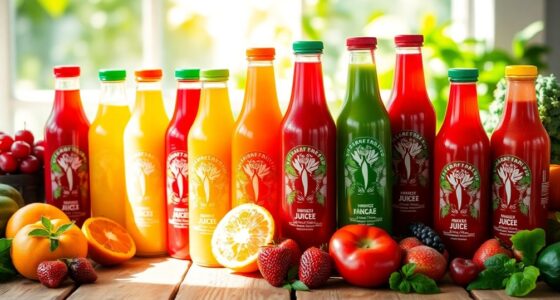

Pressed Juicery speaks to your desire for a luxurious, spa-like experience with high-quality, fresh ingredients that emphasize wellness and exclusivity. If you’re looking for premium, curated products, they cater to your lifestyle of self-care and indulgence. On the other hand, Suja connects with your need for vibrant, convenient options at a more accessible price point, focusing on energy and health benefits for busy, budget-conscious consumers. Keep going to see how each brand uniquely targets their audiences.

Get kitchen staples and gadgets delivered free with Prime
- Fast, free delivery on millions of items
- Prime Video, Amazon Music and more included
- Member-only deals all year
Key Takeaways
- Pressed Juicery targets health-conscious, luxury-seeking consumers who view juice as an indulgent self-care ritual.
- Suja appeals to broader, price-sensitive buyers seeking affordable, functional, and energizing juice options.
- Pressed emphasizes a premium, spa-like experience with sleek branding to attract niche, wellness-focused clients.
- Suja uses vibrant packaging and energetic visuals to engage busy, on-the-go consumers seeking quick health benefits.
- Each brand tailors its messaging to resonate with its core audience’s values: luxury and self-care versus affordability and convenience.
Are Pressed Juicery and Suja truly targeting different buyers? It’s a question that many consumers and industry observers ask, especially since both brands occupy the healthy juice segment but seem to appeal to distinct audiences. You might notice that Pressed Juicery focuses heavily on creating a premium, spa-like experience, which influences how they build brand loyalty. Their approach emphasizes high-quality ingredients, freshness, and a sleek, minimalist aesthetic that appeals to health-conscious individuals who see juice as more than just a beverage — it’s a lifestyle choice. Their branding encourages a sense of exclusivity and wellness, which fosters strong brand loyalty among consumers who prioritize premium, curated products. This focus on brand positioning helps them maintain a niche market of dedicated followers.
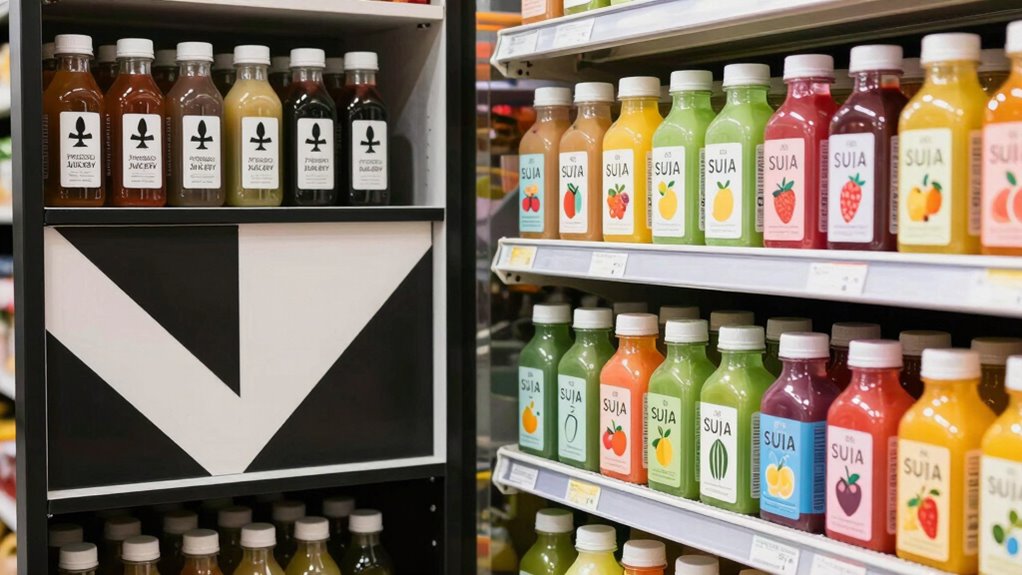
On the other hand, Suja leans into bold, vibrant branding and innovative packaging to attract a different crowd. They often emphasize organic ingredients and functional benefits, appealing to consumers who value transparency and health benefits but also want affordability and convenience. Suja’s packaging innovation is a key part of their strategy; they use colorful, eye-catching bottles that stand out on shelves, making their products accessible and inviting. This visual appeal helps them connect with busy, on-the-go buyers who want quick, nutritious options without sacrificing flavor or aesthetics. Their packaging isn’t just attractive — it’s designed to communicate health and energy instantly, which draws in a broader demographic that might be more price-sensitive but still health-conscious. Additionally, their emphasis on sustainability and eco-friendly materials aligns with environmentally conscious consumers.
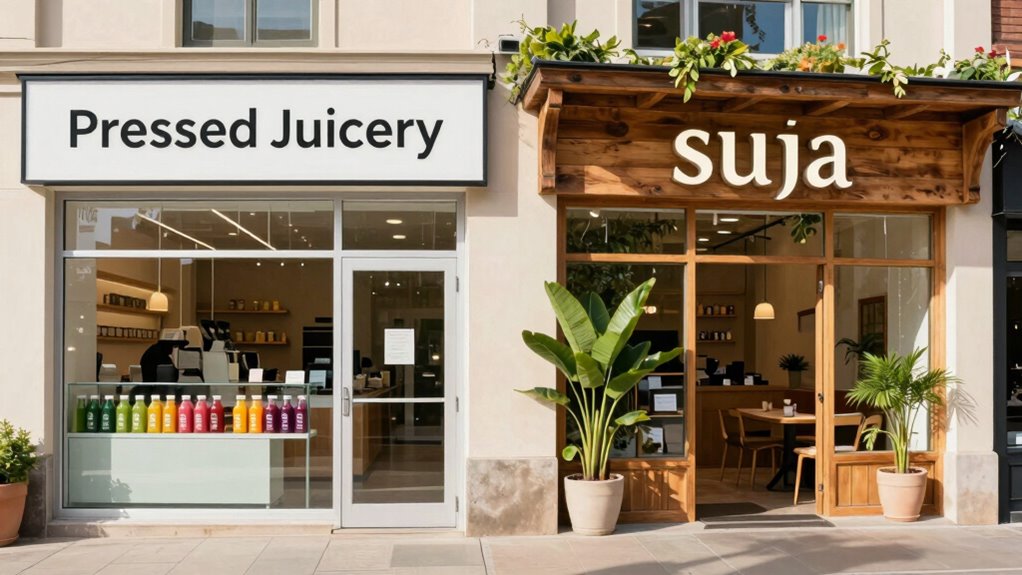
You’ll also see that these brands speak differently through their marketing and store presence. Pressed Juicery’s stores have a sleek, minimalist vibe, reinforcing their premium positioning. Their messaging centers around self-care, luxury, and a curated wellness experience, which deepens customer brand loyalty. Suja, however, uses energetic visuals and straightforward communication to emphasize organic ingredients and functional benefits, making their products feel approachable and trustworthy for everyday consumers. Their packaging innovation includes not only vibrant designs but also eco-friendly, recyclable materials, appealing to environmentally conscious buyers.
Ultimately, both brands understand their core audiences well. Pressed Juicery targets consumers who see their juice as a premium, indulgent wellness ritual, fostering brand loyalty through quality and presentation. Suja, meanwhile, appeals to those seeking accessible, functional nutrition, using packaging innovation and vibrant branding to stand out and attract a broader buyer base. So yes, they’re speaking to different buyers, each with a clear strategy that aligns with their unique market positioning. Recognizing these differences helps consumers make informed choices aligned with their values and lifestyle preferences.
premium cold-pressed juice bottles
As an affiliate, we earn on qualifying purchases.
As an affiliate, we earn on qualifying purchases.
Frequently Asked Questions
How Do Pricing Strategies Differ Between Pressed Juicery and Suja?
Pressed Juicery often sets higher prices, emphasizing flavor diversity and premium packaging innovation to appeal to health-conscious, premium buyers willing to pay more for quality and variety. Suja, on the other hand, offers more affordable options, focusing on accessible pricing and value, which attracts budget-conscious consumers. Their pricing strategies reflect their target markets, with Pressed Juicery prioritizing exclusivity and innovation, and Suja emphasizing affordability and wide accessibility.
What Marketing Channels Are Primarily Used by Each Brand?
You’ll find Pressed Juicery mainly uses social media campaigns and influencer collaborations to reach health-conscious consumers. They focus on Instagram and TikTok to showcase their fresh juices and lifestyle appeal. Suja, on the other hand, also leverages social media but emphasizes educational content and partnerships through influencer collaborations to highlight their organic and functional beverages. Both brands target engaged audiences by creating vibrant, relatable content that resonates with their core buyers.
How Do Product Ingredient Sourcing Practices Vary?
You’ll notice that Pressed Juicery emphasizes organic certification and prioritizes supplier transparency, ensuring their ingredients are ethically sourced and verified. Suja, on the other hand, also values organic certification but focuses more on transparent sourcing practices to build trust with health-conscious consumers. Both brands aim to showcase their commitment to quality, but Pressed Juicery tends to highlight organic credentials, while Suja emphasizes transparency in their ingredient sourcing.
What Are the Key Demographic Differences in Their Customer Bases?
You’ll notice Pressed Juicery’s customer loyalty often comes from health-conscious, younger adults seeking premium, cold-pressed options, shaping a brand perception of wellness and quality. In contrast, Suja’s customer base tends to include a broader demographic, including busy families and older adults, who value convenience and natural ingredients. These demographic differences influence how each brand positions itself, catering to diverse needs and reinforcing distinct brand perceptions in their respective markets.
How Do Their Store Layouts and Branding Appeal to Different Buyers?
Your eyes are drawn to the vibrant retail ambiance and sharp visual branding of Pressed Juicery, which feels like a fresh, modern oasis, appealing to health-conscious urban dwellers. Suja’s store layout emphasizes a natural, earthy vibe with warm tones and organic displays that attract eco-friendly, holistic buyers. Both brands craft environments that speak directly to their target audiences, making each shopping experience inviting and aligned with their lifestyle values.
Conclusion
As you walk through the bustling aisles, you notice Pressed Juicery’s sleek bottles, each promising a sophisticated, wellness-driven experience—like a quiet oasis amid daily chaos. Nearby, Suja’s vibrant cartons burst with color, inviting you into a lively, health-conscious community. Both brands speak to different parts of you: one whispering calm, the other shouting importance. Whether you seek serenity or energy, these brands paint your journey with strokes of clarity and zest, guiding your choices with distinct, compelling voices.
Halloween Picks
halloween
As an affiliate, we earn on qualifying purchases.