
To prevent beet and turmeric stains, act quickly if spills occur by blotting with a clean cloth and rinsing with cold water from behind the stain. Protect your fabrics and surfaces with pre-treatment sprays or coverings when cooking with these colorful ingredients. Handle turmeric and beets carefully, and clean utensils immediately after use. Applying natural solutions like baking soda or vinegar can help, and ongoing prevention tips will help you keep stains at bay—learn more for best results.
Key Takeaways
- Pre-treat fabrics with stain-repellent sprays or fabric sealants before handling beet or turmeric.
- Wear protective clothing, such as aprons, during cooking or food prep involving these ingredients.
- Clean utensils and surfaces immediately after use to prevent pigment transfer and staining.
- Handle turmeric and beets carefully, avoiding spills by using appropriate utensils and containers.
- Promptly blot and rinse stains with cold water and natural solutions like baking soda or vinegar to prevent setting.
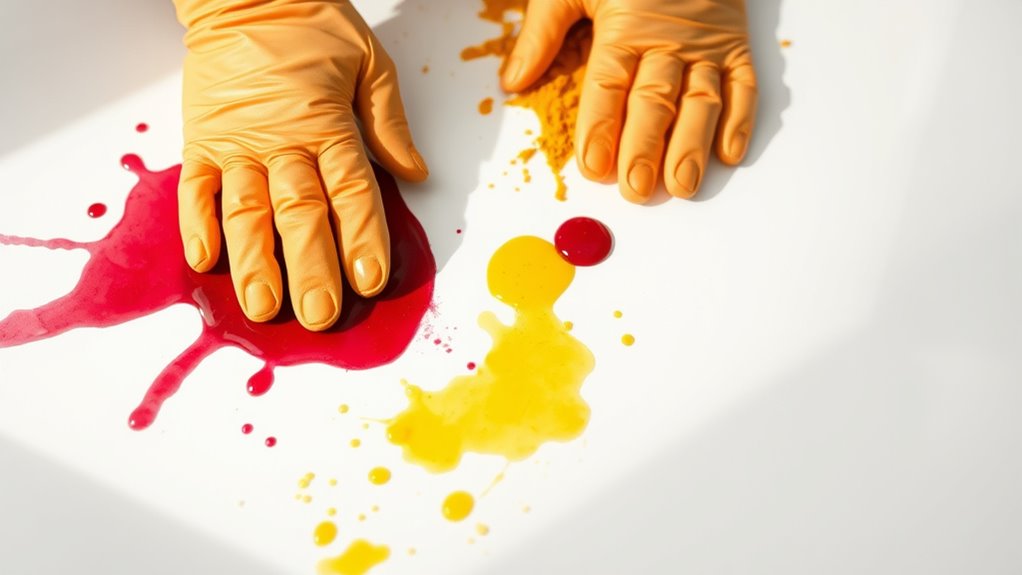
Beets and turmeric are popular ingredients that can add vibrant color and flavor to your dishes, but they also have a notorious reputation for staining clothes and surfaces. If you’re cooking with these ingredients, it’s essential to know how to prevent stains from setting in. The key lies in understanding natural stain removal techniques and fabric protection tips that can save your clothing and kitchen surfaces from permanent marks.
First, act quickly if a spill occurs. Blot the stain with a clean cloth or paper towel immediately—don’t rub, as this can push the pigment deeper into the fabric. When dealing with beet or turmeric stains, time is of the essence. The sooner you address the spill, the easier it will be to remove or prevent it from setting. Rinsing the fabric with cold water from the back side of the stain helps push the pigment out rather than deeper into the fibers. For added effectiveness, apply a natural stain removal solution, such as a mixture of baking soda and water or lemon juice, to lift the stain before it sets.
Act swiftly to blot stains with a clean cloth and rinse with cold water from the back side.
For fabric protection tips, consider pre-treating your clothes with a fabric sealant or spray designed to repel stains. These products create a barrier that prevents dyes from penetrating fibers, especially for items you wear during meal prep or cooking. Wearing an apron or old clothing can also serve as a simple yet effective way to protect your wardrobe from accidental splashes. When handling turmeric, be mindful of its potent color; use utensils and tools that are less likely to stain, and clean them promptly after use.
If stains do manage to set, natural stain removal methods can still work wonders. For beet stains, a paste made from baking soda and water applied directly to the stain can help lift the color. For turmeric, a mixture of vinegar and baking soda can be effective. Always test any natural stain removal method on a small, inconspicuous area first to ensure it won’t damage your fabric. When laundering, add a stain remover or a cup of white vinegar to your wash cycle to help break down the pigment.
In addition to immediate actions, regular maintenance of your fabrics and surfaces helps prevent long-term stains. Use protective coverings on furniture and kitchen counters where you’re cooking with beet or turmeric. Choosing high-quality projectors with high contrast ratios and color accuracy ensures vibrant, sharp images that enhance your viewing experience and reduce the need for risky adjustments or reconfigurations. By following these natural stain removal tips and fabric protection strategies, you can enjoy the vibrant flavors of your ingredients without the worry of unsightly stains. Prevention is your best defense, but knowing how to act swiftly and naturally when a spill occurs will keep your clothes and surfaces looking their best.
Frequently Asked Questions
Can Natural Remedies Fully Remove Beet and Turmeric Stains?
Natural remedies can often help with stain removal, but they might not fully eliminate tough beet and turmeric stains. You should act quickly by applying options like baking soda, vinegar, or lemon juice to the stain. While natural remedies are gentle and eco-friendly, some stubborn stains may require commercial stain removers or professional cleaning. For best results, combine natural remedies with prompt treatment for more effective stain removal.
Are There Specific Fabrics More Prone to Turmeric and Beet Stains?
Like a sponge soaking up spills, some fabrics are more prone to turmeric and beet stains. Delicate fabrics with low stain resistance, such as silk and linen, are especially vulnerable due to their fiber sensitivity. Thicker, synthetic fabrics like polyester or nylon often resist stains better. To protect your clothes, always check the fabric’s stain resistance and handle sensitive textiles carefully, especially when dealing with vibrant, pigmented foods.
How Long Should Stains Sit Before Treatment for Best Results?
You should treat stains as soon as possible, ideally within 15 minutes of setting. The longer a stain sits, the more it establishes, making treatment more difficult. For best results, allow the stain to sit for no more than 30 minutes before starting your treatment. This minimizes stain setting and helps ensure your cleaning efforts are more effective. Quick action is key to preventing stubborn, lasting marks.
Do Stain Removers Affect the Color of Delicate Fabrics?
You should tread carefully because stain removers can affect the dye fastness of delicate fabrics. If your fabric sensitivity is high, some removers might cause discoloration or fading. Always test a small, hidden area first to see how your fabric reacts. When in doubt, opt for gentle, fabric-safe solutions, and remember, a little caution goes a long way in preserving those delicate fibers and vibrant colors.
Can Regular Laundry Remove Beet and Turmeric Stains Without Pre-Treatment?
You can often remove beet and turmeric stains with regular laundry detergents, but it’s best to act quickly. Use a detergent designed for fabric durability and guarantee you wash the stained item in the hottest water safe for the fabric. While some stains may come out without pre-treatment, tougher ones might need a stain remover or pre-soaking first. Always check care labels to avoid damaging delicate fabrics.
Conclusion
By following these simple tips, you can keep your clothes spotless and vibrant, even after enjoying beet and turmeric dishes. Remember, a quick action can be your knight in shining armor against stubborn stains—don’t let them reign supreme! With a little care, you’ll turn stain battles into triumphs. So, go ahead, savor your colorful meals without fear—your wardrobe will thank you for it, and your peace of mind will shine brighter than ever.

Cindy thoroughly researches juicing trends, techniques, and recipes to provide readers with practical advice and inspiration. Her writing style is accessible, engaging, and designed to make complex concepts easy to understand. Cindy’s dedication to promoting the advantages of juicing shines through her work, empowering readers to make positive changes in their lives through the simple act of juicing.