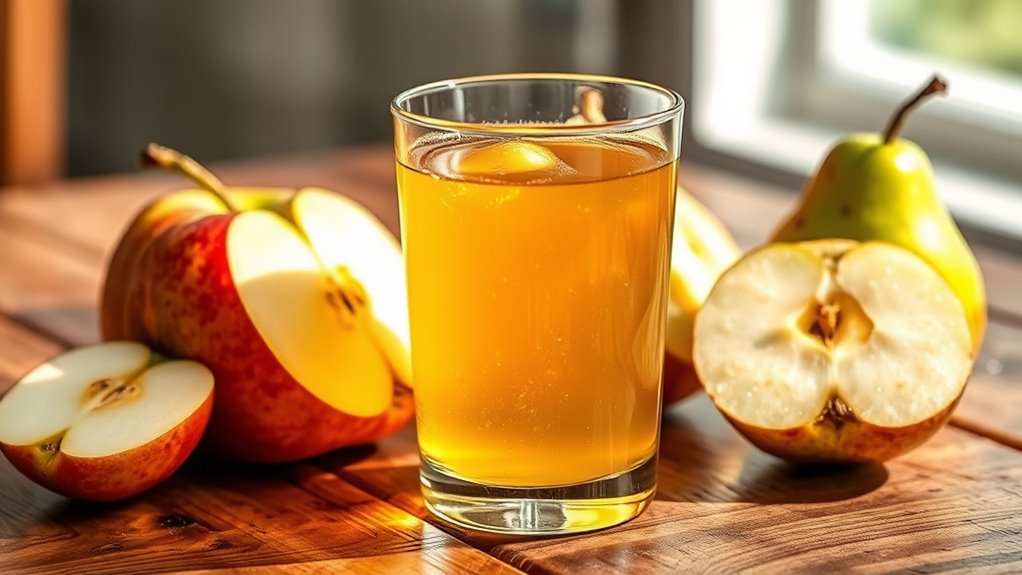
Procyanidins in apple and pear juices are powerful antioxidants that support your heart health by improving blood vessel function, reducing inflammation, and preventing plaque buildup. They also help regulate blood sugar levels and boost your immune system. These polyphenols protect your skin, slow aging, and combat oxidative stress. If you’re curious about how these natural compounds can enhance your overall well-being, there’s more to discover below.
Key Takeaways
- Apple and pear juices are rich sources of procyanidins, which are powerful polyphenol compounds.
- Consuming these juices supports cardiovascular health by improving blood vessel function and reducing inflammation.
- Procyanidins in these juices help regulate blood sugar levels and may aid in diabetes prevention.
- They possess antioxidant properties that protect skin, slow aging, and reduce oxidative stress.
- Regular intake may boost immune function and contribute to overall health and longevity.

Procyanidins contribute markedly to the health benefits associated with these juices. They are known to improve cardiovascular health by promoting healthy blood vessel function and reducing inflammation. As you drink apple or pear juice, you’re giving your body a natural way to support proper blood flow and maintain healthy blood pressure levels. Studies show that procyanidins can help prevent the formation of blood clots and reduce the buildup of plaque in arteries, which are key factors in heart disease. Additionally, these compounds have been linked to better regulation of blood sugar levels, making them a smart choice for those looking to manage or prevent diabetes. The presence of procyanidins in apple and pear juices means you’re getting more than just hydration; you’re also receiving bioactive compounds that work to improve your long-term health. Polyphenol compounds are a class of plant chemicals that include procyanidins, emphasizing their role in plant-based foods’ health benefits.
Furthermore, the health benefits extend beyond the cardiovascular system. The antioxidant properties of procyanidins help protect your skin from damage caused by UV rays and pollution, which can accelerate aging. They also support your immune system by reducing inflammation and enhancing your body’s ability to fight off infections. When you choose juices rich in procyanidins, you’re not only indulging in a tasty beverage but also providing your body with powerful natural antioxidants that bolster your defenses at a cellular level. This makes apple and pear juices excellent additions to a balanced diet aimed at promoting longevity and overall well-being.
Frequently Asked Questions
How Do Procyanidins Affect Overall Juice Nutritional Value?
Procyanidins boost your juice’s nutritional value by providing antioxidant benefits, which help protect your cells from damage. They also enhance flavor, giving your juice a richer, more complex taste. When you drink apple or pear juice with procyanidins, you’re not only enjoying a flavorful beverage but also gaining health benefits that support your overall well-being. These compounds make your juice both tastier and more nourishing.
Are Procyanidins Stable During Juice Storage and Processing?
Procyanidins aren’t entirely stable during storage and processing. Oxidation effects can degrade them, diminishing their benefits. Packaging plays a vital role; airtight, light-proof containers help preserve their integrity. You should opt for juices stored in proper packaging, as this minimizes oxidation and retains procyanidin levels. While processing methods like pasteurization may reduce their content, careful handling and packaging can markedly improve their stability over time.
Do Different Apple and Pear Varieties Vary in Procyanidin Content?
You’ll find that different apple and pear varieties do vary in procyanidin content, impacting their antioxidant capacity. Some varieties naturally have higher levels of these compounds, which can boost health benefits. By choosing specific types, you can maximize antioxidant intake. Keep in mind that varietal differences are influenced by genetics and growing conditions, so exploring different varieties helps you enjoy the full range of procyanidin benefits.
Can Procyanidin Levels Be Increased Through Specific Cultivation Practices?
Think of your orchard as a symphony, where cultivation techniques are the conductors. You can boost procyanidin levels by carefully selecting soil amendments, optimizing soil health, and managing watering and sunlight. These practices act like tuning instruments, encouraging the fruit to produce more of these beneficial compounds. By fine-tuning your cultivation approach, you’re guiding the tree to craft apples and pears richer in procyanidins, elevating their health benefits.
What Is the Recommended Daily Intake of Procyanidins From Fruit Juices?
You should aim for a daily intake of about 50-100 mg of procyanidins to enjoy their health benefits. Consuming fruit juices like apple and pear can help you reach this goal, as they contain significant amounts of these antioxidants. Incorporating a variety of fruits into your diet guarantees you get enough procyanididns, which support cardiovascular health and provide anti-inflammatory effects, enhancing your overall wellness.
Conclusion
Imagine biting into a crisp apple or juicy pear and knowing you’re also savoring a burst of procyanidins. These powerful antioxidants, found in apple and pear juices, act like tiny shields supporting your health. Just like a small drop of paint can brighten a room, these compounds add a touch of wellness to your daily routine. Embrace these natural benefits—you’re choosing a simple, delicious way to boost your health with every sip.

Cindy thoroughly researches juicing trends, techniques, and recipes to provide readers with practical advice and inspiration. Her writing style is accessible, engaging, and designed to make complex concepts easy to understand. Cindy’s dedication to promoting the advantages of juicing shines through her work, empowering readers to make positive changes in their lives through the simple act of juicing.