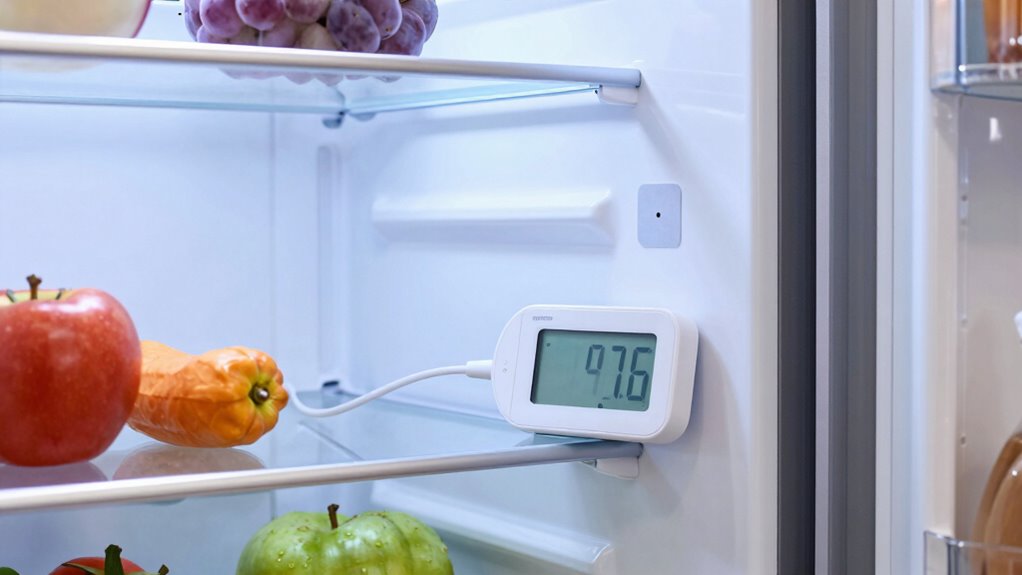

To get accurate results with your wireless fridge thermometer, place the sensor in the fridge’s center, away from the door and cooling components. Keep it clear of items that can cause temperature shifts or heat spots. Also, guarantee the sensor has a clear path to the receiver, avoiding obstacles like metal surfaces or thick walls. Proper placement and signal setup help you monitor your fridge’s conditions precisely—continue reading to discover more tips for ideal placement.

Get kitchen staples and gadgets delivered free with Prime
- Fast, free delivery on millions of items
- Prime Video, Amazon Music and more included
- Member-only deals all year
Key Takeaways
- Place the sensor in the fridge center, away from door gaskets and cooling elements for stable, representative readings.
- Avoid positioning near heat sources, drafts, or items that cause temperature fluctuations.
- Ensure the sensor is within the wireless signal range of the receiver, testing beforehand for optimal placement.
- Keep the sensor away from metal surfaces and obstructions to minimize signal interference and maintain data accuracy.
- Select a stable, consistent spot that reflects the overall storage temperature for reliable monitoring.

A wireless fridge thermometer makes monitoring your refrigerator’s temperature simple and hassle-free. With just a sensor and a receiver, you can keep an eye on your fridge’s conditions without opening the door repeatedly. To get the most precise readings, proper sensor placement is vital. You want the sensor to sit in a spot that reflects the overall temperature inside the fridge, not just a localized area. Typically, placing the sensor in the center of the fridge, away from the door, ensures it isn’t affected by frequent openings or cold air drafts. Avoid placing it directly next to the cooling element or near the door gasket, as these spots can lead to skewed readings due to temperature fluctuations. The goal is to find a stable, representative position that mirrors the average temperature of your storage space. Additionally, ensuring the sensor is placed away from items that can generate heat or cold spots can improve measurement accuracy.
Equally important is understanding the signal range of your wireless thermometer. The signal range determines how far the sensor can be from the receiver while still transmitting accurate data. If you plan to place the sensor in a different part of your home, such as a garage or basement, make sure the device’s signal range covers that distance. Most wireless fridge thermometers have a range of 30 to 200 feet, but walls, metal appliances, and other obstructions can weaken the signal. To avoid losing connection, position the sensor in a spot with minimal interference. For example, keep it away from thick walls, metallic surfaces, or electronic devices that could disrupt the signal. Testing the range beforehand can help you decide the best placement spot, ensuring consistent data transmission. Being aware of the signal interference potential can help you optimize your setup.
When installing your wireless fridge thermometer, consider both the sensor placement and the signal range as a team. A sensor placed correctly in the fridge guarantees accurate temperature readings, while an unobstructed signal ensures you receive those readings in real-time without interruptions. If you notice your device losing connection frequently, try relocating the sensor or reducing obstacles between it and the receiver. Some models even allow for repeaters or extenders to boost signal strength, which can be helpful if your setup involves long distances or thick barriers. Remember, the accuracy of your monitoring system depends on these factors. By carefully choosing the right spot for the sensor and making sure the signal range covers your intended placement, you’ll ensure your fridge stays at the ideal temperature, preserving your food and providing peace of mind.
wireless fridge thermometer sensor
As an affiliate, we earn on qualifying purchases.
As an affiliate, we earn on qualifying purchases.
Frequently Asked Questions
How Often Should I Calibrate My Wireless Fridge Thermometer?
You should calibrate your wireless fridge thermometer at least once every three to six months. Proper sensor placement ensures accurate readings, but calibration compensates for any drift over time. Check the manufacturer’s guidelines for specific calibration frequency recommendations. Regular calibration helps maintain reliable temperature readings, ensuring your food stays safe. If you notice inconsistent readings, calibrate more often to keep your sensor placement precise and your fridge functioning as effectively as possible.
Can Sensors Be Hidden for Aesthetic Reasons?
Yes, you can hide sensors for aesthetic integration, making them blend seamlessly like chameleons in their environment. Use small, discreet covers or place them behind shelves and door seals to keep them out of sight. Sensor concealment helps maintain a clean look without sacrificing accuracy. Just make certain the sensors still have proper airflow and contact with the fridge interior to get real, reliable readings.
What Is the Ideal Temperature Range for Fridge Sensors?
You should aim for a fridge sensor temperature range of 35-38°F (1.7-3.3°C) for maximum freshness. To guarantee temperature accuracy, place the sensor away from door openings, vents, or shelves with uneven airflow. Position it in the center of the fridge, ideally at eye level, to get a true reading. This helps maintain proper storage conditions and prevents spoilage.
Are There Sensors Suitable for Outdoor or Garage Use?
Yes, you can find sensors suitable for outdoor or garage use. Look for sensors designed to withstand outdoor climate conditions, with features like weatherproofing and UV resistance. These sensors offer enhanced durability, ensuring accurate readings despite exposure to temperature fluctuations, humidity, and other environmental factors. Always check product specifications to confirm the sensor’s durability and suitability for outdoor or garage environments before purchasing.
How Do I Troubleshoot Connectivity Issues With Sensors?
Think of troubleshooting your sensors like fixing a radio; interference sources can block signals. First, check sensor placement—avoid metal objects, thick insulation, or distance from the receiver. Move sensors closer to the base unit and away from Wi-Fi routers or cordless phones, which can cause interference. Restart the sensor and receiver, and verify firmware is updated. This helps establish a clear connection for accurate readings.
Conclusion
To get the most accurate readings, place your wireless fridge thermometer sensors where airflow is consistent, like in the middle of the fridge. For example, a user found that positioning the sensor near the door caused fluctuating temps, but moving it to the center stabilized readings. By following these tips, you’ll guarantee your food stays fresh and safe. Experiment with sensor placement to find what works best in your fridge’s unique layout.
NFL season / tailgating Picks
team gear
As an affiliate, we earn on qualifying purchases.