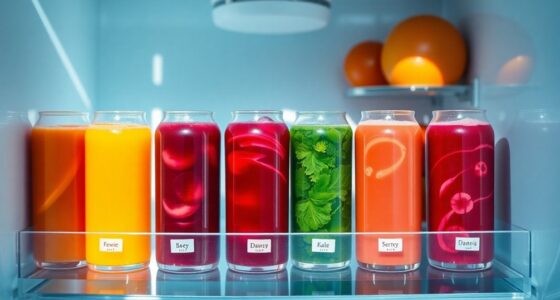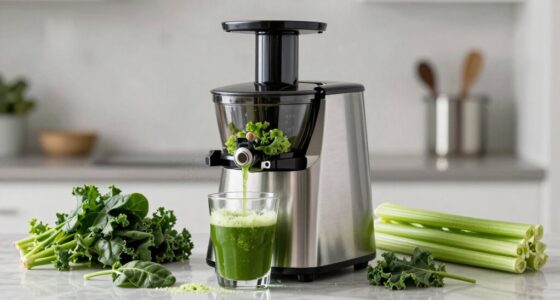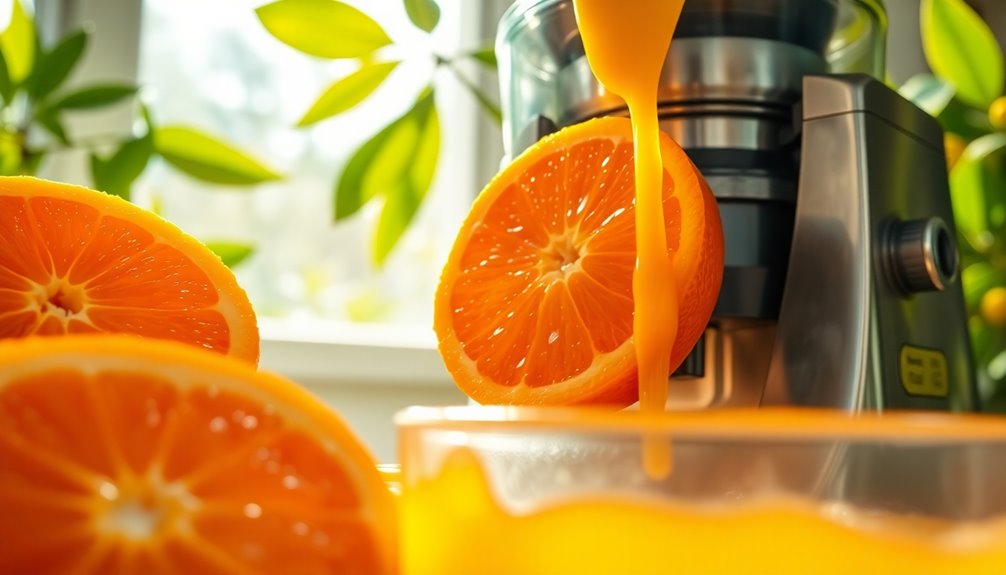

Juice concentrates are made by removing water from fresh fruit or vegetable juice, turning it into a thick syrup. This process retains the original flavor and nutrients. Methods like vacuum concentration help maintain quality by evaporating water at low heat. After concentration, juices undergo a two-step pasteurization to ensure safety and longer shelf life. You can later dilute the concentrate with water for your enjoyment. Keep going to discover more about the fascinating process of juice production. In addition to vacuum concentration, other techniques such as freeze concentration and reverse osmosis are also employed to enhance the quality of juice concentrates. Learning how to concentrate juice effectively not only optimizes the preservation of flavors but also allows for the creation of a diverse range of products, such as fruit-flavored drinks and sauces. As the demand for convenient and healthy options increases, the juice industry continues to innovate, ensuring that consumers receive the best possible products.

Get kitchen staples and gadgets delivered free with Prime
- Fast, free delivery on millions of items
- Prime Video, Amazon Music and more included
- Member-only deals all year
Key Takeaways
- Juice concentrates are made by removing water from fresh fruit or vegetable juice, resulting in a thick syrup with high soluble solids.
- Common methods for concentration include vacuum concentration, freeze concentration, and membrane concentration, each preserving flavor and nutrients.
- Vacuum concentration heats juice under low pressure, allowing efficient water removal while minimizing heat damage to flavors.
- After concentration, a two-step pasteurization process inactivates enzymes and microorganisms, ensuring product safety and extending shelf life.
- Juice concentrates are typically diluted with water before consumption and stored at low temperatures to prevent spoilage.
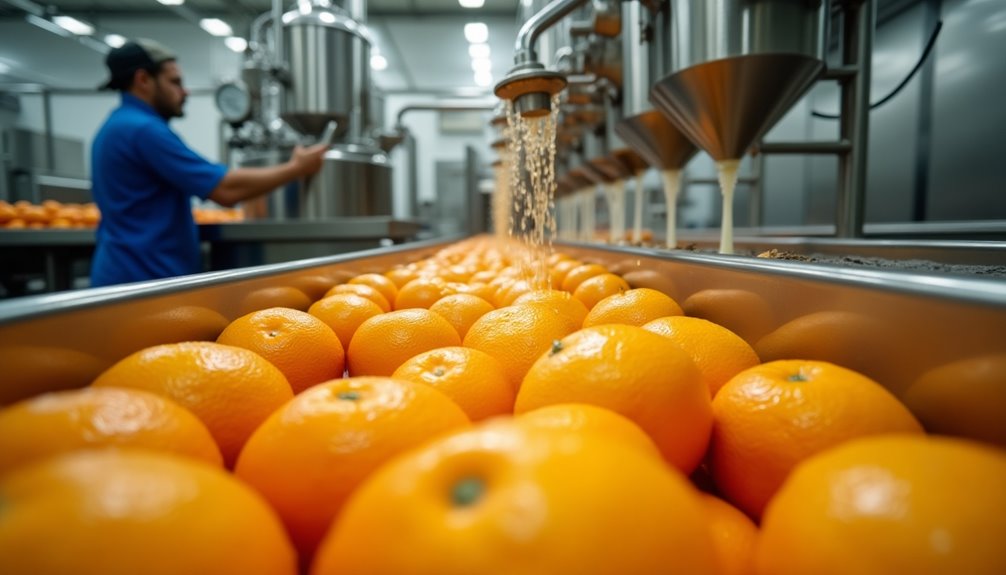
Juice concentrates are made by removing water from fresh fruit or vegetable juice, resulting in a thick syrup with 65%-70% soluble solids. This high concentration of sugars and nutrients is what makes juice concentrates popular in the food and beverage industry. The process begins with freshly squeezed fruit juice, which is then subjected to various methods for water removal. The goal is to create a product that retains the original flavor and nutritional value of the juice, while also extending its shelf life.
One common method for producing juice concentrates is vacuum concentration. In this process, the juice is heated under low pressure, allowing water to evaporate without compromising the quality of the juice. This method not only helps in the efficient removal of water but also plays a crucial role in flavor preservation, ensuring that the final concentrate closely resembles the fresh juice it originated from. By operating under vacuum conditions, the juice can be concentrated at lower temperatures, which minimizes heat damage to delicate flavors and nutrients.
Another effective technique is freeze concentration. Here, the juice is cooled until the water freezes, separating it from the juice as ice crystals. This method is particularly beneficial for preserving the juice's natural flavor and nutritional profile since it avoids the heat typically associated with other concentration processes. As the water is removed, you end up with a rich, concentrated syrup that can be diluted later with added water before consumption.
Membrane concentration is another innovative approach that utilizes reverse osmosis and ultrafiltration. This method separates water from juice at low temperatures, ensuring that the juice's flavor and nutrients remain intact. By employing this technology, producers can achieve high concentration levels while maintaining the integrity of the juice. The result is a concentrated product that consumers can enjoy without sacrificing taste or health benefits.
Once the concentration process is complete, it's essential to pasteurize the juice concentrate. This two-step pasteurization inactivates enzymes and microorganisms, ensuring the product has a longer shelf life. With the right conditions, these concentrates can be stored for months or even years without spoiling, making them a convenient option for consumers and manufacturers alike.
Finally, when you're ready to enjoy juice concentrate, it's typically diluted with water. This can be done either by you or the producer, depending on the product. The concentrate is stored at low temperatures to prevent spoilage and keep the quality high.
Whether you're adding it to a smoothie, mixing it with water for a refreshing drink, or using it as a flavoring in recipes, juice concentrates provide a versatile and flavorful way to enjoy the essence of fresh fruit and vegetables.
As an affiliate, we earn on qualifying purchases.
Frequently Asked Questions
Is Juice From Concentrate Still 100% Juice?
Yes, juice from concentrate can still be labeled as "100% juice."
When you choose this type of juice, you're getting a product made from real fruit juice without added sugars or artificial flavors. The key is that the primary ingredient is fruit juice.
While it's reconstituted with water, it retains many nutrients, though you won't get the fiber found in whole fruits.
What Are the Ingredients in Juice Concentrate?
You might think juice concentrate is just fruit juice, but it often contains more.
Besides the main ingredient, which is the juice itself, you'll find flavor packs that enhance taste and sweeteners like high fructose corn syrup.
Some brands even add preservatives to extend shelf life.
And, in certain cases, artificial colors and aromas sneak in to make it more appealing.
Is Juice Concentrate Bad for You?
Juice concentrate can be tricky for your health. While it offers some nutrients, you might miss out on fiber and face blood sugar spikes.
Many concentrates have added sugars and preservatives, which can lead to health issues if consumed too much. It's essential to enjoy juice concentrate in moderation.
If you keep an eye on your intake, you can still enjoy it while minimizing potential negative health effects. Balance is key!
How to Reduce Juice to a Concentrate?
To reduce juice to a concentrate, you'll heat it gently until water evaporates, thickening the liquid into a syrup.
Picture a pot on the stove, where steam rises while the juice transforms.
You can also freeze the juice, allowing ice to form and separate, or use a membrane to filter out water.
Each method keeps the flavor intact, so your concentrate remains delicious and nutrient-rich, ready for your next beverage or recipe!
Conclusion
In the world of juice concentrates, you're not just sipping on a drink; you're indulging in a delightful transformation. By gently extracting water and preserving the essence of fruits, these concentrates offer a burst of flavor that's hard to resist. So, next time you enjoy that vibrant juice, remember the magic that happens behind the scenes. It's not just about convenience; it's about savoring nature's sweetness in a more concentrated form. Cheers to delicious simplicity!
Columbus Day / Indigenous Peoples' Day Picks
long weekend sales
As an affiliate, we earn on qualifying purchases.