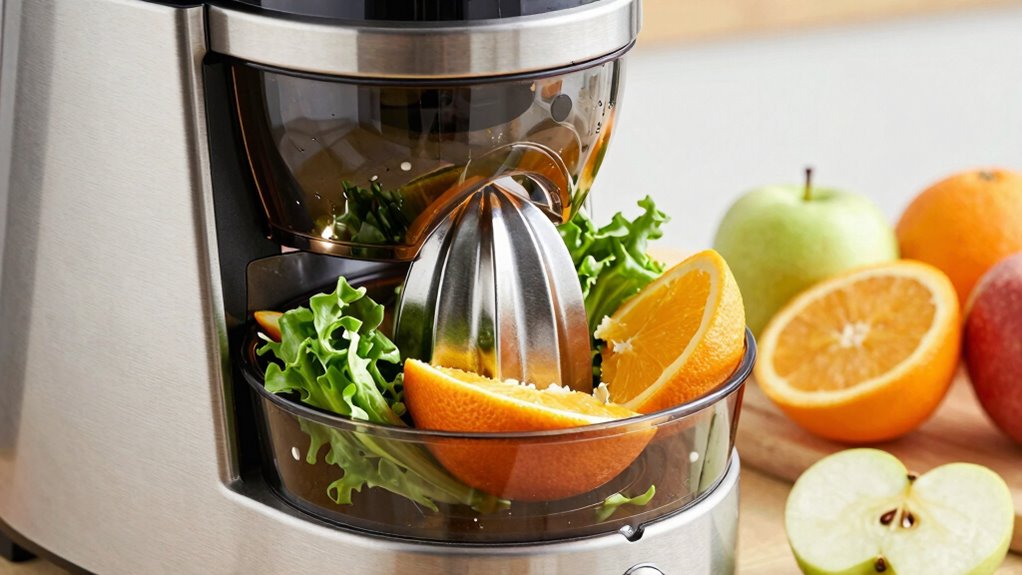
To get your self-feeding juicer to work smoothly, you need to select ripe, firm produce free of blemishes, and cut it into manageable pieces no larger than 2 inches. Drying fruits slightly before juicing and storing produce properly helps prevent jams and enhances efficiency. Proper produce prep ensures less strain on the machine and better juice quality. Keep your techniques consistent, and you’ll realize the full potential of your juicer—learn more to optimize your juicing process further.

Get kitchen staples and gadgets delivered free with Prime
- Fast, free delivery on millions of items
- Prime Video, Amazon Music and more included
- Member-only deals all year
Key Takeaways
- Use ripe, firm produce free of blemishes for smooth self-feeding and optimal juice extraction.
- Cut produce into pieces no larger than 2 inches to prevent jams and ensure consistent feeding.
- Dry produce slightly before juicing to avoid clogging the self-feeding mechanism.
- Properly store produce to maintain freshness and prevent spoilage, ensuring consistent prep quality.
- Regularly clean the juicer parts to keep the self-feeding system functioning smoothly and efficiently.
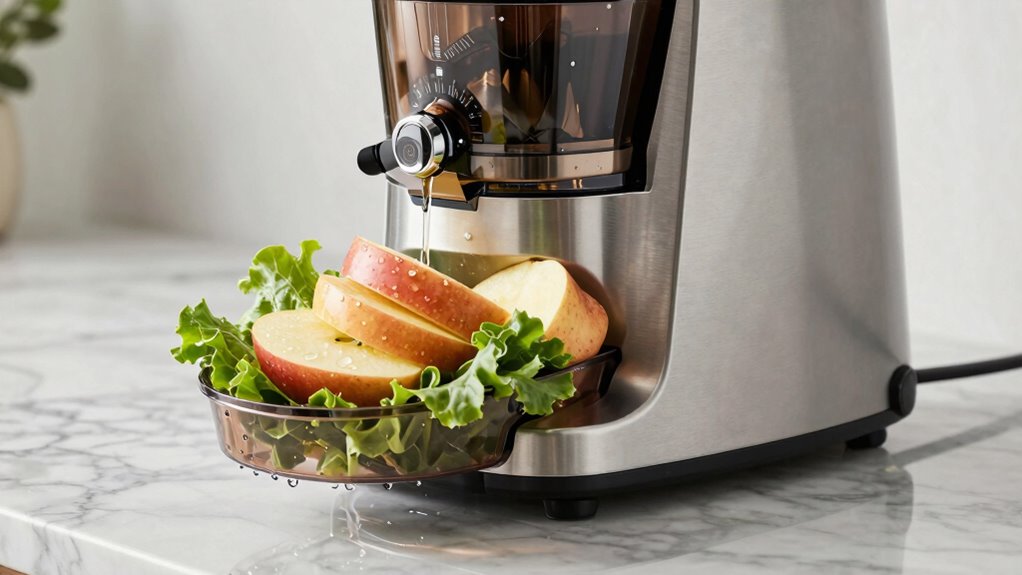
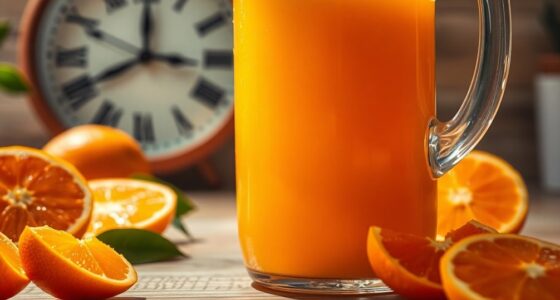
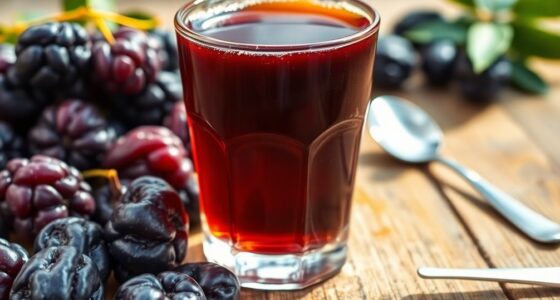
If you’re tired of constantly feeding fruits and vegetables into your juicer, the self-feeding juicer shortcut can save you time and effort. It relies on properly prepared produce to work efficiently, making your juicing process smoother and less labor-intensive. To get the most out of this shortcut, you need to understand how to prep your fruits and veggies correctly. Start by selecting produce that’s ripe, firm, and free of blemishes. Overripe or soft fruits tend to clog the machine or cause interruptions, which undermine the convenience of the self-feeding feature. When prepping, cut your produce into manageable pieces—usually no larger than 2 inches—so it feeds effortlessly into the chute. Drying fruits and vegetables slightly before juicing can also prevent excess moisture from causing jams or leaks, ensuring your juicer operates at peak performance. Proper produce prep isn’t just about ease; it’s also crucial for fruit preservation. When you cut fruits into uniform sizes and store leftovers properly, you prevent spoilage and bacterial growth that could compromise the quality of future juices. Keeping produce refrigerated and sealed helps retain nutrients and flavors, so each batch remains fresh and vibrant. This approach also minimizes waste, allowing you to get the most out of your fruits and veggies over time. Using the self-feeding juicer shortcut isn’t just about convenience; it also impacts juicer maintenance. When produce is prepped correctly, your machine experiences less strain, reducing wear and tear on blades and filters. Regular cleaning after each use is essential to prevent pulp buildup, which can hinder the self-feeding mechanism. Pay special attention to the feed chute and juice collector, ensuring no residues are left that might cause jams or bacterial growth. Proper juicer maintenance extends its lifespan and keeps your appliance functioning smoothly, making the shortcut a reliable time-saver. Additionally, understanding produce selection can significantly improve your juicing experience and machine longevity. Selecting the right produce for juicing is essential to maximize both nutrition and machine efficiency. Being aware of the nutritional content of your produce can also help you tailor your juices to meet specific health goals. Using produce that’s suited for juicing ensures better extraction and less strain on your appliance, contributing to longer-lasting equipment. Being mindful of produce quality can also prevent unnecessary waste and optimize the flavor and nutrient retention in your juices.
As an affiliate, we earn on qualifying purchases.
Frequently Asked Questions
Can I Use Frozen Produce With the Self-Feeding Juicer Shortcut?
Did you know that over 50% of households often use frozen produce for smoothies or juices? Yes, you can use frozen produce with the self-feeding juicer shortcut, but it depends on produce size. Smaller pieces work better, preventing clogging and ensuring smooth operation. To get the best juice, partially thaw frozen items and cut larger chunks into manageable sizes. This way, your juicer runs efficiently and extracts maximum flavor.
Does the Produce Size Affect the Juicer’s Efficiency?
Yes, produce size affects the juicer’s efficiency. If you use pieces that are too large, your juicer may struggle to process them smoothly, slowing down the juicing process and possibly clogging the machine. To maximize juicer efficiency, chop produce into smaller, uniform pieces. This guarantees consistent flow and easier extraction, allowing you to get the most juice with less effort and fewer interruptions.
How Do I Clean the Juicer After Using the Shortcut?
Cleaning your juicer is a breeze if you follow simple maintenance routines. After use, disassemble the parts and rinse them immediately—this prevents pulp from drying like concrete. Use cleaning tips like a brush for stubborn residue and run water through the machine to clear out pulp. Regularly deep clean with a mixture of vinegar and water. This keeps your juicer performing like a well-oiled machine and extends its lifespan.
Is There a Specific Produce Variety That Works Best?
You’ll get the best results by choosing produce with consistent ripeness and a smooth, firm texture. Opt for fruits like apples, carrots, and cucumbers, which handle the juicer well. Avoid overly ripe or soft produce, as it can clog the machine or reduce juice quality. Proper produce selection and ripeness considerations guarantee efficient juicing, minimal clogging, and a higher yield, making your juicing experience smoother and more satisfying.
Can I Mix Different Fruits and Vegetables in One Cycle?
Yes, you can mix different fruits and vegetables in one cycle, but pay attention to fruit consistency and produce layering. To guarantee smooth juicing, layer softer fruits like berries or oranges first, then add firmer produce such as carrots or apples. Mixing produce with similar texture helps prevent clogging and ensures efficient extraction. Experiment with combinations to find what works best for your juicer and taste preferences.
Conclusion
Think of your juicer as a loyal steed, keen to carry your fresh produce to the land of liquid delight. When you prep your fruits and veggies just right, you’re guiding the horse along a smooth, effortless path, avoiding the rocky patches of jam or clog. With the right produce prep, you reveal the secret shortcut, turning your juicing routine into a swift, joyful ride—where every drop of juice is a triumphant victory lap.
Halloween Picks
halloween
As an affiliate, we earn on qualifying purchases.