
If you compare small-batch juice processing with large-scale lines, you’ll notice that small batches focus on eco-friendly packaging, precise handling, and preserving freshness, while large lines prioritize automation and uniformity. Small batches let you experiment quickly with flavors, adapt to seasonal ingredients, and reduce waste. They emphasize natural qualities and sustainability, appealing to eco-conscious consumers. To get a clearer picture of these differences and how they impact quality, keep exploring how these methods operate in detail.

Get kitchen staples and gadgets delivered free with Prime
- Fast, free delivery on millions of items
- Prime Video, Amazon Music and more included
- Member-only deals all year
Key Takeaways
- Small-batch processing uses manual handling and precise filling techniques, while large-scale lines rely on automated, uniform packaging systems.
- Small batches allow for quick flavor adjustments and seasonal ingredient use, unlike the fixed production of large-scale lines.
- Small-scale methods prioritize minimal, eco-friendly packaging to preserve freshness, whereas large lines focus on long shelf life and durability.
- Small-batch production reduces waste and energy consumption, contrasting with the high-volume, automated processes of large-scale operations.
- Small batches enable rapid market responsiveness and product innovation, unlike the slower, standardized large-scale production.
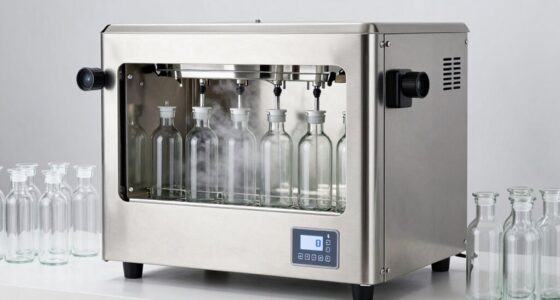
In small-batch juice processing, packaging techniques are equally essential. You tend to favor minimal, eco-friendly packaging that emphasizes the product’s freshness and artisanal qualities. Unlike large-scale lines that rely on automated, uniform containers designed for long shelf lives, your approach involves hand-packing or using small-batch filling machines to guarantee each bottle or jar is filled precisely and hygienically. This careful handling reduces exposure to contaminants and preserves the integrity of your juice. You might also incorporate innovative packaging techniques, such as aseptic filling or lightweight, recyclable bottles, to enhance shelf stability without compromising the product’s quality. These techniques allow you to maintain the juice’s vibrant color, aroma, and flavor, even without extensive preservatives or additives. The difference in scale impacts not only how you process and package your juice but also the level of flexibility you have to experiment with flavors and ingredients. Small batches give you the freedom to try new combinations, adjust sweetness levels, or incorporate seasonal fruits, responding quickly to customer preferences and market trends. Additionally, the use of small-batch processing allows for more sustainable practices, reducing waste and energy consumption. This flexibility also enables you to adapt quickly to seasonal availability, ensuring your products remain fresh and appealing. Employing sustainable packaging options can further enhance your commitment to eco-friendly practices and attract environmentally conscious consumers.
small batch juice filling machine
As an affiliate, we earn on qualifying purchases.
As an affiliate, we earn on qualifying purchases.
Frequently Asked Questions
What Types of Juice Are Best Suited for Small-Batch Processing?
You’ll find that premium, artisanal juices like single-varietal fruit blends or unique flavor combinations are best suited for small-batch processing. These juices benefit from careful fruit pairing, allowing you to craft distinctive flavors. Plus, packaging innovations in small batches enable you to highlight freshness and quality, appealing to niche markets. Small-batch setups let you experiment with diverse fruits, creating specialty products that stand out on store shelves.
How Does Quality Control Differ Between Small and Large Batches?
In small batches, you can focus more on batch sterilization to catch quality issues early, ensuring each batch meets your standards. This hands-on approach allows you to maintain better quality consistency, as you can quickly identify and address variability. Large-scale lines rely on automated, continuous processes, which can sometimes overlook subtle quality fluctuations. So, with small batches, you have greater control over maintaining high-quality juice throughout production.
What Are the Typical Costs Associated With Small-Batch Juice Processing?
You’ll find that small-batch juice processing costs include purchasing automated equipment, which can be pricey initially but saves labor over time. Energy consumption is typically lower per batch, but overall costs can add up depending on equipment efficiency. You might also spend more on quality ingredients and smaller-scale packaging. While the setup is less expensive than large-scale lines, maintaining consistent quality and automation adds to your expenses.
How Long Does It Take to Produce a Small Batch of Juice?
You’ll be happy to know that producing a small batch of juice can take anywhere from a few hours to a couple of days, depending on your batch size and production timeline. Small batches allow you to be flexible, tweaking flavors along the way. While it’s not a lightning-fast process, the intimacy and quality control make it worth the wait, giving your juice that personal touch big machines can’t match.
Can Small-Batch Processors Customize Flavors More Easily?
Yes, small-batch processors can customize flavors more easily. You can experiment with different flavor combinations through flavor experimentation, adjusting ingredients to perfect unique blends. Plus, ingredient sourcing is more flexible, allowing you to choose fresh, high-quality components tailored to specific flavor profiles. This hands-on approach enables you to respond quickly to customer preferences and create distinctive juices that stand out in the market.
Conclusion
In small-batch juice processing, you get the advantage of quality and customization, often producing just a few gallons at a time. Did you know that small-scale operations can retain up to 30% more nutrients compared to large industrial lines? This means your juice isn’t just fresher, but also more nutritious. So, if you’re seeking a personal touch and better health benefits, small-batch might be the way to go for you.
NFL season / tailgating Picks
team gear
As an affiliate, we earn on qualifying purchases.