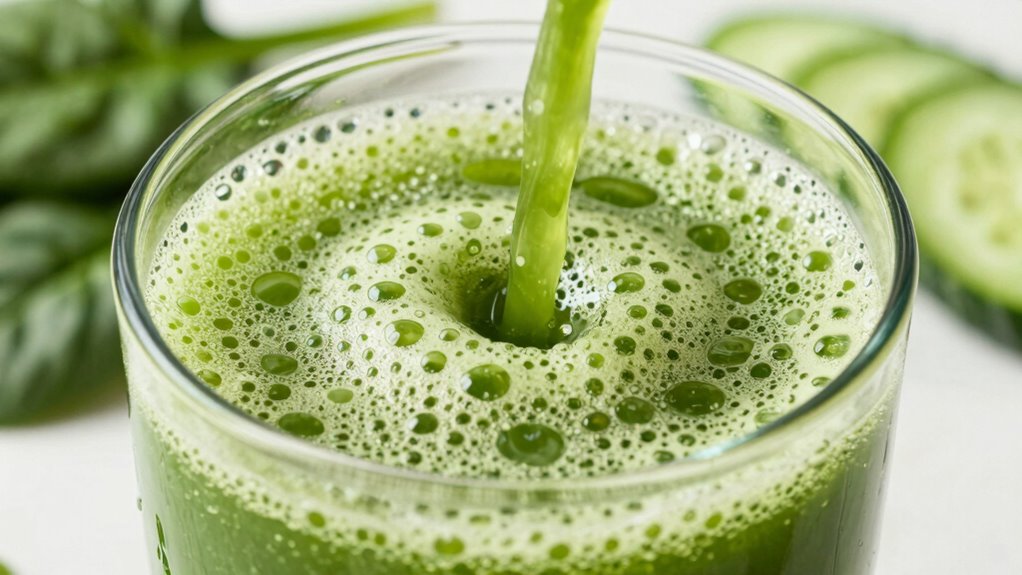

To reduce foam in your green juice, handle it gently during storage and pouring. Store in wide-mouthed containers with minimal agitation, and pour slowly to avoid trapping air. Removing excess pulp by straining can also lower bubble formation. Using smooth, controlled movements helps prevent froth from building up. By applying these techniques, you’ll keep your juice clearer and less foamy. For more tips on maintaining freshness and reducing foam, you’ll find useful ideas ahead.

Get kitchen staples and gadgets delivered free with Prime
- Fast, free delivery on millions of items
- Prime Video, Amazon Music and more included
- Member-only deals all year
Key Takeaways
- Remove pulp via blending and straining to reduce trapped air and foam formation.
- Pour juice slowly and gently to prevent air introduction and excessive froth.
- Use wide-mouthed containers for controlled pouring and minimal agitation.
- Store juice in airtight, minimal-oxygen containers to limit foam caused by oxidation.
- Limit shaking or vigorous handling during storage and serving to maintain a smoother texture.
Have you ever noticed your green juice becoming frothy and foamy when you blend or juice it? That bubbling, bubbly layer can be frustrating, especially when you’re after a smooth, invigorating drink. The good news is that foaming is a common issue, and there are straightforward ways to minimize it. One key factor is how you handle juice storage. If you store your green juice in a container with too much agitation or shake it vigorously before pouring, you’re likely to introduce extra air that results in more foam. Instead, pour your juice gently and avoid shaking the container. Using a wide-mouthed jar or bottle makes this easier, and it allows you to control the flow better, reducing the amount of air incorporated. Also, if you’re making large batches, consider storing your juice in smaller portions; this limits the exposure to air each time you open the container, helping to keep the foam at bay.
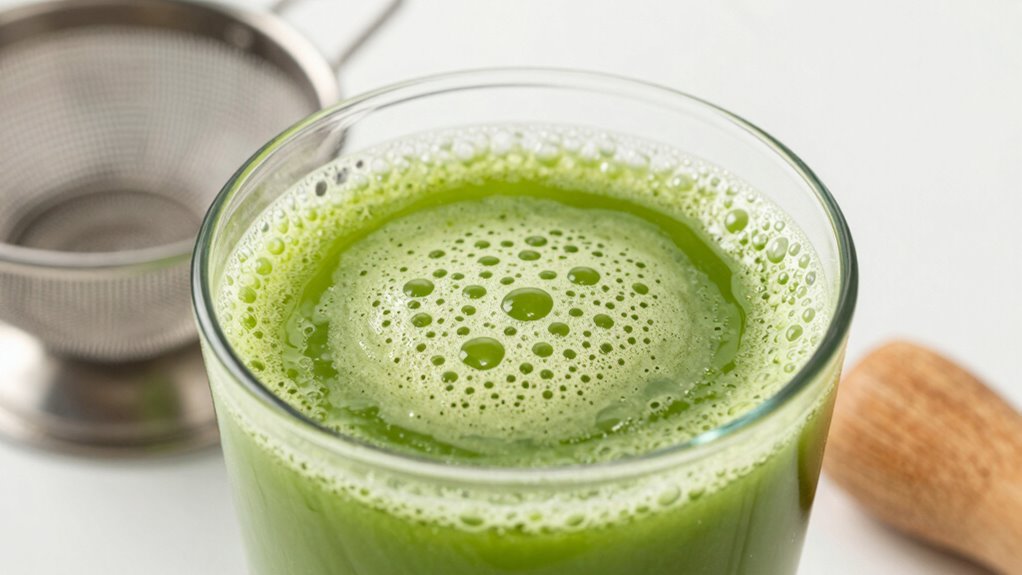
Another important aspect is pulp separation. When you blend your greens and fruits, some pulp naturally stays suspended in the juice, which can trap air and cause foaming. If you prefer a smoother drink, take the time to strain or filter out excess pulp after blending. Using a fine mesh sieve or a nut milk bag can help you remove pulp effectively. This process not only results in a more uniform texture but also reduces the amount of trapped air, which contributes to foam formation. Additionally, pulp separation can prevent the foam from becoming overly frothy during storage or pouring, making your green juice look more appealing and easier to drink. Proper storage techniques can also help maintain freshness, preventing the juice from oxidizing and producing more foam over time. Incorporating proper storage techniques can further minimize foam and keep your juice fresher for longer. Understanding how air bubbles form and behave can further help you control foaming and achieve a clearer, less frothy beverage. Being mindful of foam formation during blending and pouring can also help you develop better control over the final texture of your juice.
As an affiliate, we earn on qualifying purchases.
Frequently Asked Questions
Does the Type of Blender Affect Foam Production?
Yes, your blender’s design and blade sharpness can affect foam production. A blender with a smooth, well-designed container minimizes air pockets, reducing foam. Sharper blades break down ingredients more efficiently, preventing excessive agitation that causes foam. When you choose a blender with these features, you’ll notice less foam and a smoother juice. Adjusting blending speed and duration also helps, but the right design and blades make a significant difference.
Can Adding Lemon Reduce Foam in Green Juice?
Adding lemon can help reduce foam in your green juice because lemon acidity interacts with the natural enzymes and proteins, stabilizing the mixture. When you squeeze a bit of lemon into your juice, it acts as a natural anti-foaming agent, decreasing bubbles and creating a smoother texture. So, if foam bothers you, try adding a splash of lemon to your green juice for effective foam reduction.
Is Foam Harmful or Just Aesthetic?
Foam is like a frothy crown—mainly aesthetic, not harmful. It’s just air trapped in the juice, so foam health isn’t a concern. While it might look unappealing, it doesn’t affect the juice’s nutritional value or safety. If you’re worried about visual appeal, reducing foam improves the look, but don’t stress if it’s there; it’s simply a visual concern, not a health risk.
How Long Should I Let Green Juice Sit to Settle?
You should let your green juice sit for about 10-15 minutes to settle and improve juice clarity. During this time, foam naturally rises to the surface, making it easier to remove. Gently skim off the foam with a spoon or a paper towel to reduce excess bubbles. This simple step helps your juice look more appealing and guarantees a smoother drinking experience without affecting the nutritional value.
Does the Temperature of Ingredients Influence Foam?
Yes, ingredient temperature influences foam formation in green juice. When you use cold ingredients, the foam tends to be less vigorous because colder temperatures reduce the release of air bubbles during blending. Conversely, warm ingredients can increase foam because they encourage more air entrapment. To minimize foam, try blending with ingredients at similar, cooler temperatures, which helps keep the juice smooth and less foamy.
Conclusion
To keep your green juice from foaming too much, remember that a quick blend and avoiding over-blending can make a big difference. Don’t worry if it still foams slightly—it’s natural and harmless. Just let it sit for a minute or two; the foam will settle. Some people think foam ruins the taste, but once you pour it, you’ll see it’s barely noticeable. Enjoy your smooth, foam-free green juice!
Columbus Day / Indigenous Peoples' Day Picks
long weekend sales
As an affiliate, we earn on qualifying purchases.