Understanding the difference between pH and total alkalinity (TA) is key for juice safety. pH measures how acidic or basic the juice is at a specific moment, while TA reflects the juice’s ability to resist pH changes, acting as a buffer. Confusing these can lead to safety issues or spoilage. If you want to ensure effective acid-base control and improve quality, knowing how these two factors work together is essential—more details await you ahead.
Key Takeaways
- pH measures current acidity or alkalinity, while TA indicates water’s capacity to buffer pH changes.
- Proper juice safety relies on understanding both pH and TA, not mixing their concepts.
- pH can change quickly; TA provides stability by resisting pH fluctuations.
- Using pH meters alone isn’t enough; TA requires titration for accurate assessment.
- Differentiating pH and TA ensures precise quality control and prevents safety issues in juice production.
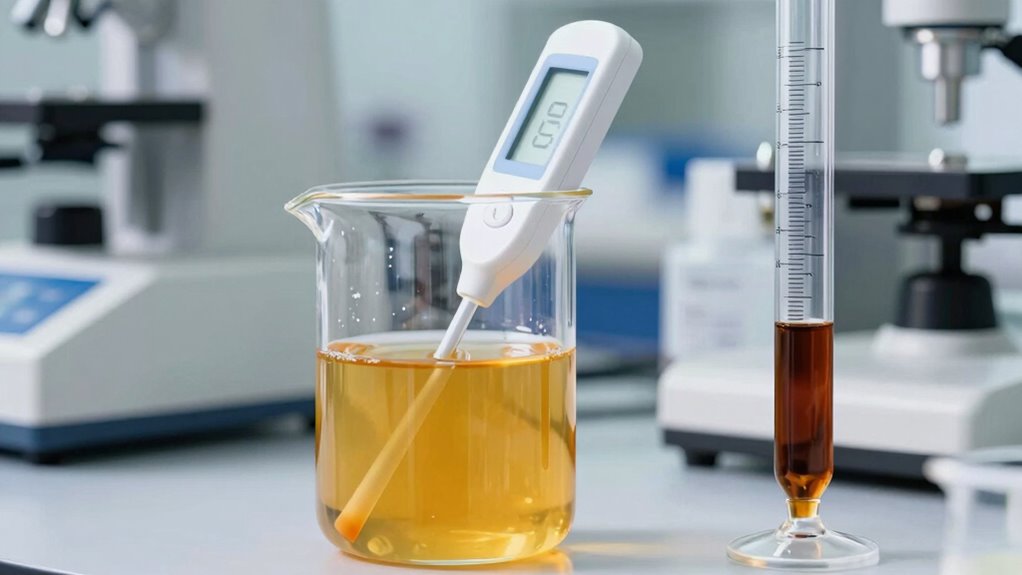
Have you ever wondered how total alkalinity (TA) and pH work together to influence water chemistry? They might seem similar, but they serve different roles, especially when it comes to understanding and maintaining safe juice or water supplies. Grasping the distinction is essential, especially if you’re involved in ensuring the safety and quality of consumables. The acid-base balance in water hinges on these two factors. pH measures how acidic or basic the solution is, indicating the concentration of hydrogen ions. Meanwhile, total alkalinity reflects the water’s capacity to neutralize acids, acting as a buffer. This buffering capacity prevents sudden pH shifts that could compromise safety or spoilage.
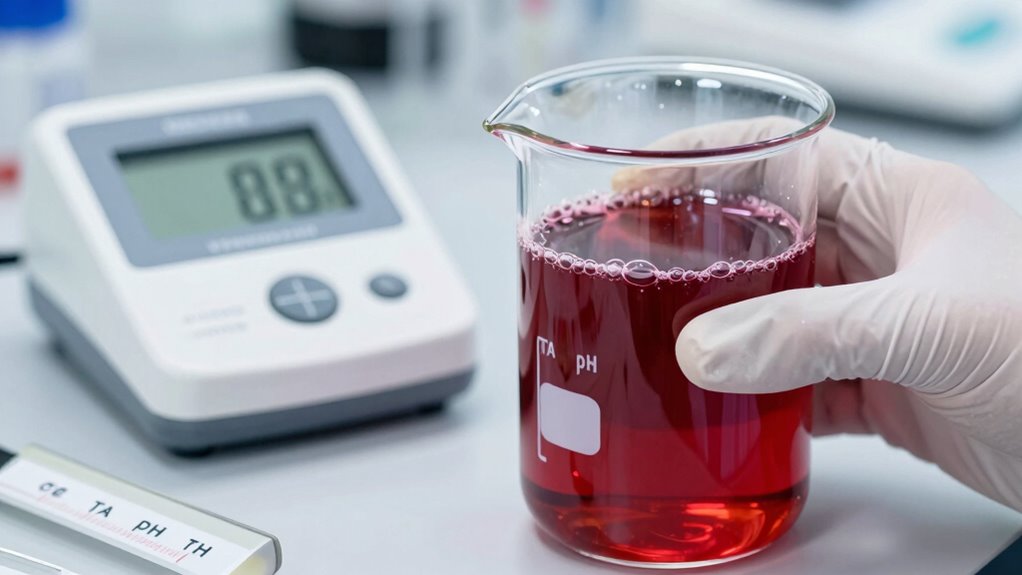
To accurately assess water quality, you need to understand pH measurement techniques. These methods range from simple test strips to advanced electronic pH meters. Test strips are quick and inexpensive but can be less precise, especially if not used correctly or if the sample isn’t at the right temperature. Digital pH meters provide more accurate, real-time readings, which are essential for controlling acid-base balance in water or juice processing. When measuring pH, it’s important to calibrate your device properly with standard solutions to guarantee reliable results. Proper pH measurement is especially critical during production, as even small deviations can lead to safety issues or spoilage. Additionally, understanding the balance between TA and pH is crucial for maintaining water stability and preventing issues in beverage safety.
Total alkalinity, on the other hand, isn’t measured with pH meters but through titration methods. This involves adding a standard acid solution to the sample until a specific pH endpoint is reached, often around 4.5. The amount of acid used indicates the alkalinity level. Understanding alkalinity helps you determine how well the water can resist pH changes when acids or bases are introduced—important in preventing unexpected shifts that could affect juice safety or quality. If alkalinity is too low, the solution can quickly become too acidic, risking spoilage or safety hazards. Conversely, excessively high alkalinity can cause pH to drift into unsafe ranges, impacting taste and safety.
Frequently Asked Questions
How Do TA and pH Affect Juice Shelf Life?
You can extend juice shelf life by managing TA and pH levels effectively. A balanced TA helps maintain pH stability, preventing harmful bacteria growth. When you adjust TA, you’re stabilizing pH, which keeps the juice safe longer. Keep the pH within a safe range, and guarantee TA is properly balanced, so your juice resists spoilage and maintains quality. Proper control of these factors is key to longer-lasting, safer juice.
Can TA and pH Be Adjusted Independently?
Yes, you can adjust TA and pH independently, but it requires careful balancing. To modify the acidic balance and flavor stability, you might add acidulants like citric acid to lower pH without markedly changing TA. Conversely, adding buffering agents can increase TA without greatly affecting pH. This allows you to fine-tune your juice’s acidity and flavor stability, ensuring ideal shelf life and sensory qualities.
What Instruments Are Best for Measuring TA Accurately?
You should use a calibrated pH meter specifically designed for TA measurement to guarantee accuracy. Look for instruments with reliable TA calibration features, allowing you to adjust and verify readings regularly. These meters often have specialized electrodes for titratable acidity testing. Regular calibration with standard solutions is essential. By choosing a precise pH meter and maintaining it properly, you’ll get accurate TA readings vital for juice safety and quality control.
How Do TA and pH Influence Microbial Growth?
You should know that TA and pH directly influence microbial growth in juice. Higher TA, often linked to sugar content, creates an environment less favorable for bacteria, while a lower pH, indicating increased acidity, inhibits microbial activity. Additionally, antioxidant levels can impact microbial stability. Together, these factors help you control fermentation and spoilage, ensuring your juice remains safe and fresh for longer.
Are TA and pH Equally Important for Juice Quality?
You might think both are equally crucial, but pH actually trumps TA in juice quality. A precise pH level ensures microbial safety, color stability, and preserves the vibrant look you crave. TA, linked to sugar content, influences taste and mouthfeel, but pH directly affects microbial growth and color retention. Prioritizing pH keeps your juice safe, appealing, and visually stunning—it’s the superhero of juice quality!
Conclusion
Now that you understand the difference between TA and pH, remember that clarity matters. Don’t confuse TA with pH, don’t mix acidity with alkalinity, don’t overlook their roles in juice safety. Recognize that TA measures total acidity, while pH indicates acidity level. Keep these concepts clear, keep them distinct, and keep your juice safe. Because knowing the difference isn’t just knowledge; it’s your safeguard, your standard, and your responsibility.