Traceability in juice production relies on lot codes that link each bottle to specific batches, ensuring supply chain transparency. These codes help you quickly identify product sources, streamline recalls, and minimize disruption if safety issues arise. By maintaining detailed records, manufacturers can act swiftly to retrieve affected batches, protecting consumer health and building trust. Continuing with this system, you’ll discover how effective lot coding enhances safety measures and guarantees quality at every step.
Key Takeaways
- Lot codes link each juice bottle to specific batches, enabling precise traceability throughout the supply chain.
- They facilitate quick identification of product origins, essential for efficient recalls and safety management.
- Effective lot coding supports targeted recalls, minimizing costs and consumer impact during safety issues.
- Traceability systems improve transparency and communication with retailers and consumers during product recalls.
- Comprehensive record-keeping of lot information enhances quality assurance and rapid response to contamination.
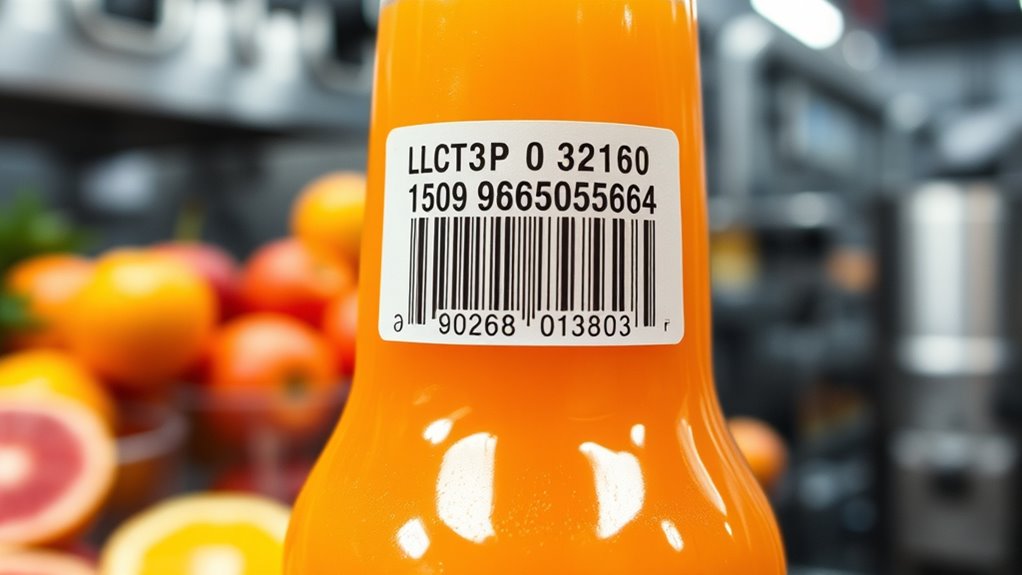
Have you ever wondered how you can trace the journey of your juice from orchard to bottle? It’s a fascinating process that hinges on supply chain transparency and meticulous quality assurance processes. When you pick up a bottle of juice, you might not realize the extensive steps involved in ensuring its safety and quality. That’s where traceability, especially through lot codes, plays a crucial role. These codes act as unique identifiers, linking each bottle back to specific batches of fruit, production dates, and processing details. This system enables manufacturers to maintain a clear record of where each batch originated, how it was handled, and how it moved through the supply chain.
Supply chain transparency is fundamental in this context. It allows everyone involved—farmers, processors, distributors, and retailers—to access detailed information about each step of the journey. This transparency not only boosts consumer confidence but also makes it easier to identify and address potential issues swiftly. For example, if a batch of juice is found to be contaminated, the lot code helps trace back to the exact source of the problem. This precise identification minimizes the scope of recalls, saving time, resources, and reducing waste. Additionally, effective quality assurance processes, such as testing for contaminants and verifying ingredient integrity, are integrated into this system to ensure safety and consistency.
Quality assurance processes are tightly integrated into this system. From the moment the fruit is harvested, rigorous testing and monitoring are conducted to ensure it meets safety standards. These checks are documented and linked to the lot codes, providing an extensive record of quality at every stage. If a defect or contamination is detected later, the lot code allows manufacturers to quickly isolate affected products and prevent them from reaching consumers. This proactive approach underscores the importance of traceability in safeguarding public health.
Recalls become much more manageable with effective lot coding. When a safety concern arises, companies can issue targeted recalls, informing retailers and consumers precisely which batches are affected. This precision reduces the scope of recalls compared to a blanket withdrawal, which can be costly and disruptive. Plus, with clear lot codes, companies can communicate transparently about the issue, building trust with their customers. Over time, this system encourages better practices across the entire supply chain, ensuring that every step— from orchard to shelf—upholds the highest standards of safety and quality. Moreover, implementing traceability systems can also help in monitoring the effectiveness of quality assurance, ensuring continuous improvement throughout the process.
Frequently Asked Questions
How Long Should Juice Manufacturers Retain Traceability Records?
You should retain traceability records for at least 2 years, according to industry best practices and regulatory guidelines. Your record retention policies must guarantee data storage compliance, making sure records are accessible and secure during this period. This helps you quickly respond to recalls or quality issues, maintain transparency, and meet legal requirements. Regularly review and update your policies to stay aligned with evolving standards and regulations.
What Technologies Are Used for Tracking Juice Batch Information?
Like a lighthouse guiding ships, digital tagging illuminates your juice batch info, ensuring accurate tracking. You use technologies like digital tagging and blockchain verification to keep data secure and transparent. These tools act as your reliable compass, helping you trace batches from source to shelf effortlessly. They streamline recalls and boost consumer confidence, making sure your juice’s journey is documented and trustworthy every step of the way.
How Are Consumers Notified During a Juice Recall?
During a juice recall, you’re notified through recall procedures that may include consumer alerts via email, text messages, or social media. Companies often post notices on their websites and work with retailers to inform you directly. These consumer alerts guarantee you’re aware of the recall, guiding you on how to return or discard the product safely. This process helps protect your health and prevents further consumption of contaminated juice.
Are There International Standards for Juice Traceability?
Yes, there are international standards for juice traceability, primarily guided by organizations like Codex Alimentarius and ISO. These global standards help guarantee compliance requirements are met across different countries, making it easier for you to track juice products throughout the supply chain. By following these standards, producers and retailers can efficiently identify and manage product origins, ensuring safety and compliance during recalls or quality issues.
How Does Traceability Impact Juice Product Shelf Life?
Traceability directly impacts your juice’s shelf life by enhancing quality assurance and supply chain transparency. When you track lot codes, you can quickly identify and address potential spoilage or contamination issues, preventing compromised products from reaching consumers. This proactive approach helps maintain freshness, ensures safety, and extends shelf life, giving you confidence that your juice remains safe and high-quality from production to consumption.
Conclusion
Understanding traceability in juice isn’t just about compliance—it’s about protecting consumers. Did you know that over 20% of food recalls are due to traceability issues? By effectively using lot codes and recalls, you can quickly identify contaminated batches and prevent harm. Stay vigilant and prioritize traceability; it’s your best defense against potential health risks and reputation damage, ensuring your customers enjoy safe, high-quality juice every time.