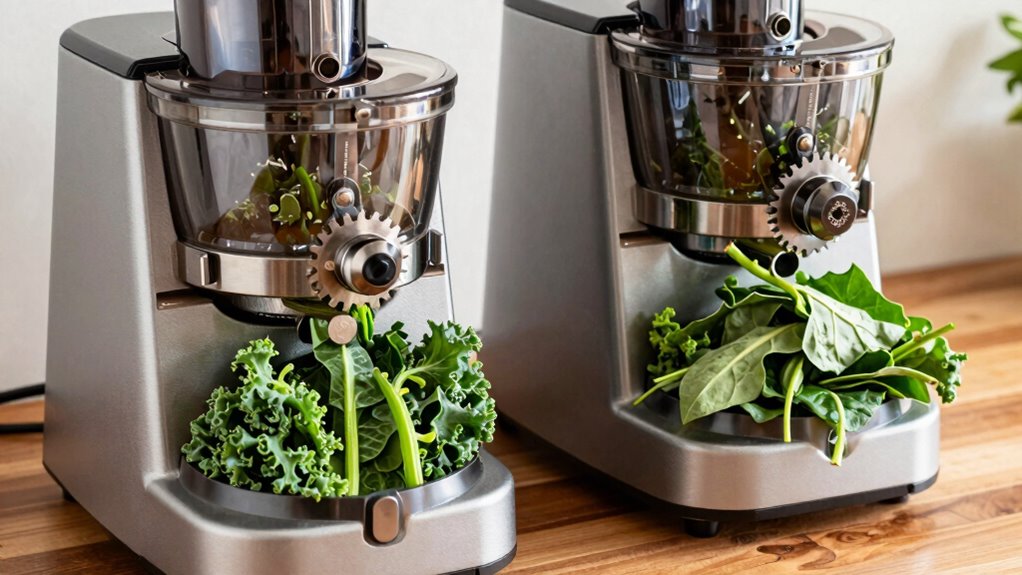

Twin gear juicers handle greens differently because their dual-augur system crushes and grinds fibrous, leafy vegetables slowly and thoroughly. This process breaks cell walls more effectively, extracting more juice and nutrients while reducing oxidation. Unlike other juicers, they’re designed to deal with tough greens like kale, spinach, and wheatgrass, maximizing yield and freshness. Keep going to discover how their mechanics help preserve enzymes and vitamins even better than traditional machines.
Key Takeaways
- Twin gear juicers use dual augers that thoroughly crush greens, breaking cell walls for higher juice and nutrient extraction.
- Their slow, low-speed operation minimizes heat, preserving enzymes and vitamins in fibrous greens.
- The mechanical crushing process handles tough greens like kale and wheatgrass more effectively than other juicers.
- Twin gear design reduces oxidation, helping greens stay fresh longer and retain maximum nutritional value.
- Their sturdy construction and efficient processing make them ideal for extracting concentrated nutrients from fibrous greens.
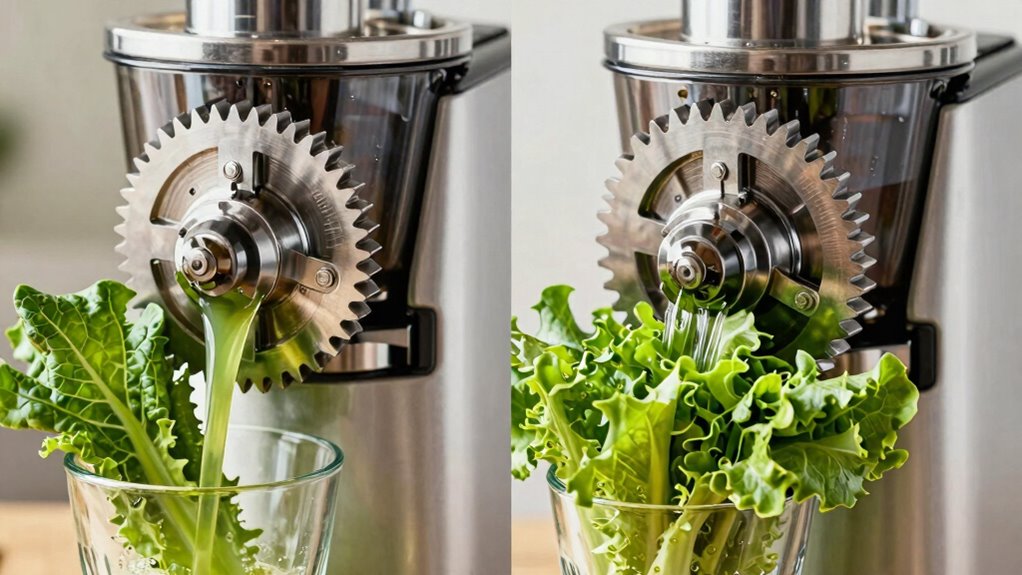
Twin gear juicers are among the most efficient and nutrient-preserving juicers on the market, making them a popular choice for health-conscious individuals. Their unique design allows you to extract maximum juice from a variety of produce, especially greens. When it comes to juicing efficiency, twin gear models excel because they crush and grind ingredients slowly, ensuring that you get the most nutrients and juice out of your vegetables and fruits. This slow speed minimizes heat generation, which helps conserve delicate enzymes and vitamins that can be lost with high-speed juicers. As a result, you often end up with a richer, more nutritious juice that retains the natural flavors and benefits of your ingredients.
Twin gear juicers maximize juice and nutrients through slow, efficient crushing, preserving flavors and enzymes for healthier, richer juice.
Handling greens with a twin gear juicer is a different experience compared to other types. Greens such as kale, spinach, and wheatgrass are often fibrous and tough to extract juice from efficiently. Twin gear juicers, with their twin auger mechanism, crush greens thoroughly, breaking down cell walls and extracting more juice than centrifugal or single-gear juicers. This thorough processing means you get a higher yield and more concentrated nutrients from your greens, making them ideal for those who want to maximize their leafy vegetable intake. The slow crushing process also reduces oxidation, helping your juice stay fresh longer and retain more nutrients.
While their juicing efficiency is impressive, you should consider the maintenance requirements of twin gear juicers. They tend to be more complex than simpler juicers because of their multiple parts and gears. Regular cleaning is essential to prevent pulp buildup and ensure smooth operation. Fortunately, most models are designed with ease of cleaning in mind, featuring removable parts that can be rinsed quickly under water. However, you’ll need to disassemble the augers and other components after each use to remove any residue or pulp, which can be a bit time-consuming compared to simpler juicers. Some parts may also require occasional lubrication or inspection to maintain peak performance.
Despite these maintenance requirements, twin gear juicers are relatively durable and built for long-term use. Their sturdy construction means they can handle frequent juicing sessions without significant wear. Plus, because they operate at low speeds, they generate less heat and friction, which reduces the risk of motor burnout or gear damage over time. If you’re willing to invest a little extra effort into cleaning and maintenance, you’ll be rewarded with a juicer that delivers superior juicing efficiency, especially when handling greens. This combination of high juice yield, nutrient preservation, and durability makes twin gear juicers a smart choice for anyone serious about their health and looking to get the most out of their produce. Additionally, understanding the contrast ratio of your juicer can help you gauge its ability to produce vibrant, visually appealing juice with a full spectrum of colors.
Frequently Asked Questions
How Do Twin Gear Juicers Compare in Price to Single Gear Models?
Twin gear juicers tend to be more expensive than single gear models, but they offer a better price comparison with regard to juice quality and durability. You might find their higher affordability analysis justified if you juice frequently or want more nutrient-rich juice. While the initial investment is higher, the long-term benefits of efficiency and juice yield often make twin gear juicers worth the extra cost.
Can Twin Gear Juicers Handle Nuts and Seeds Effectively?
Did you know twin gear juicers excel in nut processing and seed extraction? You can confidently use them for nuts and seeds, as their powerful gears crush and extract maximum nutrients efficiently. Unlike single gear models, twin gear juicers handle tougher ingredients with ease, making them ideal for creating nut butters or seed milks. So, if you’re into nutritious homemade treats, a twin gear juicer is a smart choice for your kitchen.
Are Twin Gear Juicers Suitable for Juice Concentrates?
Yes, twin gear juicers are suitable for making juice concentrates because they efficiently extract juice and preserve nutrients. They handle fiber extraction well, giving you a thicker, richer concentrate. You’ll find that their slow, cold-pressing process preserves flavors and enzymes, making your juice ideal for concentrates. Plus, their high extraction rate means you get more juice from greens and other produce, perfect for creating flavorful, nutritious concentrates at home.
What Is the Typical Lifespan of a Twin Gear Juicer?
A twin gear juicer typically lasts 10 to 20 years with proper maintenance. You should consider durability concerns because high-quality models tend to be more resilient, reducing the likelihood of needing replacements. While the initial investment may seem high, it can save you money on replacement costs over time. Regular cleaning and avoiding hard substances help extend its lifespan, ensuring you get the most out of your juicer.
Do Twin Gear Juicers Require More Maintenance Than Other Juicers?
While twin gear juicers may seem more complex, they actually require less maintenance than other juicers. You’ll need to follow routine cleaning routines, but their component durability means they handle regular use well. Unlike single-gear models that might need frequent part replacements, twin gear juicers are built to last, making upkeep straightforward. So, with proper care, they don’t demand more maintenance, and their longevity compensates for any extra cleaning steps.
Conclusion
Twin gear juicers handle greens differently because of their unique design, efficiency, and juice quality. They extract more nutrients, preserve flavors, and handle tough greens with ease. So, when you choose a twin gear juicer, you’re choosing freshness, nutrition, and durability. It’s about making smarter choices, enjoying better health, and investing in quality. Because in the end, it’s not just about juicing greens, but about nourishing your body, fueling your day, and embracing a healthier lifestyle.