

To season savory juice without overdoing it, add salt gradually in small pinches, tasting as you go to find the right balance. Use alternatives like soy sauce, seaweed, or herbs to add depth without excess sodium, and consider balancing flavors with citrus or a touch of sweetness. Paying attention to ingredient quality and layering flavors enhances the overall taste. Keep experimenting with these techniques, and you’ll master just the right amount of salt for your perfect finish.

Get kitchen staples and gadgets delivered free with Prime
- Fast, free delivery on millions of items
- Prime Video, Amazon Music and more included
- Member-only deals all year
Key Takeaways
- Start with a small pinch of salt and gradually increase, tasting frequently to avoid over-salting.
- Use salt alternatives like soy sauce or seaweed for depth without excessive sodium.
- Incorporate acidity (lemon/lime juice) to balance saltiness and enhance overall flavor.
- Add sweeteners (honey or fruit) to offset salt and create a harmonious taste.
- Focus on high-quality ingredients and layered flavors for a well-rounded, balanced savory juice.
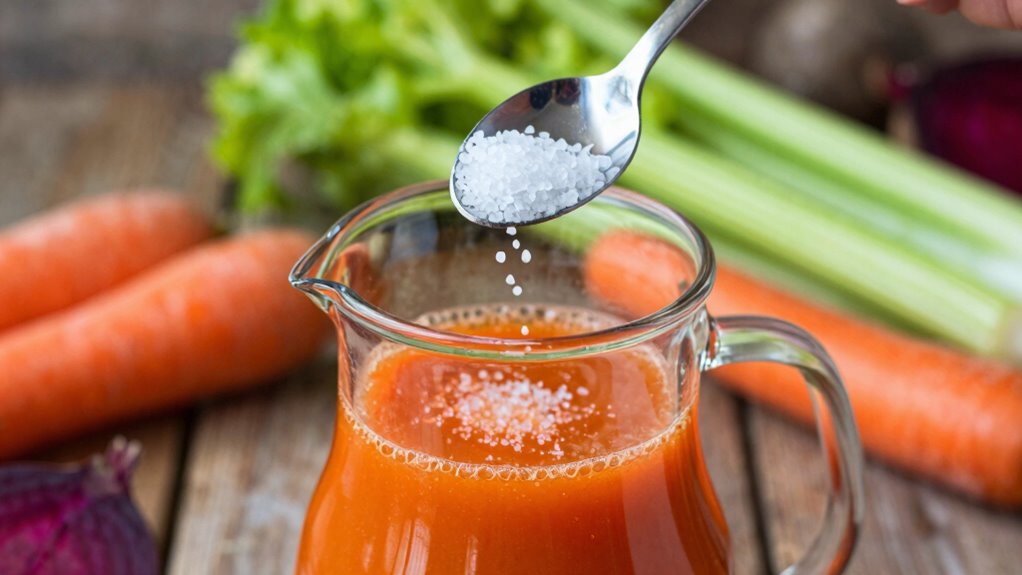
Adding salt to savory juice might seem simple, but doing it correctly can dramatically enhance the flavor. When you’re working with liquid ingredients, getting the flavor balance right is key. Too much salt can overpower the natural taste of your juice, while too little might leave it flat and dull. The goal is to find that perfect sweet spot where all the flavors harmonize, making your savory juice truly stand out. Start by adding a small pinch of salt, then taste and adjust gradually. This slow approach helps prevent over-salting and keeps you in control of the final flavor profile.
Add salt gradually to balance flavors and avoid overpowering your savory juice.
If you’re concerned about overdoing it or want to explore healthier options, salt alternatives can be your best friends. Ingredients like seaweed, tamari, or even a splash of soy sauce can bring a salty depth without the excessive sodium. Herbs and spices, such as garlic, onion powder, or smoked paprika, also contribute savory notes that complement the salt and add complexity to your juice. Using these alternatives allows you to balance flavors more naturally, especially if you’re watching your salt intake or trying to create a more nuanced taste.
Remember, the key to proper flavor balance isn’t just about adding salt at the beginning. It’s about tasting throughout the process. As you blend your ingredients, pause periodically to assess how the flavors are developing. This way, you can make informed decisions about whether to add more salt or try a salt alternative. Flavor balance is an essential aspect of seasoning, and practicing mindful tasting helps you develop your palate. If your juice starts to taste too salty, a splash of citrus juice, like lemon or lime, can help brighten the flavors and offset the saltiness. Similarly, a small amount of sweetener—like honey or a touch of fruit—can balance out the savory elements if needed.
You should also consider the overall purpose of your savory juice. If it’s going to be part of a larger dish or served with salty or rich foods, you might want to keep the salt level slightly lower to prevent overpowering the other flavors. Conversely, if it’s meant to be a bold, standalone beverage, a bit more salt might be appropriate. The importance of seasoning techniques cannot be overstated, as they help you customize your flavor profile effectively. Incorporating flavor layering can also enhance the complexity and depth of your savory juice, making it more interesting and well-rounded. Paying attention to ingredient quality can also make a significant difference in how well your seasoning turns out. The important thing is to taste as you go, keep the flavor harmony in mind, and use salt and its alternatives thoughtfully. With practice, you’ll master the art of seasoning your savory juice so that it’s flavorful without being overly salty, ensuring every sip is just right. Understanding flavor balance is essential for perfect seasoning every time.
As an affiliate, we earn on qualifying purchases.
Frequently Asked Questions
Can I Substitute Regular Salt With Sea Salt in Savory Juice?
Yes, you can substitute regular salt with sea salt in savory juice. Salt substitution like this can enhance flavor, thanks to sea salt’s mineral content. Just remember, sea salt grains are often coarser, so start with a smaller amount and taste as you go to avoid over-seasoning. This way, you’ll achieve a balanced, flavorful juice without overpowering other ingredients.
How Do I Adjust Salt Levels for Different Juice Recipes?
Think of adjusting salt levels like tuning an instrument—you want harmony, not dissonance. For different juice recipes, start with a small salt measurement, then taste and gradually add more, aiming for flavor balancing. Keep in mind, each recipe’s salt needs vary, so always adjust slowly. Remember, you can always add, but you can’t take out salt easily. Trust your palate to find the perfect balance.
Is There a Way to Enhance Flavor Without Adding More Salt?
You can enhance flavor without adding more salt by focusing on flavor balancing. Incorporate natural sweeteners like honey or agave to amplify sweetness subtly, which can mask any bitterness or acidity. Fresh herbs, spices, and a splash of citrus juice also boost flavor complexity without extra salt. These methods help you achieve a richer taste profile, making your savory juice more vibrant and satisfying without risking over-salting.
What Are the Signs of Over-Salting Savory Juice?
Imagine your savory juice as a sponge; over-salting is like squeezing out too much water. Signs of over-salting include a pronounced salty taste that surpasses your taste threshold, making the flavor unbalanced. You might notice a metallic or bitter aftertaste, or the juice becomes too thick and unappealing. If you see salt crystals settling, it’s a clear sign you’ve gone too far, and salt absorption is now excessive.
How Long Should I Let the Juice Sit After Adding Salt?
You should let your savory juice sit for at least 10 to 15 minutes after adding salt. This resting time allows the salt to absorb fully, balancing flavors without overdoing it. Stir the juice occasionally to guarantee even distribution. Tasting after this period helps you decide if it needs more salt. Remember, patience is key to achieving a well-seasoned, flavorful juice without risking an overpowering saltiness.
Conclusion
Remember, salt is like the key to a well-tuned instrument—it releases the full flavor of your savory juice. Use it wisely, tasting as you go, and let a little patience be your guide. When balanced, salt becomes the silent conductor, orchestrating harmony in every sip. Overdo it, and the melody’s lost. So, handle your salt with care, and your juice will sing with vibrant, savory notes that delight every palate.
Halloween Picks
halloween
As an affiliate, we earn on qualifying purchases.