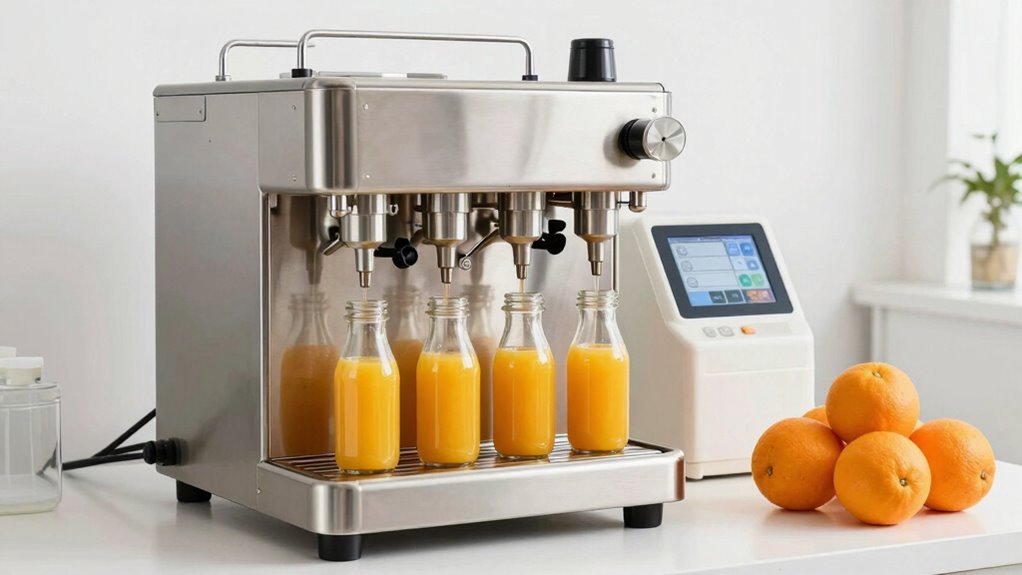

Bench-top fillers are an excellent starting point for small juice brands because they are user-friendly, affordable, and easy to clean. They feature digital controls, automatic calibration, and sensor technology that keep your filling process precise and consistent. Plus, their simple design makes training staff easier and allows for quick setup and adjustments. This helps improve efficiency and hygiene without breaking the bank. Keep exploring to discover how these fillers can help your business grow.

Get kitchen staples and gadgets delivered free with Prime
- Fast, free delivery on millions of items
- Prime Video, Amazon Music and more included
- Member-only deals all year
Key Takeaways
- Easy-to-use controls and displays make bench-top fillers accessible for small juice brands with minimal training.
- Automatic calibration and sensor technology ensure consistent, accurate filling, reducing errors and waste.
- Hygienic design and simple maintenance minimize downtime and uphold quality standards.
- Suitable for small-scale operations, enabling growth without complex or costly equipment.
- Cost-effective and scalable, supporting brand growth while maintaining product quality and customer satisfaction.
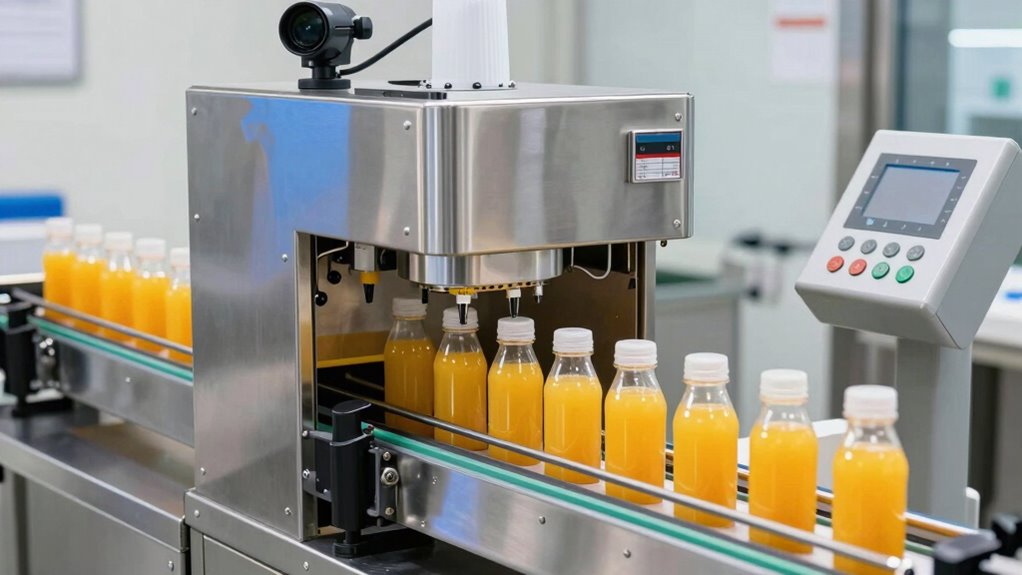
A user-friendly interface is another key advantage of modern bench-top fillers. You don’t need to be an engineer to operate these machines confidently. Instead, intuitive controls and clear displays help you set up and monitor filling tasks easily. You can quickly adjust volume settings, switch between different container sizes, or pause the process without hassle. This simplicity means you spend less time troubleshooting and more time focusing on product quality and business growth. Plus, many models include digital readouts that provide real-time feedback, so you always know exactly how much liquid has been dispensed, reducing the risk of overfills or underfills.
When choosing a bench-top filler for your small juice operation, consider one with automatic calibration. This feature guarantees your machine stays accurate after initial setup or if it’s been idle for a while. Automatic calibration adjusts internal sensors and measurements automatically, minimizing human error and maintaining high precision levels. As your production scales, this becomes even more important, helping you meet regulatory standards without needing additional staff or complex procedures. Modern bench-top fillers also often incorporate advanced sensor technology, ensuring even higher accuracy and consistency in filling processes. Incorporating features like smart calibration can further streamline operations and improve overall efficiency. Additionally, ease of cleaning is an important consideration, as it helps maintain hygiene standards and reduces downtime between batches. Furthermore, selecting a machine with easy maintenance features can extend its lifespan and reduce long-term operational costs. Implementing regular calibration checks can help sustain accuracy over time and prevent costly errors.
The combination of automatic calibration and a user-friendly interface makes bench-top fillers a practical starting point for small juice brands. They’re easy to learn and operate, yet sophisticated enough to meet quality control demands. These features also make it easier to train staff or even run the equipment yourself, without extensive technical knowledge. Additionally, their affordability compared to larger industrial fillers allows you to invest in quality equipment without draining your startup budget. Overall, a well-chosen bench-top filler enhances your production efficiency, product consistency, and ultimately, customer satisfaction—key ingredients for growing your brand in a competitive market.
bench-top liquid filler for small juice bottles
As an affiliate, we earn on qualifying purchases.
As an affiliate, we earn on qualifying purchases.
Frequently Asked Questions
What Is the Maximum Production Capacity of Bench-Top Fillers?
You’ll find that the maximum production capacity of bench-top fillers varies, but generally, they handle around 50 to 200 bottles per hour. With manual operation and batch processing, these fillers are ideal for small-scale production. You can easily adjust settings for different bottle sizes, making them flexible. While not suitable for large-scale output, they efficiently meet the needs of small juice brands starting out or testing new flavors.
Are Bench-Top Fillers Suitable for Carbonated Juice Products?
You might be surprised—bench-top fillers aren’t ideal for carbonated juice products. Their carbonation compatibility is limited because they can’t handle the pressure from fizzing liquids. Plus, juice viscosity considerations matter; thicker juices can clog or not fill properly. If carbonation is essential, you’ll want to explore specialized fillers designed for carbonated beverages to guarantee quality and efficiency. Don’t compromise on the right equipment for your product’s unique needs.
How Easy Is It to Clean and Maintain These Fillers?
Cleaning and maintaining bench-top fillers is fairly straightforward if you follow proper sanitation procedures and maintenance routines. You’ll want to regularly disassemble parts, wash them thoroughly, and sanitize to prevent contamination. Keep an eye on seals and moving parts, replacing them as needed. Staying consistent with your cleaning schedule guarantees your equipment operates smoothly, minimizes downtime, and helps maintain high product quality for your small juice brand.
Can Bench-Top Fillers Handle Different Bottle Sizes?
Yes, bench-top fillers can handle different bottle sizes, thanks to their size flexibility and adjustable settings. You can easily switch between various bottle compatibility options, making them suitable for small juice brands that want to offer diverse packaging. Their design allows quick adjustments, ensuring efficient filling across multiple bottle sizes without hassle. This versatility helps you streamline your production while maintaining high accuracy and minimizing waste.
What Are the Initial Costs Involved in Purchasing a Bench-Top Filler?
They say “you get what you pay for,” so initial costs for a bench-top filler vary based on your needs. Expect to spend between $2,000 and $10,000, depending on features and capacity. Pricing considerations include the machine’s specifications, while installation requirements might involve a stable surface and basic setup. Keep in mind, investing wisely now can streamline your production and grow your brand effectively.
Conclusion
Choosing a bench-top filler is your best bet for a small juice brand just starting out. It’s like having a trusty quill in the age of typewriters—simple, reliable, and perfect for your initial needs. As your business grows, you can upgrade, but this setup keeps things manageable and efficient now. Think of it as your trusty steed, ready to carry your fresh juice into the future without the need for a knight’s armor.
Halloween Picks
halloween
As an affiliate, we earn on qualifying purchases.