UV water purifiers are worth it for home juicers if you’re concerned about microbial safety, especially with water sources that may carry bacteria or viruses. They quickly and effectively disinfect water without chemicals, helping guarantee the water used preserves taste and nutrients. However, UV purifiers don’t remove physical impurities or chemicals, so pairing them with filtration is wise. If you’re curious about optimizing your water safety, you’ll find helpful tips ahead.
Key Takeaways
- UV purifiers effectively eliminate microorganisms, making water safer for health-conscious home juicers.
- They are ideal when water sources are microbiologically contaminated but lack physical or chemical impurities.
- UV alone doesn’t remove sediments or chemicals; pairing with filtration ensures comprehensive water safety for juicing.
- Regular maintenance and water clarity are essential for UV effectiveness, especially in areas with turbid water.
- Combining UV with other filtration methods offers optimal protection, enhancing the quality of water used in home juicing.
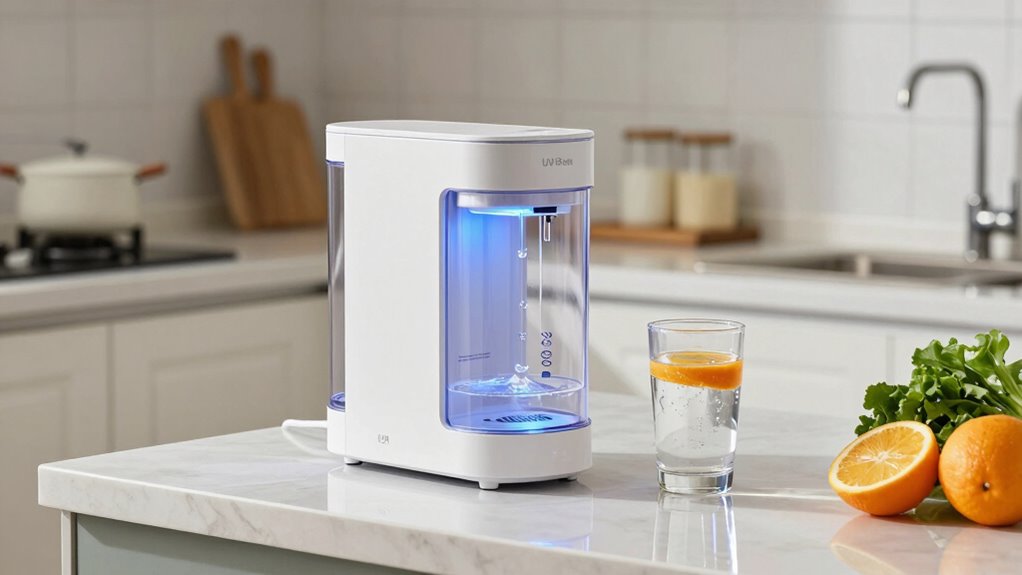
UV water purifiers have become a popular choice for guaranteeing clean and safe drinking water, especially in areas where contamination is a concern. If you’re someone who cares about water safety and wants to protect your family from harmful microorganisms, understanding how UV light technology works can help you decide if a UV water purifier is right for your home. These devices use ultraviolet light to disinfect water, effectively destroying bacteria, viruses, and other pathogens without the need for chemicals or added filters. This method is quick, efficient, and environmentally friendly, making it an attractive option for home use.
When you turn on a UV water purifier, you expose the water to high-intensity UV light, which penetrates the cell walls of microorganisms. This exposure damages their DNA, rendering them incapable of reproduction and infection. As a result, the water you drink is considerably safer, reducing the risk of waterborne diseases. Because UV light doesn’t introduce any chemicals into the water, it preserves the water’s natural taste and mineral content, which is often a concern with chemical disinfection methods. This makes UV purifiers especially appealing if you prefer clean, unaltered water straight from the tap or well.
In terms of water safety, UV purifiers are particularly effective against bacteria like E. coli, cholera, and cryptosporidium, as well as many viruses. However, they do have limitations. UV light cannot remove physical impurities such as sediments, dirt, or chemical contaminants like pesticides and heavy metals. That means, if your water source has these issues, a UV water purifier should be used in conjunction with a filtration system to guarantee complete water safety. Also, the effectiveness of UV purification depends on the clarity of the water; if the water is cloudy or contains suspended solids, the UV light may not penetrate fully, reducing its disinfecting power.
Choosing a UV water purifier for your home can be a wise investment if water safety is a priority. They’re low maintenance—usually just requiring periodic replacement of the UV bulb—and operate silently without adding any chemicals. If you want peace of mind knowing that your drinking water is free from harmful microorganisms, UV technology offers a reliable, eco-friendly solution. Just remember, for total water safety, consider pairing it with other filtration methods to address physical and chemical contaminants. This combination ensures you and your family enjoy pure, safe water every day.
Adding proper water treatment methods can further enhance your water safety, ensuring comprehensive protection against all potential contaminants.
Frequently Asked Questions
How Often Should UV Water Purifiers Be Serviced or Replaced?
You should service your UV water purifier every 6 to 12 months, following the maintenance schedule suggested by the manufacturer. Replacement indicators include a decrease in water quality, cloudy water, or a burnt smell. Regular maintenance guarantees peak performance, so keep an eye out for these signs and replace the UV bulb or the entire unit as recommended. Staying proactive helps keep your water safe and pure for juicing.
Are UV Purifiers Effective Against Chemical Contaminants?
UV purifiers are not effective against chemical contaminants because they primarily target biological safety by destroying bacteria and viruses through ultraviolet light. For chemical filtration, you’ll need activated carbon filters or other chemical-specific treatments. Relying solely on UV will leave chemical pollutants in your water. To guarantee safe, clean water, combine UV purification with chemical filtration methods, especially if your water source contains harmful chemicals or pollutants.
Can UV Water Purifiers Remove Heavy Metals From Water?
Did you know that over 10 million Americans drink water contaminated with heavy metals? UV water purifiers can’t remove heavy metals or chemical contaminants, as UV light only inactivates bacteria and viruses. If you’re concerned about heavy metals, you need a filter specifically designed for that, like activated carbon or reverse osmosis systems. UV purifiers are great for pathogens but aren’t effective for chemical or heavy metal removal.
Do UV Purifiers Require Electricity to Operate Continuously?
Yes, UV water purifiers require electricity to operate continuously. This energy consumption is necessary for the UV lamp to generate ultraviolet light, which destroys bacteria and viruses. You should also consider maintenance frequency since the UV lamp needs regular replacement to stay effective. While they do consume some energy, many models are designed to be energy-efficient, making them a practical choice for ensuring clean water without markedly increasing your electricity bill.
Are UV Water Purifiers Suitable for Well Water or Only Municipal Sources?
You might be surprised, but UV water purifiers are suitable for well water, not just municipal sources. They effectively kill bacteria and viruses in both types, ensuring safe drinking water. While municipal water often benefits from additional filtration, well water can be treated with UV systems to eliminate pathogens. This makes UV purifiers versatile, providing the advantages of clean, pathogen-free water whether your source is a well or city supply.
Conclusion
So, if you’re serious about transforming your home juicing into a health-boosting powerhouse, a UV water purifier might just be your secret weapon. Think of it as a superhero heroically zapping away 99.9% of harmful germs—making your water as pure as mountain spring water. Don’t let contaminated water sabotage your juice game; invest in a UV purifier and let your drinks shine with the kind of freshness that could outshine the sun itself!