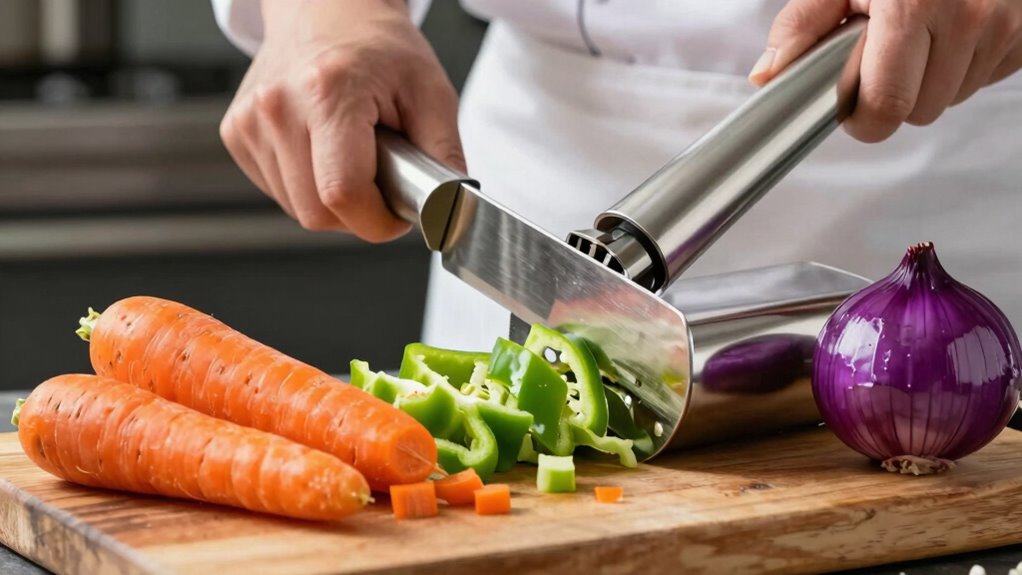

Vegetable choppers can speed up prep when you use an electric model for large quantities or quick tasks, saving time and effort. However, they can slow you down if you struggle with setup, cleaning, or safety concerns, especially with manual tools that require more hand work. Choosing the right type and maintaining safety protocols can help you avoid delays. If you continue, you’ll discover more tips to make your vegetable prep faster and safer.

Get kitchen staples and gadgets delivered free with Prime
- Fast, free delivery on millions of items
- Prime Video, Amazon Music and more included
- Member-only deals all year
Key Takeaways
- Electric choppers speed up large-volume prep but may slow down small tasks due to setup and cleaning time.
- Manual choppers are quick for small, simple tasks but can become slow with repetitive or large-scale chopping.
- Speed depends on the user’s familiarity; experienced users can work faster with manual models, while electric models offer consistent speed.
- For quick, frequent small prep jobs, manual choppers are more efficient; for bulk or repetitive tasks, electric choppers save time.
- Cleaning and safety checks can slow down overall prep time, especially with electric models requiring more maintenance.
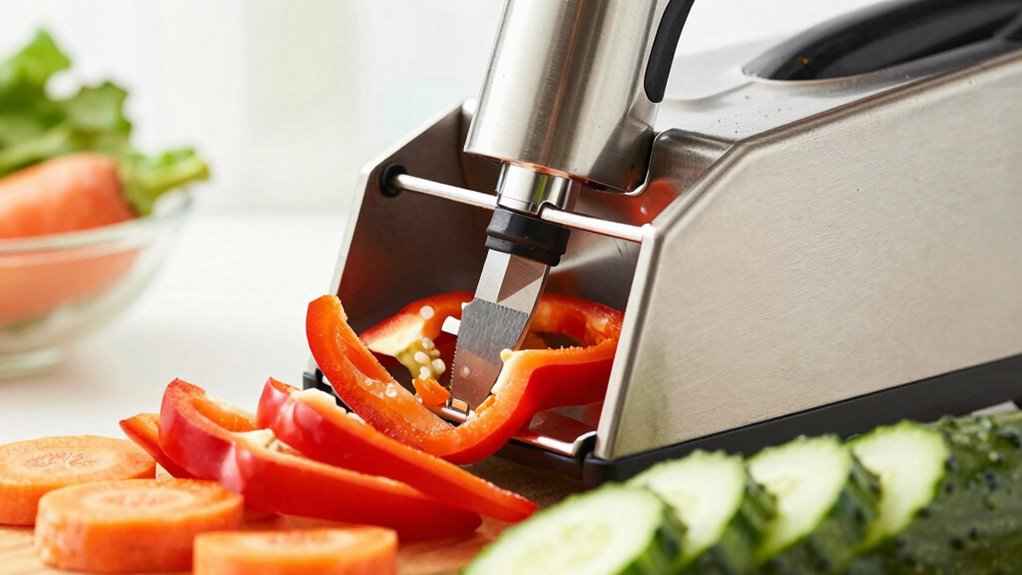
Preparing vegetables can be time-consuming, but a good vegetable chopper can make the process faster and easier. When choosing a chopper, you’ll notice options for manual versus electric models. Manual choppers are simple, relying on your hand to operate blades that chop vegetables as you press or pull a lever. They’re usually compact, easy to clean, and don’t require electricity. Electric choppers, on the other hand, use a motor to automate the chopping process, allowing you to prepare large quantities quickly with minimal effort. They’re ideal for busy kitchens or when chopping multiple vegetables at once. However, each type has its benefits and drawbacks that can influence your decision.
Manual vegetable choppers excel in portability and control. You can use them anywhere without worrying about power outlets or cords. They’re typically safer because they lack moving parts that can cause injuries if mishandled. Still, safety considerations remain important. Always handle blades carefully during cleaning or assembly, and ensure the device is stable on your work surface before pressing down. Electric choppers eliminate the need for manual effort, making them a good choice if you frequently chop large amounts or have joint issues. But they come with their own safety concerns. The blades inside electric models can be very sharp, and improper handling during cleaning or maintenance can lead to cuts. Additionally, the risk of electrical hazards exists if the device isn’t used properly or if it’s damaged.
When it comes to safety considerations, manual models tend to be safer overall, especially for casual use or in households with children. They usually feature safety locks or mechanisms that prevent accidental activation. Electric models require more caution—ensure the device is unplugged before cleaning or adjusting blades, and always follow the manufacturer’s instructions. If you’re not attentive, you might accidentally turn on the electric chopper when opening or cleaning it, which could cause injuries. Understanding the safety features of each type can help prevent accidents and ensure a safer cooking experience. Additionally, considering the user-friendliness of each device can impact your overall satisfaction and safety during use. Choosing a model with easy assembly and cleaning features can also streamline your prep process and reduce potential safety hazards. A knowledge of proper safety protocols can help prevent mishaps and extend the lifespan of your equipment. Knowing the durability and quality of your chopper can help prevent malfunctions and ensure long-term safety.
Ultimately, your choice depends on your needs and comfort level. If you value simplicity, portability, and safety, a manual chopper might suit you best. If you prioritize speed and efficiency for larger prep jobs, an electric model could be worth the investment. Just keep safety considerations in mind with either option—use blades carefully, follow instructions, and keep your equipment in good condition. Either way, a good vegetable chopper can considerably reduce your prep time and make cooking more enjoyable.
electric vegetable chopper for large quantities
As an affiliate, we earn on qualifying purchases.
As an affiliate, we earn on qualifying purchases.
Frequently Asked Questions
Are Vegetable Choppers Dishwasher Safe?
Most vegetable choppers are dishwasher safe, but you should check the manufacturer’s instructions first. They typically feature durable blades designed to withstand cleaning, but hand washing can prolong blade durability. For storage, dry all parts thoroughly and store in a dry, safe place. Avoid overcrowding in the dishwasher to prevent damage, and disassemble parts for a thorough clean, ensuring your chopper stays sharp and ready for quick prep.
How Do I Clean Hard-To-Reach Chopper Blades?
Ever lost track of how to clean those hard-to-reach chopper blades? It’s simple—use a small brush or toothbrush to gently scrub away food particles, ensuring blade maintenance and safety tips are followed. For stubborn spots, soak the blades in warm, soapy water first. Always handle blades carefully to avoid cuts. Regular cleaning keeps your chopper safe, sharp, and ready for quick prep, saving you time in the kitchen.
Can Vegetable Choppers Handle Frozen Vegetables?
Vegetable choppers can handle frozen vegetables, but you might need to let them thaw slightly for better chopping consistency. Frozen veggies tend to be firmer, which can strain the blades or cause uneven cuts if they’re too hard. To prevent damaging your chopper, partially thaw or cut frozen vegetables into smaller pieces before chopping. This ensures smoother processing and maintains the chopper’s efficiency and longevity.
What Safety Precautions Should I Take While Using?
Think of your vegetable chopper as a trusty sword—handle it with care. Always wear safety gear like cut-resistant gloves and keep your fingers clear of blades. Make certain proper storage—store blades safely away when not in use to avoid accidents. Before chopping, double-check that everything’s assembled correctly. By respecting these precautions, you turn a potentially dangerous tool into a culinary ally, keeping your kitchen safe and efficient.
Do Choppers Work Well With All Vegetable Sizes?
Vegetable choppers work best with medium-sized vegetables, as small ones can slip through or get stuck, reducing chopping efficiency. Larger vegetables might need to be cut into smaller pieces first for smoother processing. If you choose appropriately sized vegetables, you’ll enjoy quicker, more uniform chopping. Keep in mind, matching the vegetable size to your chopper’s capacity helps maximize chopping efficiency and prevents jams or delays during prep.
Conclusion
In the end, vegetable choppers can be your trusty sidekick, making prep work feel like a breeze when they’re in sync with your needs. But sometimes, they might play hard to get, slowing down your rhythm instead. Think of them as your kitchen’s little dance partners—when they move smoothly, your meal prep flows effortlessly. With a bit of patience and a good understanding, you’ll find the perfect rhythm, turning prep time into a more enjoyable, less chore-like experience.
Halloween Picks
halloween
As an affiliate, we earn on qualifying purchases.