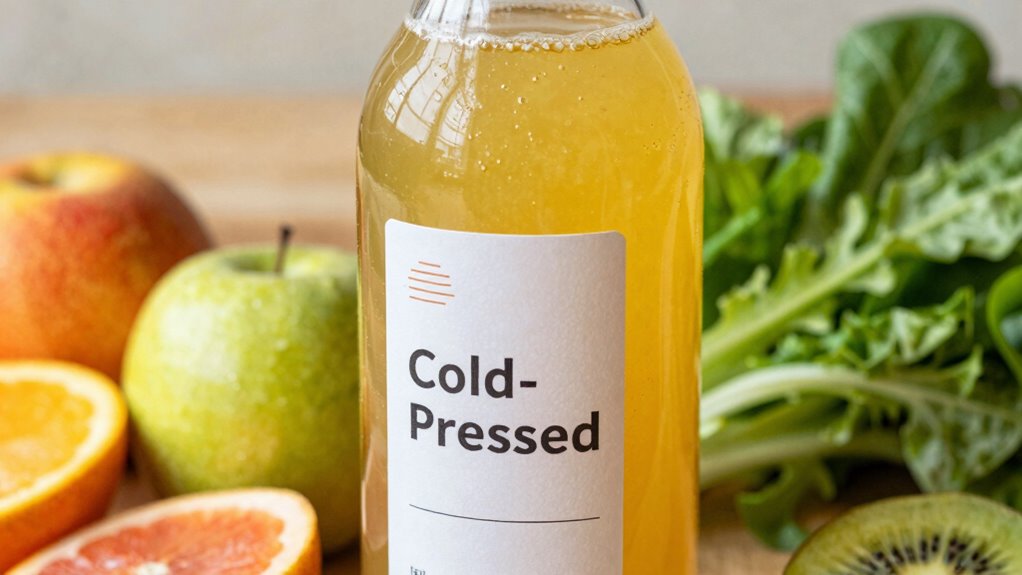

When you see “cold-pressed” on modern labels, it means the product was made using a mechanical process without heat or chemicals, usually below 120°F. This method preserves delicate nutrients like vitamins, enzymes, and antioxidants, resulting in richer flavors and higher quality. Since “cold-pressed” isn’t strictly regulated, check if the product clearly states the process to verify authenticity. Keep exploring to learn more about how this natural process benefits your health and environment.

Get kitchen staples and gadgets delivered free with Prime
- Fast, free delivery on millions of items
- Prime Video, Amazon Music and more included
- Member-only deals all year
Key Takeaways
- “Cold-pressed” indicates the extraction method uses mechanical pressure without heat or chemicals, preserving nutrients.
- Labels should specify “cold-pressed” since the term is not regulated; look for transparency and detailed process info.
- Cold-pressed products maintain higher levels of enzymes, vitamins, and antioxidants, offering superior nutritional benefits.
- The process is more eco-friendly and sustainable, often reflecting in premium pricing and quality.
- Clear labeling helps consumers verify authenticity and distinguish cold-pressed items from processed alternatives.
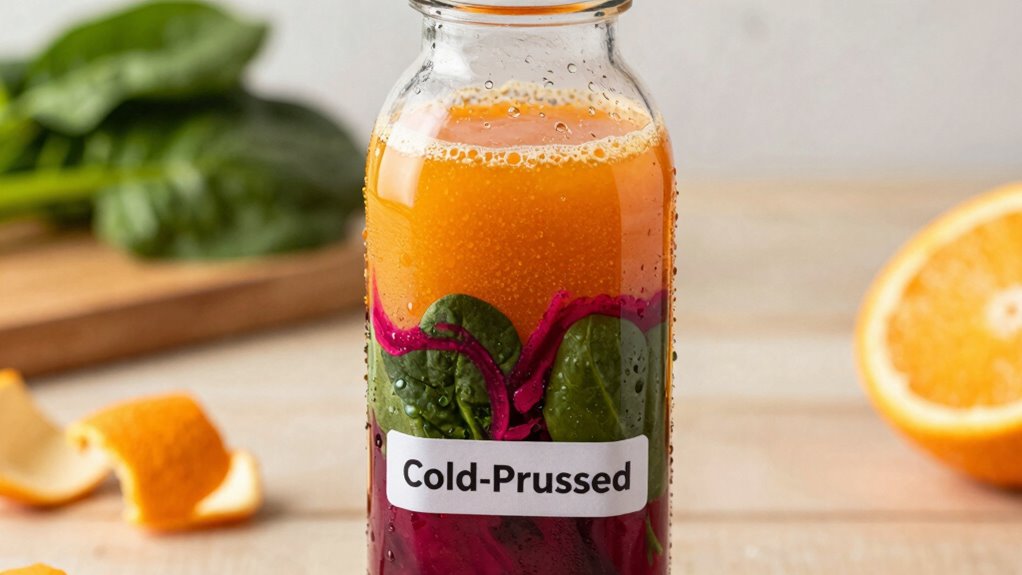
Have you ever wondered what “cold-pressed” truly means on modern labels? When you see that term on a bottle of oil or juice, it hints at a specific way the product was made. The extraction process is central to understanding what makes cold-pressed products different from others. Unlike methods that use heat or chemicals, cold-pressing involves mechanically pressing the ingredients to extract the liquid. This process typically uses a hydraulic or screw press to apply pressure without any added heat, usually keeping the temperature below 120°F (49°C). By avoiding heat, the process ensures that the natural qualities of the ingredients are preserved. You’re not just getting a liquid; you’re getting a product that retains more of the original nutrients.
Cold-pressed products are made by mechanically pressing ingredients below 120°F, preserving nutrients and natural flavors.
Because of this extraction process, cold-pressed products tend to have a higher nutritional value. Heat can break down delicate nutrients like enzymes, vitamins, and antioxidants, which are abundant in raw, unprocessed ingredients. When you choose cold-pressed oils or juices, you’re opting for a product that maintains more of these beneficial compounds. For example, in cold-pressed oils like olive or coconut, you’ll find a richer flavor and a higher concentration of nutrients compared to their refined counterparts. Similarly, cold-pressed juices retain more vitamins and enzymes, making them potentially more healthful and vibrant in taste. This preservation of nutrients is one of the main reasons many health-conscious consumers prefer cold-pressed options. Additionally, the extraction method used in cold-pressing is often considered more environmentally friendly because it avoids the use of chemicals and minimizes waste. Eco-friendly practices in cold-pressing also contribute to reducing the environmental impact of production, which many consumers find appealing. Incorporating sustainable production methods can further enhance the appeal of cold-pressed products to environmentally conscious buyers. As a result, consumers increasingly seek out products that are both nutritious and eco-friendly, reinforcing the importance of understanding cold-pressed.
However, it’s important to recognize that the term “cold-pressed” isn’t a regulated label, so some companies might use it loosely. To truly benefit from the extraction process and nutritional value, look for products that specify that they’re cold-pressed and check for transparency about their manufacturing. You’ll notice that cold-pressed items often come with a richer aroma and more intense flavor because the natural oils and juices haven’t been altered by heat or chemicals. The process also tends to be slower and more costly, which is reflected in the price, but many believe the nutritional benefits justify the premium. Moreover, clarity in labeling can help ensure that you’re truly getting a cold-pressed product rather than a product simply marketed as such.
In short, understanding what “cold-pressed” means helps you make smarter choices. It signals a method of extraction that emphasizes preserving the natural goodness of the ingredients, leading to products that are richer in nutrients and flavor. When you pick cold-pressed, you’re choosing a product that’s closer to its raw, natural state, giving you more of the health benefits you seek in your diet.
cold-pressed extra virgin olive oil
As an affiliate, we earn on qualifying purchases.
As an affiliate, we earn on qualifying purchases.
Frequently Asked Questions
How Does Cold-Pressed Differ From Expeller-Pressed?
Cold-pressed differs from expeller-pressed primarily in their extraction process. Cold-pressed oils use minimal heat, preserving more nutrients, while expeller-pressed oils involve mechanical pressure that generates some heat, which can slightly reduce nutritional benefits. This means cold-pressed oils generally retain more antioxidants and vitamins, making them a healthier choice. If you want maximum nutritional benefits, opt for cold-pressed, but both methods avoid chemical solvents.
Is Cold-Pressed Oil Always Healthier Than Processed Oils?
Cold-pressed oil often offers more health benefits because its production methods preserve nutrients better than processed oils. Since it’s extracted without heat or chemicals, it retains natural antioxidants and vitamins, making it a healthier choice. However, not all cold-pressed oils are automatically healthier; quality and source matter too. Always check labels and opt for reputable brands to guarantee you’re getting the maximum health benefits from your oil.
Can Cold-Pressed Labels Be Misleading or Inaccurate?
Like a clear window into a hidden world, cold-pressed labels can sometimes be misleading or inaccurate. You need to prioritize label transparency and stay alert to false promises. Consumer awareness is your shield, helping you decode marketing tricks and identify genuine quality. Don’t just trust the label—look for certifications and ask questions. Your vigilance guarantees you choose truly healthy options, avoiding the illusion of purity that some labels try to create.
What Temperature Is Considered “Cold” in Cold-Pressing?
Cold-pressing typically occurs at temperatures below 120°F (49°C), ensuring minimal heat exposure. This low temperature helps preserve nutrients and flavor, making your oil or juice richer and more vibrant. By keeping the temperature “cold,” producers retain more of the natural nutrients and authentic flavor profile, which often gets lost in high-heat processing. So, when you see “cold-pressed,” expect a product that’s nutrient-dense and full of fresh flavor.
Are All Cold-Pressed Oils Unrefined?
You might think all cold-pressed oils are unrefined, but that’s not always the case. Cold-pressed oils generally retain more nutrients and flavor because they’re processed without heat or chemicals—think of it as keeping the essence intact. However, some cold-pressed oils undergo minimal refining to improve clarity or shelf life while still preserving maximum nutrient retention and flavor. Always check labels to be sure about the level of refinement.
Conclusion
Understanding what “cold-pressed” truly means helps you make smarter choices on labels. For instance, if you pick a cold-pressed olive oil, you’re getting a product that’s minimally processed and retains more nutrients. Imagine choosing that over a heavily processed oil—your salads taste better, and your body benefits more. Next time you shop, look beyond the buzzwords and pick what’s genuinely better for your health. After all, informed choices lead to a healthier you.
Fall Picks
fall essentials
As an affiliate, we earn on qualifying purchases.