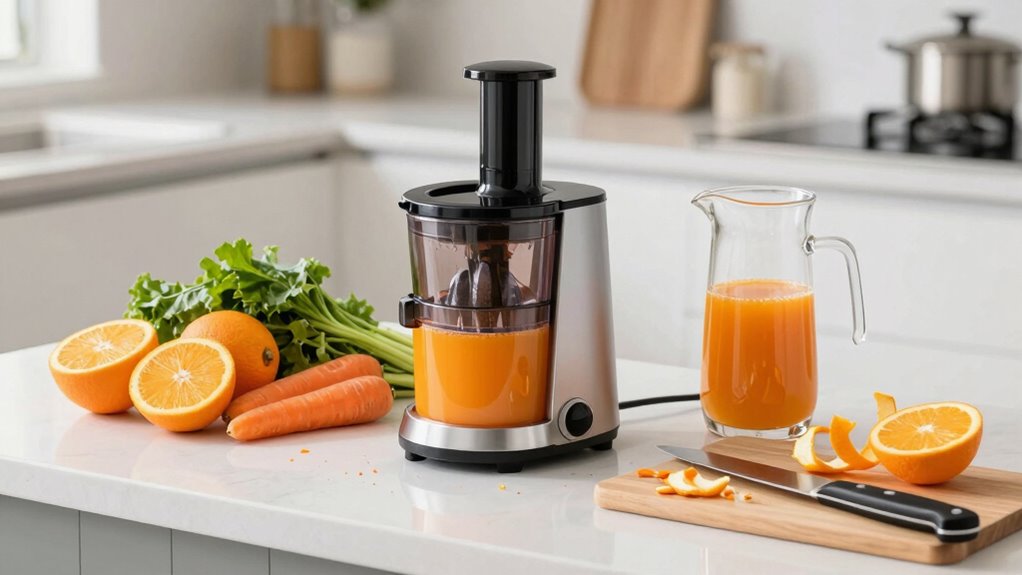

To optimize your juicing process, start with fresh, ripe fruits and vegetables, washing them thoroughly to remove dirt and pesticides. Cut produce into manageable pieces to improve machine efficiency and reduce strain. Consistently disassemble and clean your juicer after each use to guarantee safety and maintain performance. Proper prep and maintenance may take a bit of time, but they result in better-tasting, healthier juice. Keep these tips in mind, and you’ll become more confident—there’s plenty more to explore ahead.

Get kitchen staples and gadgets delivered free with Prime
- Fast, free delivery on millions of items
- Prime Video, Amazon Music and more included
- Member-only deals all year
Key Takeaways
- Choose fresh, ripe produce with vibrant color and firmness for maximum juice and flavor.
- Wash all fruits and vegetables thoroughly to remove dirt, pesticides, and bacteria.
- Cut produce into manageable pieces to improve juicer efficiency and reduce strain on the machine.
- Disassemble and clean the juicer parts after each use to maintain hygiene and performance.
- Regularly inspect and maintain your juicer to ensure consistent, high-quality juice and longevity.
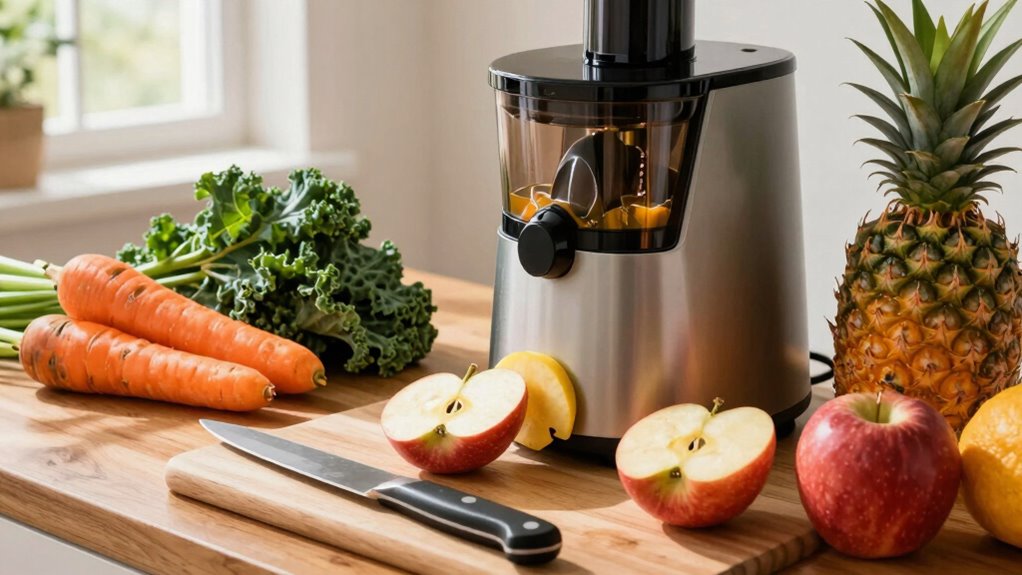
Getting your juicer ready before you start can make the entire process smoother and more efficient. The first step is to think about your fruit selection. Pick fresh, ripe fruits for the best flavor and maximum juice yield. Apples, oranges, and carrots are popular choices because they juice easily and produce a lot of liquid. If you want a more nutrient-packed drink, include vegetables like kale or cucumber. Wash everything thoroughly to remove dirt, pesticides, and bacteria. Proper fruit selection guarantees your juice tastes great and is safe to consume, so don’t rush this step. When choosing your fruits, look for firmness and vibrant color, as these are signs of freshness. Avoid bruised or overripe produce, which can result in a watery or off-flavor juice. Cutting the fruits into manageable pieces will also help your juicer work more efficiently, reducing strain on the machine and speeding up the process.
Once you’ve selected and prepared your produce, focus on cleaning techniques. Clean your fruits and vegetables thoroughly under cold running water, using a brush if needed for tougher skins like apples or potatoes. This removes surface contaminants and dirt that can clog your juicer or alter the flavor. Before feeding the produce into your juicer, check the equipment itself. Make sure all parts are clean and dry, especially the feeding chute and juice containers. Residual pulp or sticky substances from previous uses can interfere with juice extraction and affect taste. Regular cleaning techniques involve disassembling your juicer after each use and washing all removable parts with warm, soapy water. Some parts may be dishwasher safe, but always double-check your manufacturer’s instructions to avoid damaging delicate components. For a more thorough clean, soak parts in vinegar or lemon water to break down any stubborn residue. This helps maintain hygiene and keeps your juicer functioning at its best over time. Additionally, paying attention to equipment maintenance can extend the lifespan of your juicer and ensure consistently high-quality juice. Proper maintenance also helps prevent buildup that can hinder performance and flavor, ensuring your juicer continues to operate smoothly.
Preparing your ingredients properly and maintaining a clean machine are essential for a smooth juicing experience. Taking the time to select the right fruits, clean them thoroughly, and keep your equipment in top shape guarantees you get the best-tasting juice with minimal effort. These steps might seem simple, but they greatly impact the quality of your final product and the longevity of your juicer. The more you pay attention to your prep and cleaning techniques, the more enjoyable and efficient your juicing routine will be. Plus, you’ll be confident that every glass of juice you make is fresh, flavorful, and safe to drink.
As an affiliate, we earn on qualifying purchases.
Frequently Asked Questions
How Do I Clean My Juicer Quickly After Use?
After you finish juicing, rinse your juicer parts immediately with warm water to prevent pulp from drying and sticking. Use cleaning tips like a soft brush or sponge to quickly remove residue, focusing on blades and mesh screens. For quick maintenance, disassemble, rinse, and dry each part thoroughly. Doing this right away makes cleanup faster and easier, ensuring your juicer stays in top condition for your next healthy drink.
What Fruits and Vegetables Are Best for Beginner Juicers?
Imagine your juicing journey as planting seeds in a garden; start with easy-to-grow, vibrant favorites. For beginner juicers, softer fruits like apples and pears, paired with gentle vegetables like cucumbers and carrots, are your best allies. Experiment with fruit combinations like berries and citrus for flavor bursts, while vegetable selection should focus on mild-tasting options. These choices make your first juicing experience smooth, enjoyable, and full of delicious, nourishing harvests.
How Do I Store Fresh Juice to Prevent Spoilage?
To prevent spoilage, store your fresh juice in airtight storage containers, preferably glass or BPA-free plastic. Fill them to the top to minimize air exposure, which helps with juice preservation. Keep the containers refrigerated and consume the juice within 24-48 hours for maximum freshness. Always seal tightly after each use, and consider adding a squeeze of lemon to extend shelf life. Proper storage guarantees your juice stays fresh and nutritious longer.
Can I Juice Frozen Produce Directly?
You can juice frozen produce directly, but keep in mind, it might dilute your juice or affect the texture. Using frozen produce is a great time-saver and preserves nutrients, making it a handy juicing tip. Just thaw slightly or blend it first to prevent straining your juicer. This way, you get fresh-tasting juice without waiting for produce to thaw completely, saving you time and effort.
How Often Should I Replace Juicer Parts for Optimal Performance?
You should replace juicer parts based on your juicer’s lifespan and a consistent replacement schedule. Typically, check parts like blades, filters, and seals every 6 to 12 months, depending on usage. Regular replacement guarantees peak performance, prevents breakdowns, and extends your juicer’s life. Follow your manufacturer’s guidelines, and don’t wait for signs of wear—proactive maintenance keeps your juicer running smoothly and efficiently.
Conclusion
In the end, understanding prep time isn’t just about speeding up your juice-making but about optimizing your health routine. While some believe longer prep preserves more nutrients, recent studies suggest that quick, efficient prep can retain similar benefits if done properly. So, don’t get caught up in over-preparation—trust your instincts and streamline your process. Ultimately, consistency and enjoyment matter more than perfect timing, turning juicing into a sustainable, rewarding habit.
NFL season / tailgating Picks
team gear
As an affiliate, we earn on qualifying purchases.