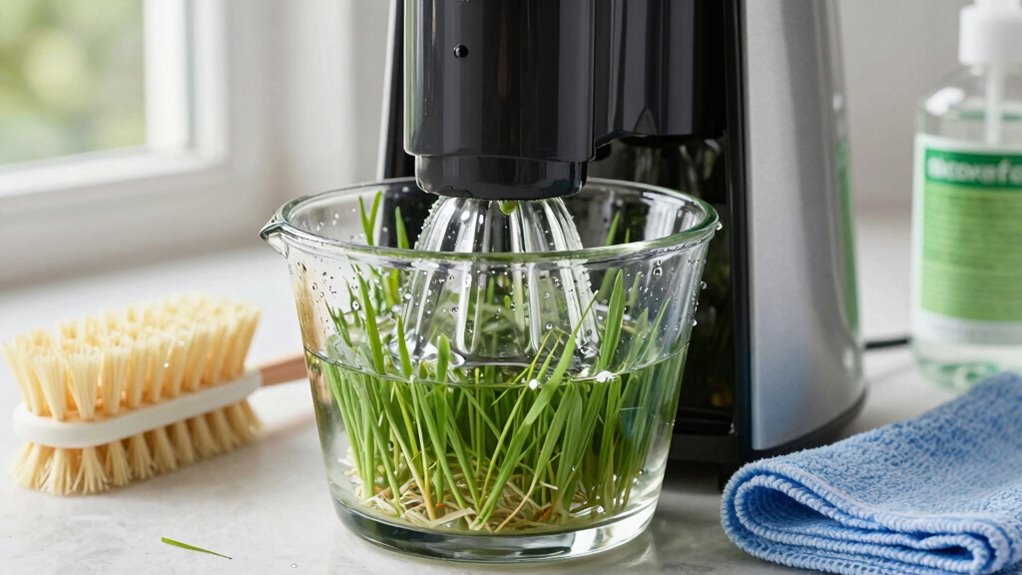

To prevent funky smells in your wheatgrass, you should develop a consistent cleaning routine. Rinse juicers, blenders, and planting containers thoroughly after each use, removing any plant residue that can decay and cause odors. Sanitize your tools regularly with food-safe solutions to kill bacteria and mold. Keeping your growing area clean and well-ventilated also helps prevent unpleasant smells. By maintaining proper hygiene, you’ll ensure fresh-tasting juice and healthy wheatgrass—learn more to keep your process spotless.
Key Takeaways
- Rinse all juicing and planting tools immediately after use to remove organic residue and prevent odor buildup.
- Sanitize equipment regularly with food-safe solutions to eliminate bacteria and mold that cause foul smells.
- Keep the growing area clean, well-ventilated, and properly maintained to prevent mold and unpleasant odors.
- Follow proper watering, soil drainage, and light practices to avoid rotting and mold formation in wheatgrass.
- Maintain a consistent cleaning routine to ensure fresh, nutrient-rich wheatgrass and a odor-free juicing environment.
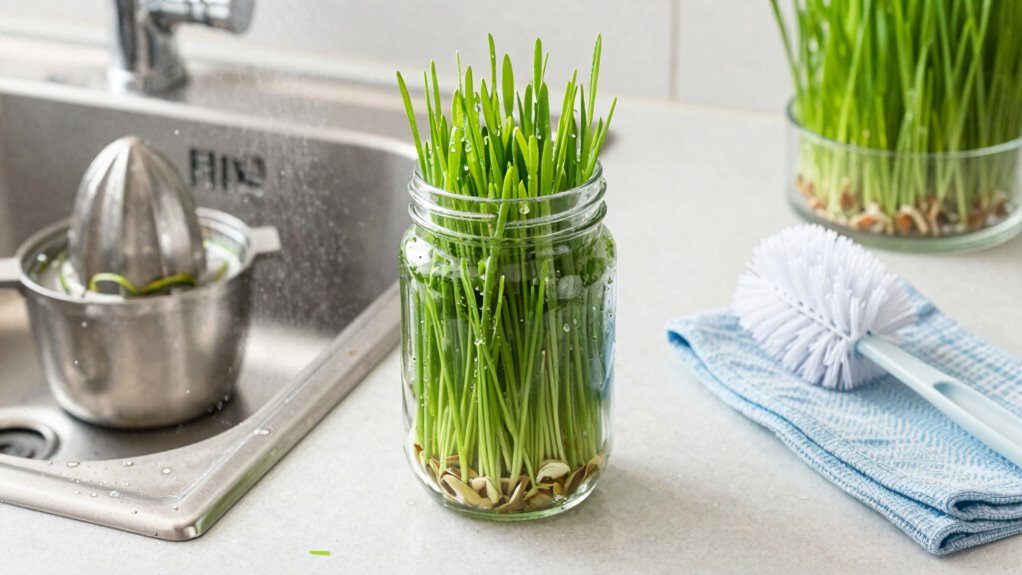
Wheatgrass juicing has gained popularity as a simple way to boost your overall health and energy. But to get the most out of your wheatgrass, you need to pay attention to how you care for it, especially when it comes to maintaining a clean routine that prevents funky smells. Proper cleaning isn’t just about hygiene; it plays a vital role in guaranteeing your wheatgrass stays fresh and nutrient-rich. When you keep your equipment clean, you improve nutrient absorption, allowing your wheatgrass to develop the vibrant green color and potent health benefits you’re after. Plus, a clean growing environment helps prevent mold, bacteria, and foul odors that can develop from leftover plant debris or stagnant moisture.
Focusing on plant growth techniques is essential for healthy wheatgrass, but equally important is establishing a cleaning routine that keeps your setup sanitary. After each harvest, rinse your juicer, blender, or any planting containers thoroughly to remove residual plant material. This step prevents the buildup of organic matter that could decompose and cause unpleasant smells. Regularly sanitizing your tools with mild, food-safe solutions further minimizes the risk of bacterial growth, which can compromise both the flavor and safety of your juice. When you practice consistent cleaning, you create an ideal environment for your wheatgrass to thrive, which directly influences the nutrient absorption process. Healthy, well-maintained plants absorb nutrients more efficiently, resulting in a richer, more potent juice. Proper cleaning routines are crucial for maintaining the quality and safety of your wheatgrass.
In addition to cleaning your equipment, pay close attention to your growing conditions. Use proper plant growth techniques, like ensuring good soil drainage, adequate light, and proper watering schedules. These practices help your wheatgrass stay healthy and free from disease, reducing the chances of foul odors developing from rotting or mold. When your wheatgrass grows under perfect conditions, it’s less likely to develop the unpleasant smells associated with overwatering or poor ventilation. Consistently cleaning your growing area and harvest tools ensures that your wheatgrass remains fresh and free of contaminants, which is key to preventing funkiness in both smell and taste.
Ultimately, a disciplined cleaning routine combined with sound plant growth techniques keeps your wheatgrass fresh, nutritious, and odor-free. This not only enhances your juicing experience but also ensures you’re consuming a pure, healthy product. When you prioritize cleanliness and proper growth methods, you set yourself up for success, enjoying the full benefits of wheatgrass without the annoyance of funky smells. It’s a straightforward, effective way to maintain the quality of your wheatgrass and enjoy the vibrant, energizing juice every time.
Frequently Asked Questions
How Often Should I Clean My Juicer for Optimal Hygiene?
You should clean your juicer after every use to maintain ideal hygiene practices. Establishing a consistent cleaning schedule prevents residue buildup and funky smells. Rinse all parts thoroughly and use a brush to remove any pulp or juice stuck in crevices. Regular cleaning not only keeps your juicer in top condition but also guarantees your juice remains fresh and safe to drink, supporting good health and cleanliness.
Can Using Filtered Water Reduce the Smell During Juicing?
Using filtered water can definitely help reduce odor during juicing. It eliminates impurities and minerals that might contribute to funky smells, keeping your wheatgrass fresher for longer. When you juice, opt for filtered water to minimize odor buildup and promote a cleaner, more pleasant juicing experience. Regularly cleaning your equipment also enhances odor reduction, ensuring your juicer stays fresh and your juice tastes great every time.
Are There Specific Storage Tips to Prevent Mold Growth?
Mold thrives where moisture persists, so you must be vigilant. Store your wheatgrass in airtight storage containers that prevent excess moisture, and keep them in a cool, dry place. Use moisture control packets or silica gel to absorb residual humidity. Regularly check for any signs of mold, and clean containers thoroughly between uses. These simple storage tips help keep your wheatgrass fresh and mold-free, ensuring safe, healthy juice every time.
Does the Type of Wheatgrass Affect Cleaning Frequency?
Yes, the type of wheatgrass can influence your cleaning schedules. Different wheatgrass varieties may have varying moisture levels or growth patterns, requiring you to clean more or less frequently. For instance, denser or more humid varieties might need more regular cleaning to prevent mold and funky smells. Pay attention to your wheatgrass’s specific needs and adjust your cleaning routine accordingly to maintain freshness and avoid contamination.
What Natural Cleaning Agents Are Safest for Juicer Maintenance?
You should use natural cleansers like vinegar or baking soda for your juicer, as they’re safe and effective. These safe disinfectants help eliminate residue and bacteria without harsh chemicals. Mix equal parts water and vinegar or create a baking soda paste for thorough cleaning. Regularly rinsing and wiping down parts with these natural agents will keep your juicer fresh, functioning well, and free from funky smells.
Conclusion
By sticking to a regular cleaning routine, you’ll keep your wheatgrass juicer fresh and free from funky smells—like a breath of spring air for your kitchen. Think of it as giving your machine a spa day after every use, ensuring it runs smoothly and tastes pure. With just a little effort, you’ll enjoy vibrant, healthy juice without the unwanted odors, turning your juicing habits into a invigorating, odor-free ritual.