Before you taste grape juice, your perception of its darkness is influenced by visual cues shaped by lighting, surroundings, and past experiences. Dim lighting makes it appear darker, while vibrant environments can make it seem brighter. Your expectations also play a role: dark purple hues often suggest richness and strong flavor, which influences how you perceive its color. If you continue exploring, you’ll uncover more about how your mind shapes what you see and taste.

Get kitchen staples and gadgets delivered free with Prime
- Fast, free delivery on millions of items
- Prime Video, Amazon Music and more included
- Member-only deals all year
Key Takeaways
- Visual perception is influenced by brain interpretations and expectations based on past experiences and typical grape juice colors.
- Darker hues are associated with stronger flavor or ripeness, affecting perceived darkness before tasting.
- Lighting conditions, such as dim or bright environments, alter how the juice’s color appears visually.
- Cultural and personal associations link dark purple colors with flavor strength or quality, shaping perception.
- Subconscious cues and prior knowledge influence the brain’s processing, making the juice seem darker regardless of its actual color.
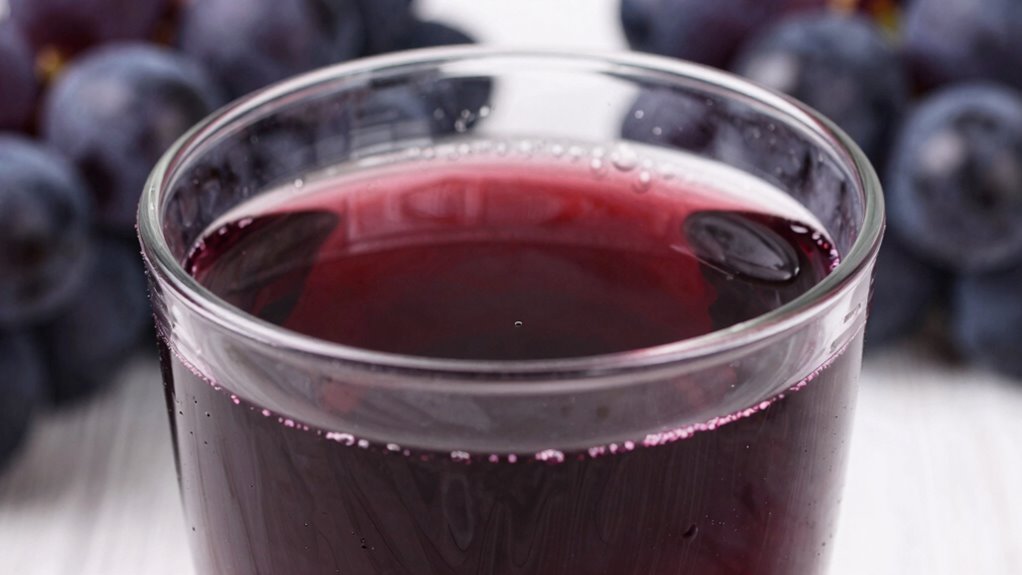
When you pick up a glass of grape juice, you might notice it looks darker than you expected, even before you take a sip. This initial impression is rooted in how your brain perceives color, influenced heavily by your sensory expectations. The color perception of grape juice isn’t just about the liquid itself; it’s shaped by what you anticipate based on past experiences and visual cues. When you see a dark, rich hue, your mind automatically associates it with intense flavor or ripeness, even if the actual taste might be milder. Your expectations set a mental framework that influences how you interpret the visual information before tasting.
Your sensory expectations play a critical role in this perception. Because grape juice is often linked with deep purple or violet shades, your brain automatically expects certain qualities—richness, sweetness, or even a stronger flavor. This mental association causes you to perceive the color as darker or more vibrant than it might objectively be. The contrast between what you see and what you expect can create a kind of perceptual bias, making the juice seem even darker than it really is. This phenomenon demonstrates how your senses don’t operate in isolation but are interconnected with your brain’s anticipations.
Color perception is also affected by the context and lighting conditions. In dim or subdued lighting, the same glass of grape juice can appear darker because your eyes adapt to the environment, reinforcing your perception of depth and richness. Conversely, under bright light, the color might seem less intense, but your expectation remains rooted in the visual cues you’ve learned to associate with grape juice. This interplay between actual color and perceived color shapes your initial impression, influencing your overall experience even before you taste it. lighting conditions can significantly alter how we perceive colors, highlighting the importance of environment in sensory interpretation.
Furthermore, cultural and personal experiences influence what you expect to see in grape juice. If you’ve grown up associating dark purple drinks with strong flavor or high quality, your brain is primed to view darker hues as more desirable or potent. This mental conditioning can make the juice seem darker to align with your expectations, regardless of its true color intensity. In essence, your perception of darkness isn’t solely about the physical properties but also about the context and associations you bring to the experience.
Additionally, recent research shows that visual perception can be strongly influenced by subconscious cues, which further explains why your expectations can alter your perception of color even before tasting. This highlights how your brain processes sensory information in tandem with your prior knowledge and biases. Ultimately, the reason grape juice feels darker before you taste it boils down to a complex interaction between color perception and your sensory expectations. Your brain’s interpretations shape how you see the juice, often leading you to perceive it as darker and richer, even before your taste buds get involved. It’s a fascinating reminder of how much your perceptions are colored—literally and figuratively—by what you expect.
As an affiliate, we earn on qualifying purchases.
Frequently Asked Questions
Does the Color of Grape Juice Affect Its Taste?
The color of grape juice can influence your flavor perception even before you taste it, thanks to visual cues. Darker juice often appears richer and more intense, leading you to expect a stronger flavor. While color doesn’t directly change the actual taste, it shapes your expectations, making the experience more vivid. So, yes, the hue of grape juice impacts how you perceive its flavor, highlighting the power of visual cues in taste.
Are There Health Benefits Linked to Darker Grape Juice?
Darker grape juice often contains higher antioxidant levels, which can boost your health. Studies show these antioxidants, like resveratrol, may support heart health and reduce inflammation. Fermentation effects in darker juices can enhance these benefits, making them more bioavailable. So, by choosing darker grape juice, you’re likely getting more health perks, thanks to its increased antioxidant content that promotes overall well-being.
How Does Lighting Influence the Perception of Grape Juice Color?
Lighting dramatically influences how you perceive grape juice color through visual perception. Under different lighting conditions, like warm or cool light, the hue may appear darker or lighter. According to color psychology, these shifts can evoke specific feelings or expectations about the juice’s flavor and quality. So, your perception of grape juice’s darkness isn’t just about the actual color but also how lighting alters your visual experience.
Can the Color of Grape Juice Indicate Its Freshness?
Yes, the color of grape juice can hint at its freshness, but only if you consider color stability and storage conditions. Bright, vibrant hues often signal freshness, while dull or darkened shades might suggest aging or spoilage. Proper storage preserves color and quality, preventing oxidation and spoilage. So, when you see a lively color, you can feel more confident about its freshness—just remember, storage conditions play a vital role too.
Do Different Grape Varieties Produce Differently Colored Juices?
Yes, different grape varieties produce differently colored juices because their grape skins contain varying amounts of pigments like anthocyanins. During juice extraction, the skin’s pigment influences the juice’s color; darker-skinned grapes produce deeper, richer hues, while lighter-skinned grapes yield paler juices. So, when you see a darker grape juice, it’s often due to the grape skin’s natural color and how much pigment is released during extraction.
Conclusion
So, next time you see that deep, dark hue of grape juice, remember it’s not just a color but a story of ripeness, concentration, and tradition. It’s the richness in its appearance, the promise in its flavor, and the depth in its history. The darkness isn’t just visual; it’s an invitation to explore, taste, and savor what’s hidden beneath the surface. Embrace the mystery, and let your senses uncover what’s truly inside.
Halloween Picks
halloween
As an affiliate, we earn on qualifying purchases.