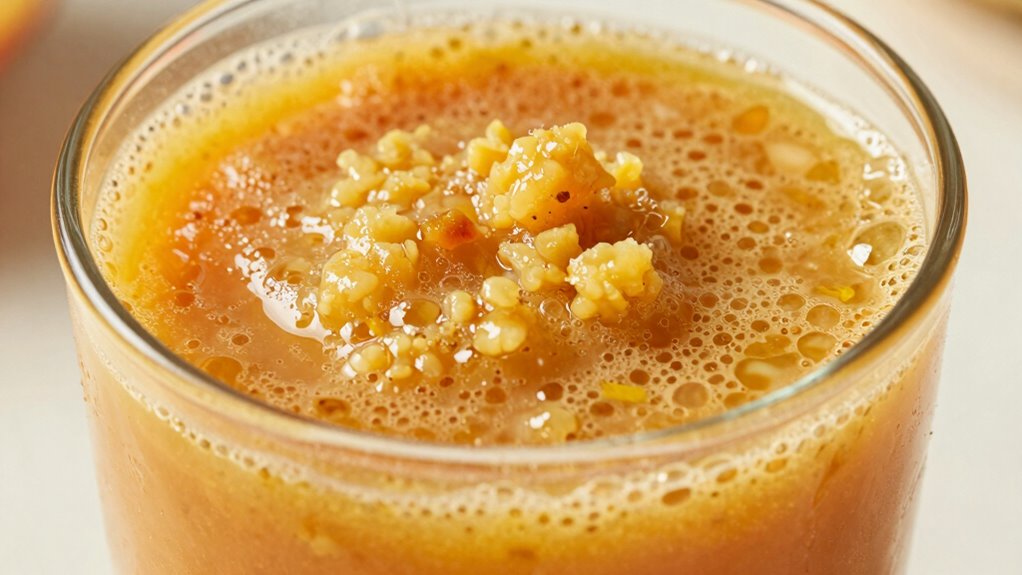

When you ignore texture in your juice recipes, you risk creating an unbalanced mouthfeel that can make the drink unpleasant to sip. Poor texture can cause ingredients to separate or feel gritty, ruining the overall experience. This oversight also impacts flavor and nutritional enjoyment, making your juice less appealing and less beneficial. Paying attention to texture helps make certain your juices are smooth, consistent, and tasty—so if you want to master this art, there’s more to discover ahead.

Get kitchen staples and gadgets delivered free with Prime
- Fast, free delivery on millions of items
- Prime Video, Amazon Music and more included
- Member-only deals all year
Key Takeaways
- Ignoring texture can cause undesirable separation, making the juice appear unappealing and inconsistent.
- Neglecting mouthfeel reduces overall enjoyment, leading to a less satisfying drinking experience.
- Focusing only on flavor without considering texture can result in a watery or gritty final product.
- Poor texture management may compromise the perceived freshness and quality of the juice.
- Inadequate processing techniques can lead to instability and spoilage, causing the recipe to fail.
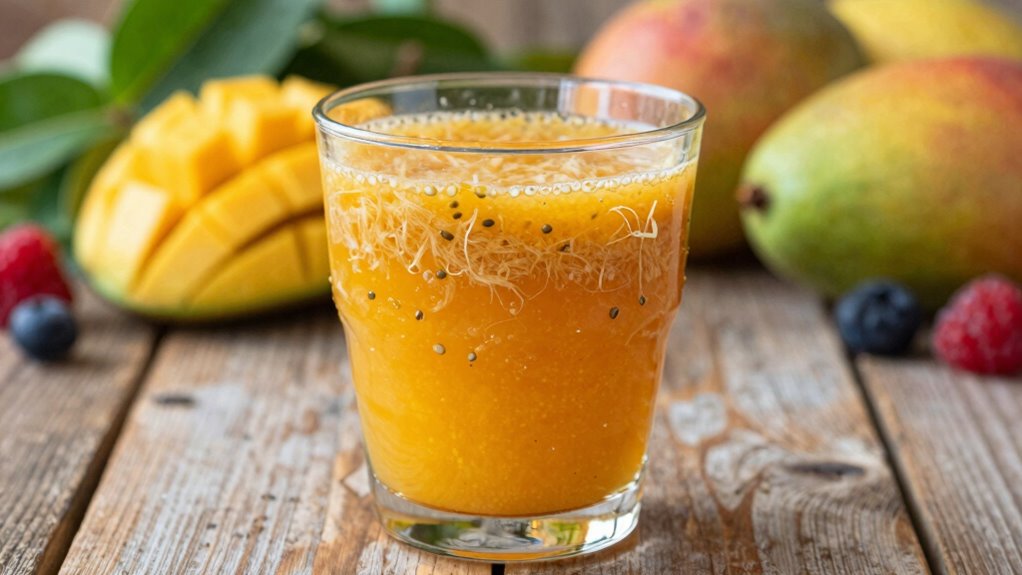
Furthermore, understanding the processing methods involved can help you better control the final texture and nutritional profile of your juice. Incorporating the right techniques can also minimize pulp separation and ensure consistency. In the end, neglecting texture is a common mistake that can cause your juice recipes to fail. It’s tempting to focus solely on flavor combinations and nutritional goals, but the way your juice feels in your mouth makes a huge difference. When you pay attention to texture alongside flavor balance and nutritional content, your drinks become more enjoyable, satisfying, and healthful. Remember, a great juice isn’t just about what’s inside it, but also about how it feels with each sip.
As an affiliate, we earn on qualifying purchases.
Frequently Asked Questions
How Can I Improve Juice Texture Without Changing Ingredients?
You can improve juice texture by controlling fruit pulp and pulp removal. If your juice feels too thin or watery, try leaving a bit more pulp in the mixture for added body and richness. Conversely, if it’s too thick, remove excess pulp to achieve a smoother, more balanced consistency. Experimenting with pulp removal helps you customize the texture to your preference, making your juice more enjoyable and satisfying to drink.
Does Blending Affect Juice Shelf Life?
Blending can dramatically shorten your juice’s shelf life, making it spoil faster than you’d believe! When you blend, juice pectin gets broken down, and pulp filtration becomes trickier, leading to a more complex, unstable mixture. This exposes your juice to oxygen and bacteria, accelerating spoilage. To keep your juice fresh longer, consider minimal blending or proper pulp filtration methods. Otherwise, expect your juice to turn sour and unappetizing in no time!
Are There Specific Fruits That Enhance Texture?
Certain fruits like bananas, avocados, and mangoes enhance texture because their natural pulp adds creaminess and body to your juice. When you do fruit pairing, choose fruits with similar pulp consistency to avoid separation. Managing pulp is vital; too much can make your juice thick and gritty, while too little can make it watery. Balancing these elements ensures a smooth, enjoyable texture every time.
Can Freezing Impact Juice Consistency?
Freezing can impact juice consistency by causing texture changes. Freezing effects often include water expansion, which can break down cell walls and lead to a watery or grainy texture when thawed. To preserve texture, it’s best to freeze juice in airtight containers and consume it promptly after thawing. Proper freezing techniques help with texture preservation, ensuring your juice remains smooth and enjoyable, even after freezing.
What Tools Are Best for Achieving Ideal Texture?
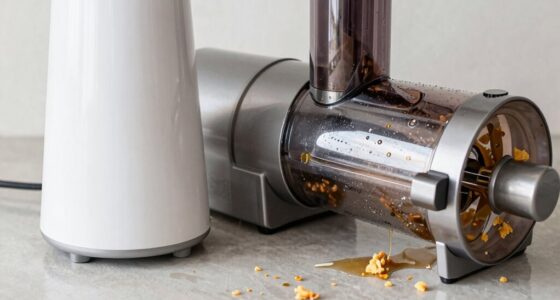
To achieve ideal texture, you need tools that promote perfect pulp control and juice clarity. A high-quality masticating juicer is your best bet, offering smooth, pulp-free results while preserving nutrients. A fine mesh strainer or nut milk bag also helps refine texture by removing excess pulp. Using these tools guarantees your juice is silky-smooth, visually appealing, and thoroughly satisfying, preventing texture troubles and transforming your juice experience.
Conclusion
Remember, paying attention to texture is key to successful juice recipes. Ignoring it is like putting all your eggs in one basket—you risk ending up with a drink that’s either too watery or too pulpy. When you consider the feel and consistency, you’re more likely to create a smooth, enjoyable juice every time. Don’t overlook the importance of texture; it makes all the difference between a good drink and a great one.
NFL season / tailgating Picks
team gear
As an affiliate, we earn on qualifying purchases.