
In juice facilities, identifying critical control points (CCPs) is key to ensuring safety. Focus on steps like raw material inspection, pasteurization, and packaging, setting critical limits such as specific temperatures and times. Regularly monitor these parameters and record results to catch any deviations early. If issues arise, prompt corrective actions help prevent contamination and spoilage. Understanding how to manage these CCPs will guide you toward best practices for safe, high-quality juice production.
Open a free Amazon Business account
Business pricing, bulk buying and tax-exempt orders.
As an affiliate, we earn on qualifying purchases.
Key Takeaways
- Identify critical control points such as raw material inspection, pasteurization, and packaging to prevent microbial hazards.
- Establish critical limits like minimum pasteurization temperature and duration to ensure effective microbial reduction.
- Implement continuous monitoring of critical parameters (e.g., temperature, time) with record keeping for verification.
- Develop corrective actions for deviations to promptly address safety breaches and maintain product integrity.
- Train staff regularly on hygiene practices and control procedures to sustain effective hazard management.
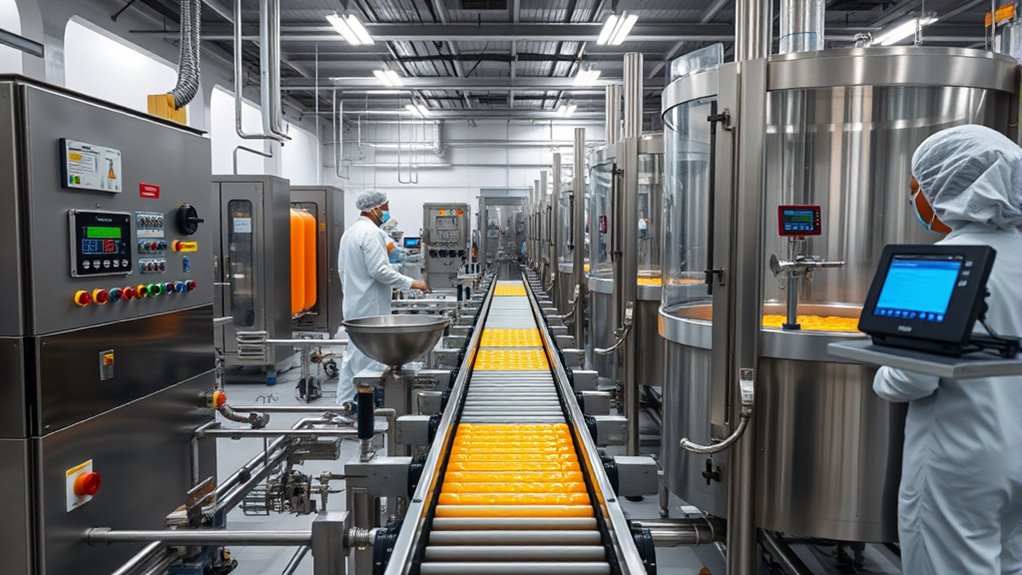
Implementing HACCP (Hazard Analysis and Critical Control Points) is essential for guaranteeing the safety of juice products in your facility. This systematic approach helps you identify potential hazards, establish critical control points, and implement actions to prevent contamination. One of the most vital steps in juice safety is juice pasteurization, which significantly reduces the risk of microbial contamination. By properly pasteurizing your juice, you eliminate harmful bacteria, yeasts, and molds that could cause illnesses or spoilage. HACCP guides you to monitor pasteurization parameters such as temperature and time, ensuring each batch meets safety standards. Proper pasteurization not only guarantees product safety but also extends shelf life, which is crucial for maintaining your brand’s reputation.
Contamination prevention is at the heart of any effective HACCP plan. You need to carefully analyze each step of your juice production process, from raw material receipt to packaging, to identify where contamination could occur. For example, raw fruits and vegetables can carry pathogens, so implementing strict supplier controls and cleaning procedures is essential. Regularly sanitizing equipment, utensils, and contact surfaces prevents cross-contamination. Additionally, controlling environmental factors, such as air quality and personnel hygiene, helps reduce the introduction of contaminants into your process. Incorporating proper storage conditions and handling practices ensures that your juice remains safe throughout production and distribution.
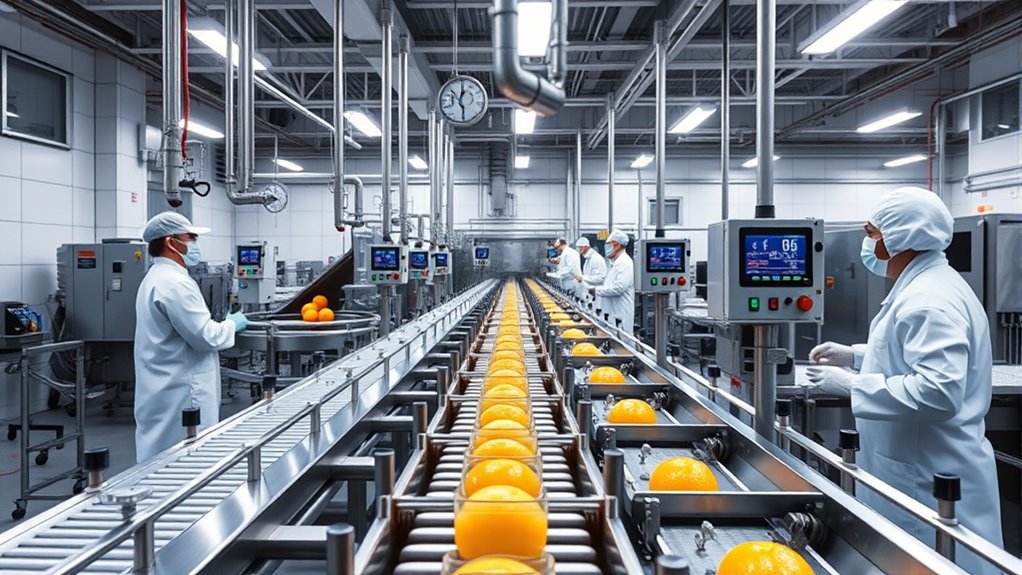
Critical control points are specific stages where controls are essential to prevent, eliminate, or reduce hazards to acceptable levels. For juice production, this might include raw material inspection, pasteurization, and packaging. You must establish critical limits for each control point—such as minimum pasteurization temperature and time—and regularly verify that these limits are met. Continuous monitoring, like recording temperature logs during pasteurization, makes it easier to detect deviations early and take corrective actions promptly. Training your staff on proper procedures and hygiene practices is equally important to maintain these controls effectively.
juice pasteurization thermometer
As an affiliate, we earn on qualifying purchases.
As an affiliate, we earn on qualifying purchases.
Frequently Asked Questions
How Often Should CCPS Be Reviewed and Updated?
You should review and update your CCPs regularly, at least annually, to make certain of effectiveness. Conduct audits more frequently if there are regulatory updates or process changes. Stay vigilant for new hazards or industry standards that might impact your critical control points. By maintaining a consistent review schedule, you’ll ensure your juice facility remains compliant and safe, adapting promptly to any necessary adjustments based on audit findings and evolving regulations.
What Training Is Essential for Staff Regarding CCPS?
Did you know that effective employee awareness reduces food safety incidents by 70%? To guarantee staff understand CCPS, you need extensive training programs that cover hazard identification, proper monitoring, and corrective actions. This training should be ongoing, practical, and tailored to your facility’s processes. When staff are well-trained, they can confidently identify risks and respond quickly, safeguarding your juice quality and consumer safety.
How to Handle Deviations at Critical Control Points?
When you encounter deviations at critical control points, you need to quickly implement deviation management by identifying the cause and halting the process if necessary. Then, take corrective actions to address the issue, such as adjusting equipment or reprocessing product, ensuring safety and quality. Document these steps thoroughly, review procedures to prevent recurrence, and train staff regularly to handle deviations effectively and maintain compliance with safety standards.
Are There Specific Equipment Standards for Juice Facilities?
Think of equipment standards like the backbone of a healthy body; they keep your juice facility running smoothly. You should regularly perform equipment maintenance and follow strict sanitation procedures to prevent contamination. Use food-grade materials, ensure proper cleaning, and verify calibration of machines. These standards help uphold product safety and quality, ensuring your juice stays fresh and safe for consumers every time.
How Can Technology Improve CCP Monitoring Accuracy?
Technology, like sensor integration, substantially improves CCP monitoring accuracy by providing real-time data on critical parameters such as temperature and pH. Data analytics then processes this information, identifying trends and potential issues before they become hazards. You can set alerts for deviations, allowing swift corrective actions. This proactive approach ensures consistent safety standards, reduces human error, and enhances overall product quality in your juice facility.
Conclusion
By implementing HACCP in your juice facility, you guarantee safety from farm to bottle. Focus on identifying critical control points, monitor them diligently, and act swiftly on deviations. Remember, an ounce of prevention is worth a pound of cure—staying proactive keeps your product safe and your reputation intact. Keep safety at the forefront, and you’ll turn fresh juice into a trusted, quality product every time.
Flea & tick season Picks
flea and tick prevention
As an affiliate, we earn on qualifying purchases.