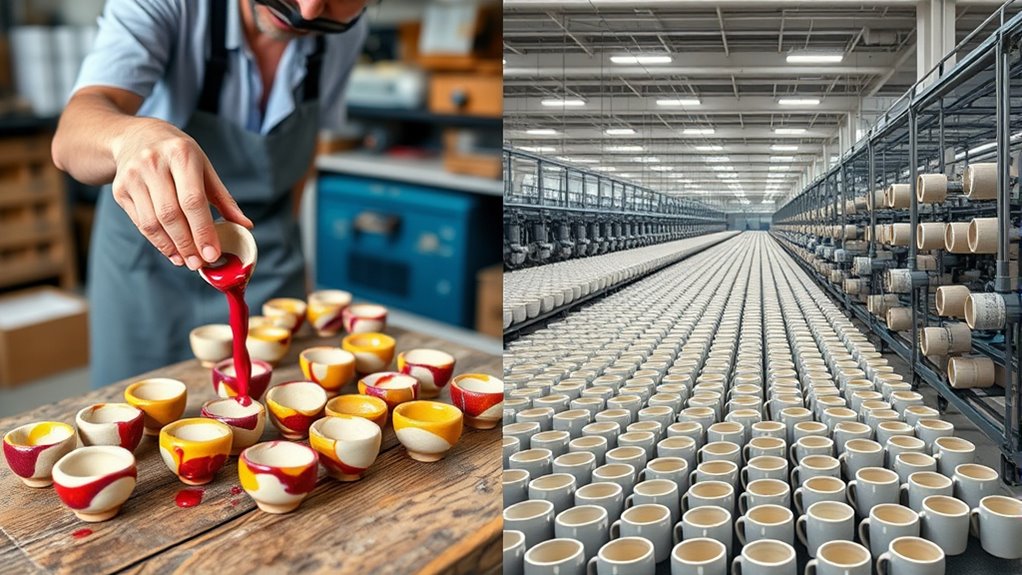

When comparing small-batch and industrial processes, you’ll find that small-batch emphasizes craftsmanship and attention to detail, with skilled artisans overseeing each step to guarantee quality and uniqueness. Conversely, industrial methods prioritize efficiency with automation and standardized procedures for mass production and consistency. If you want to understand how each approach impacts product quality, speed, and costs, exploring further will reveal how these differences shape their applications.

Get kitchen staples and gadgets delivered free — and shop member deals
- Fast, free delivery on millions of items
- Access to Prime Big Deal Days deals on October 6–7
- Prime Video, Amazon Music and more included
Key Takeaways
- Small-batch processes emphasize craftsmanship, attention to detail, and cultural authenticity, often involving skilled artisans overseeing production.
- Industrial processes prioritize efficiency, automation, and standardization to ensure high volume, consistent products at lower costs.
- Small-batch manufacturing is slower and more costly per unit, focusing on quality and exclusivity, while industrial methods enable rapid, large-scale output.
- Quality control in small-batch production is hands-on and allows early detection of imperfections, unlike automated, protocol-driven industrial testing.
- Small-batch suits niche, premium markets emphasizing authenticity; industrial processes target broad markets with reliability and cost-effectiveness.
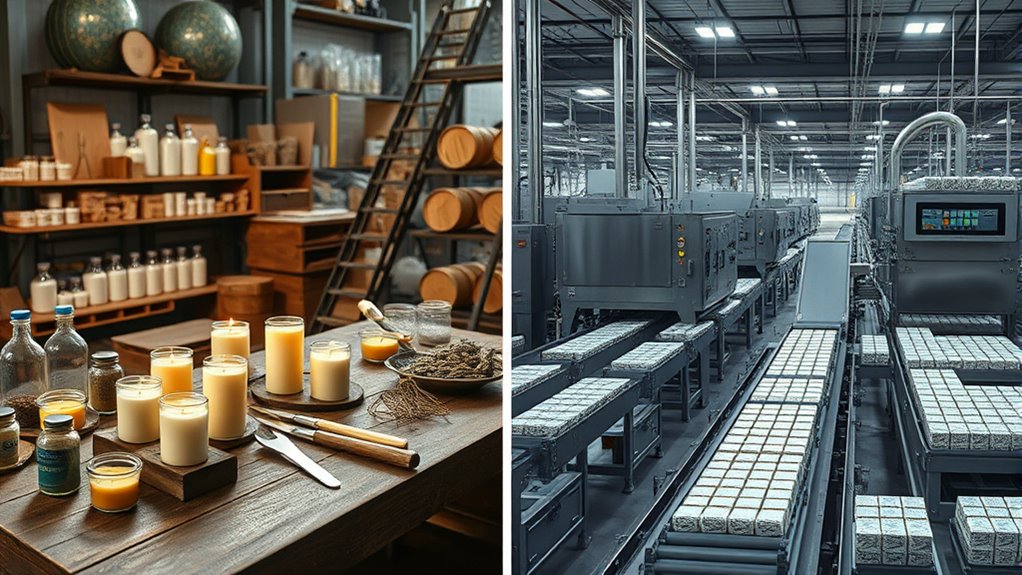
When choosing between small-batch and industrial processes, understanding their fundamental differences can help you make better production decisions. Small-batch manufacturing emphasizes craftsmanship nuances, where each product benefits from close attention to detail. This approach allows you to focus on the unique qualities that distinguish your items, whether it’s a handcrafted piece of jewelry or a limited-edition beverage. Because of this, small-batch processes often involve skilled artisans who meticulously oversee each step, ensuring that the final product embodies authenticity and character. However, this precision also means that quality control becomes a more personal, hands-on task. You can spot inconsistencies early and address them directly, maintaining high standards across every item produced. The trade-off is that small-batch runs typically take longer and incur higher costs, but they reward you with exclusivity and a distinct market edge rooted in authenticity. Incorporating traditional knowledge and cultural practices can further enhance the uniqueness of such products, setting them apart in a crowded marketplace.
In contrast, industrial processes prioritize efficiency, scalability, and uniformity. When you adopt an industrial approach, you leverage automation and standardized procedures to produce large quantities quickly. This method minimizes variability, ensuring that each product meets the same specifications without extensive oversight. Quality control in this context relies on rigorous protocols and automated testing systems, reducing the chance of human error. The focus here is on consistency, which is crucial when meeting high demand or maintaining a brand’s reputation for reliability. While you might sacrifice some craftsmanship nuances—such as the personal touch or artisanal imperfections—industrial processes excel in delivering predictable quality at lower costs. This makes them ideal when your goal is mass production, where speed and cost-effectiveness outweigh the need for uniqueness.
Both approaches have their merits, but understanding their core differences helps you align your manufacturing strategy with your business goals. If you want to create premium, distinctive products that resonate with a niche audience, small-batch production might be the best choice. It allows you to highlight craftsmanship nuances and build a reputation based on quality and authenticity. Conversely, if your priority is scaling up quickly to meet broad market demand, industrial processes provide the consistency and efficiency necessary to succeed. You’ll benefit from streamlined quality control systems that ensure uniformity across all units, making sure every product meets your standards without sacrificing speed. Ultimately, your decision depends on what you value most—whether it’s the artisanal touch and exclusivity of small-batch or the reliability and cost savings of industrial manufacturing. Recognizing the role of traditional practices and cultural elements, such as Aboriginal art or ceremonial objects, can also add cultural depth and appeal to your products.
As an affiliate, we earn on qualifying purchases.
Frequently Asked Questions
How Do Costs Compare Between Small-Batch and Industrial Processes?
You’ll find small-batch processes often have higher costs per unit due to lower cost efficiency, but startup expenses tend to be lower, making them ideal for testing markets. Industrial processes, however, benefit from economies of scale, reducing costs per unit markedly. Although initial investments are higher, their cost efficiency improves over time, making them suitable for large-scale production. Balancing startup expenses and long-term costs depends on your production goals.
What Environmental Impacts Differ Between the Two Production Methods?
You’re staring at a world of difference, where industrial processes often cause more environmental harm. They typically have higher resource consumption and contribute markedly to sustainability challenges due to mass production and waste. Small-batch methods tend to be more eco-friendly, using fewer resources and generating less waste. By choosing smaller-scale production, you help reduce environmental impacts, promoting sustainability and minimizing the strain on our planet’s resources.
How Do Quality Control Measures Vary in Small-Batch and Industrial Settings?
In small-batch settings, you typically perform more hands-on quality inspections, allowing for quicker defect management and personalized adjustments. Industrial processes rely on automated quality control systems, which guarantee consistency across large volumes but may overlook subtle defects. Your approach in small batches promotes detailed oversight, while industrial methods focus on efficiency and standardized defect detection. Both methods aim to reduce errors, but their quality control measures differ based on scale and automation.
What Are the Typical Production Times for Each Process Type?
You’ll find that small-batch production typically has a shorter production cycle, often taking days to weeks, allowing for quicker batch turnaround and adjustments. In contrast, industrial processes usually involve longer production times, sometimes months, due to scale and complexity. Your choice depends on your needs for flexibility versus volume. Small batches offer rapid turnaround, while industrial methods prioritize efficiency for large-scale output.
How Scalable Are Small-Batch Versus Industrial Manufacturing?
Like trying to fit a square peg in a round hole, small-batch manufacturing isn’t very scalable—you face limited capacity and fewer customization options. Industrial processes, however, excel in scaling up, handling large volumes efficiently. You can expand production easily, meeting high demand without sacrificing quality. If growth is your goal, industrial manufacturing offers the flexibility and capacity you need, whereas small-batch suits niche markets with tailored products.
Conclusion
In the end, understanding the process differences helps you choose what’s right for your needs. Small-batch methods feel like a craftsman’s touch, while industrial processes resemble a well-oiled machine from the dawn of the Industrial Revolution. Think of it as the difference between hand-stitched embroidery and a factory’s assembly line—each has its charm, each its purpose. So, whether you’re channeling a bygone era or embracing modern efficiency, your choice shapes the final product.
NFL season / tailgating Picks
team gear
As an affiliate, we earn on qualifying purchases.