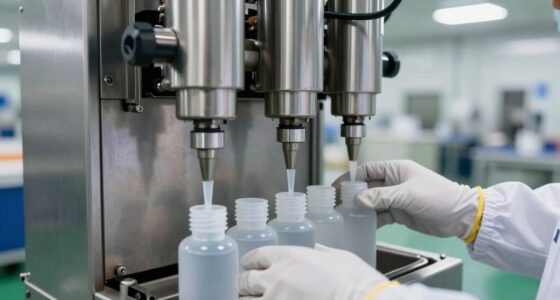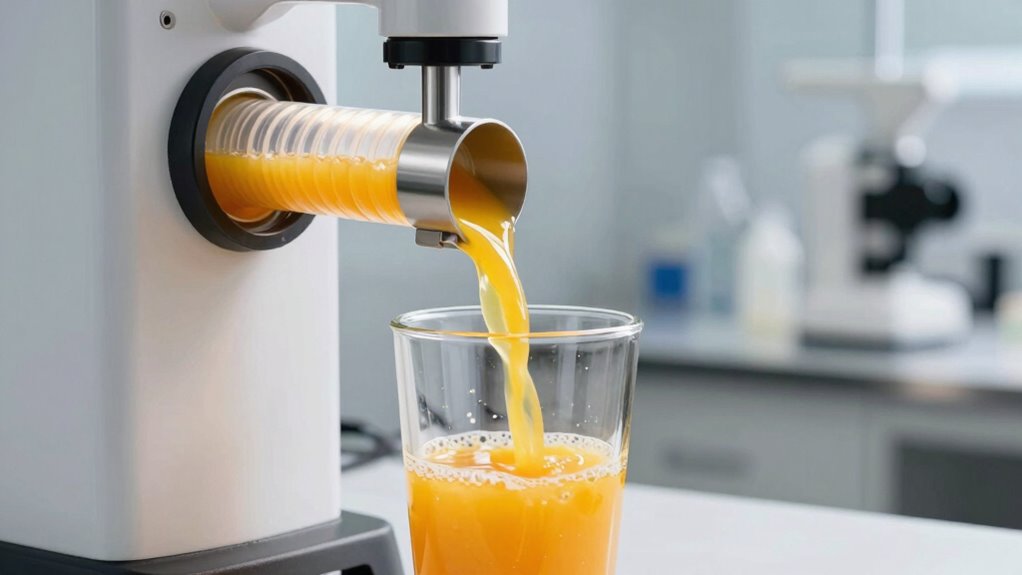
Peristaltic pump fillers are a game-changer for juice production because they provide precise, hygienic, and contamination-free filling. Their flexible tubing system ensures only contact with the liquid, keeping your product safe and consistent. They also simplify cleaning and maintenance, reducing downtime and ensuring high-quality output. This innovative technology boosts efficiency while maintaining strict hygiene standards. Keep going to discover how these benefits come together to transform your juice filling process.
Key Takeaways
- Ensures hygienic, contamination-free juice filling due to contact only with flexible tubing.
- Provides precise, consistent fill volumes, reducing waste and maintaining product quality.
- Simplifies cleaning and maintenance with easy disassembly and CIP compatibility.
- Offers reliable operation, minimizing downtime and enhancing overall production efficiency.
- Supports sanitary practices and compliance with food safety standards in juice manufacturing.
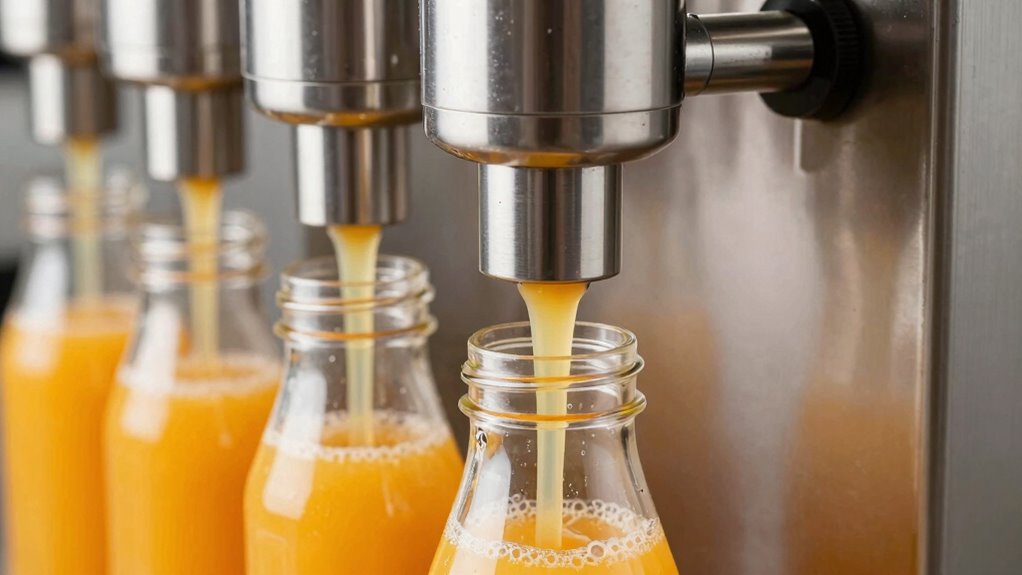
Peristaltic pump fillers are indispensable tools in industries that require precise and sanitary liquid dispensing. When you’re working with juice, maintaining product quality and ensuring consistent fill levels are top priorities. These pumps excel because they use a flexible tubing system that is only in contact with the liquid, minimizing contamination risks. To keep your equipment running smoothly and ensure your juice remains safe and fresh, you need to follow proper cleaning protocols and maintenance procedures diligently. Regularly testing and verifying dispensing accuracy helps maintain quality control and prevents waste. Cleaning protocols for peristaltic pump fillers are straightforward but critical. Since the tubing is the only part that contacts the product, it’s essential to clean it thoroughly after each use. You should disassemble the tubing and rinse it with warm water to remove any residual juice. For more thorough cleaning, use a food-grade cleaning solution specifically designed for beverage equipment. Some operators prefer to run a cleaning-in-place (CIP) system that automatically flushes the tubing with cleaning agents and water, saving time and reducing manual labor. Regularly inspecting the tubing and replacement schedule is key. Worn or cracked tubing can compromise hygiene and accuracy, so replace tubing periodically according to the manufacturer’s recommendations. Maintenance procedures are equally important to keep your peristaltic pump functioning at peak performance. Check the rollers and rotor assembly regularly to ensure they’re clean and free from debris. Lubricate moving parts only with manufacturer-approved lubricants to avoid contamination. Keep the entire pump free of dust and spills that could interfere with its operation. Calibration is another critical aspect; regularly verify that your pump dispenses the correct volume of juice to maintain consistency across batches. If you notice any irregularities, address them immediately — this could indicate a worn part or a need for recalibration. Implementing a routine maintenance schedule helps prevent unexpected breakdowns and prolongs the lifespan of your equipment. Properly maintaining your peristaltic pump also reduces the risk of cross-contamination, which is essential in food and beverage production. When you combine diligent cleaning protocols with scheduled maintenance, you ensure your juice filling process remains efficient, hygienic, and reliable. This proactive approach not only safeguards your product quality but also boosts your overall operational efficiency, making peristaltic pump fillers a valuable asset in your production line. By staying attentive to these details, you’re investing in a system that consistently delivers high-quality juice with minimal downtime and maximum hygiene.

Saladulce Liquid Filling Machine 1-105Oz Digital Bottle Filler Peristaltic Pump Automatic Weight Filling Machine for Wine, Juice, Oil, Perfume 110V
- Peristaltic Pump for Easy Cleaning: Food-grade silicone tube, simple to clean
- Versatile Liquid Compatibility: Suitable for alcohol, juice, oil, perfume
- Upgrade Design with Multiple Modes: Weighing and timing filling options
As an affiliate, we earn on qualifying purchases.
As an affiliate, we earn on qualifying purchases.
Frequently Asked Questions
How Do Peristaltic Pump Fillers Compare in Cost to Traditional Fillers?
Peristaltic pump fillers generally cost more upfront compared to traditional fillers, but they offer better accuracy and hygiene, which can save you money in the long run. When considering your budget, think about the total cost of ownership, including maintenance and downtime. While the initial investment might be higher, their efficiency and reduced contamination risks often make them a smarter choice for your juice filling operations.
What Maintenance Is Required for Peristaltic Pump Filling Machines?
Like a well-oiled machine, your peristaltic pump needs regular upkeep. You’ll perform routine sanitization procedures to keep everything clean and prevent contamination. Pump tubing replacement is essential to guarantee accuracy and avoid breakdowns. Keep an eye on the rollers and check for wear. With proper maintenance, your machine runs smoothly, just like a trusted friend, making your juice filling process efficient and reliable.
Are Peristaltic Pump Fillers Suitable for All Juice Viscosities?
Peristaltic pump fillers are suitable for most juice viscosities, but you should consider viscosity limitations for very thick or extremely thin juices. They work well within a broad range, and ingredient compatibility is excellent since the fluid contacts only the tubing. If your juice has unique viscosity or ingredient needs, consult the manufacturer to guarantee the pump can handle your specific product without compromising quality or efficiency.
How Do They Handle Different Bottle Sizes and Shapes?
You’ll find that peristaltic pump fillers handle different bottle sizes and shapes seamlessly. The adjustable nozzles and flexible tubing adapt quickly to various containers, ensuring precise filling without spillage. Their design allows for easy adjustments, so you can switch between small and large bottles effortlessly. This flexibility makes them ideal for diverse packaging needs, saving you time and reducing waste while maintaining consistent fill levels.
What Is the Typical Lifespan of a Peristaltic Pump Filler?
You can expect a typical lifespan of 6 to 12 months for a peristaltic pump filler, depending on usage and maintenance. Pump durability depends largely on how well you care for it, especially the tubing lifespan. Regularly inspecting and replacing tubing ensures peak performance, preventing breakdowns. Proper maintenance extends the overall lifespan, making these fillers a reliable choice for consistent, efficient juice filling.
Conclusion
Think of peristaltic pump fillers as the skilled conductor of your juice production symphony. They orchestrate a flawless flow, ensuring each bottle receives just the right amount, like a maestro guiding each note to perfection. With their gentle, precise rhythm, they transform your filling process into a harmonious dance—effortless, reliable, and elegant. Embrace this game-changing technology, and watch your juice operation flourish like a finely tuned orchestra, hitting all the right notes every time.