To make certain your labels survive ice baths and coolers, choose waterproof materials like polyester or vinyl. These materials resist water, freezing temperatures, and moisture, preventing peeling, fading, or damage. Make sure the labels have strong adhesive bonds that stay secure despite temperature changes and condensation. Selecting high-quality, UV-resistant, and durable labels will keep your labels readable and intact over time. Keep exploring for more tips on choosing the perfect waterproof labels for harsh environments.
Key Takeaways
- Use labels made from durable polyester or vinyl for superior water and moisture resistance.
- Select labels with industrial-strength adhesives designed to bond securely on plastic, metal, and glass surfaces.
- Opt for UV-resistant materials to prevent fading and maintain legibility in outdoor or sun-exposed environments.
- Ensure labels are flexible and capable of withstanding freezing temperatures and ice baths without cracking or peeling.
- Choose high-quality waterproof labels that resist smudging, scratching, and peeling for long-lasting identification.
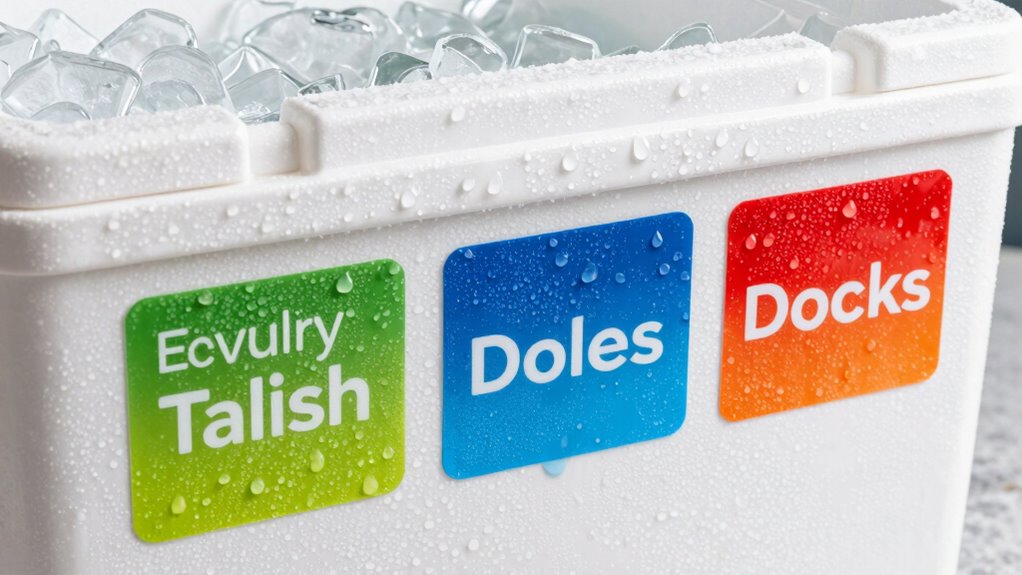
When it comes to labeling items exposed to water or harsh conditions, waterproof labels are vital. You need labels that won’t peel, smudge, or wash away when submerged or subjected to moisture. The key factors here are label durability and adhesive strength. You want labels that can withstand freezing temperatures, ice baths, or humid environments without losing their integrity. High-quality waterproof labels are designed specifically to resist water, chemicals, and abrasion, ensuring your labels stay intact no matter what they face.
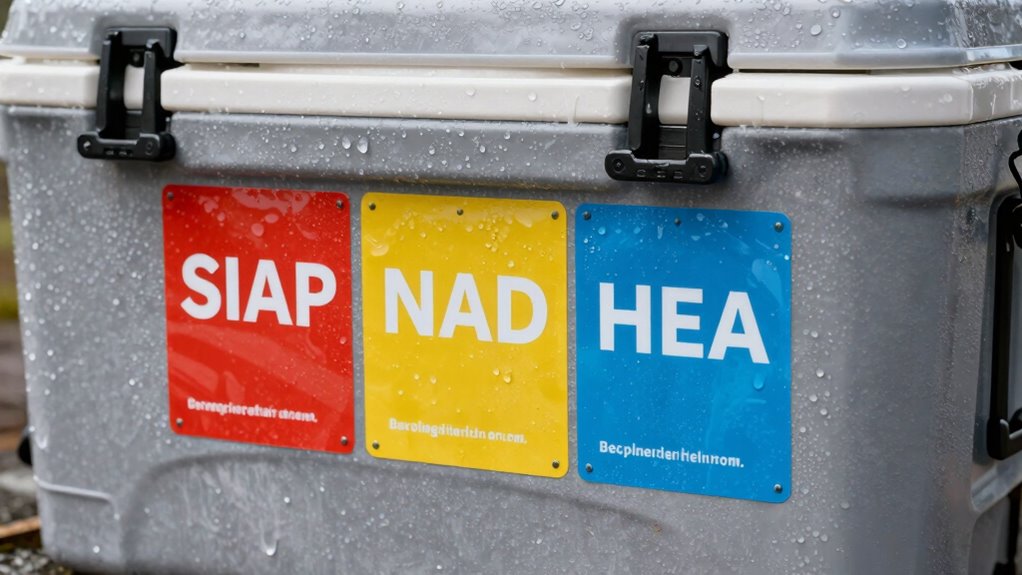
Waterproof labels ensure durability and adhesion in harsh, wet, and cold conditions.
Label durability is a critical consideration. It’s not just about the label’s material but also about how well it resists wear and tear over time. When you’re dealing with ice baths or coolers, the labels are often exposed to freezing temperatures that can make adhesives brittle and cause labels to crack or fall off. That’s why choosing labels made from durable materials like polyester or vinyl is a smart move. These materials are inherently resistant to water and temperature fluctuations, providing a long-lasting solution. They also resist fading from UV exposure if your labels are outdoors or in direct sunlight.
Adhesive strength is equally important. No matter how tough the label material is, if the adhesive isn’t strong enough, it won’t stick securely to the surface, especially after repeated exposure to moisture. You need an adhesive that forms a firm bond on various surfaces like plastic, metal, or glass and can handle the expansion and contraction caused by temperature changes. Industrial-strength adhesives are typically formulated to provide superior adhesion, even in cold environments. This ensures your labels won’t peel or lift when submerged in water or subjected to freezing conditions.
In practical terms, when selecting waterproof labels for ice baths or coolers, look for products that specify high adhesive strength and excellent durability. These labels are often designed with a strong adhesive backing that remains flexible and sticky, even after exposure to moisture or cold. The label’s surface should also be resistant to smudging, scratching, or fading, so the information remains legible over time. This way, you prevent confusion or misidentification, especially in environments where quick and accurate identification is vital.
Furthermore, choosing labels that are UV resistant can significantly extend their lifespan outdoors or in direct sunlight, maintaining their legibility and appearance over time. Ultimately, investing in waterproof labels with high label durability and adhesive strength provides peace of mind. You can confidently label your items knowing they’ll survive ice baths, freezing temperatures, and humid conditions without losing their label. This ensures your labeling remains clear, professional, and reliable, no matter how tough the environment gets.

ThreeKin Waterproof Labels for Bottles and Containers – Custom Stickers – All-Purpose and Personalizable – Dishwasher, Freezer and Microwave Safe – BPA-Free – USA-Owned (Black and White, 72pcs)
- Easy to Apply and Peel: Simple application on various surfaces
- Durable Waterproof Material: Resistant to water, oil, steam, and smudging
- Dishwasher, Freezer, Microwave Safe: Suitable for all storage conditions
As an affiliate, we earn on qualifying purchases.
As an affiliate, we earn on qualifying purchases.
Frequently Asked Questions
How Long Do Waterproof Labels Typically Last Outdoors?
Waterproof labels usually last between 1 to 3 years outdoors, depending on conditions. You’ll notice their adhesion durability remains strong for about a year or more, but over time, exposure to sunlight, moisture, and temperature changes can cause color fading and reduce adhesion. To maximize lifespan, choose high-quality materials and proper application, ensuring your labels stay vibrant and securely attached despite outdoor elements.
Can Waterproof Labels Be Removed Without Leaving Residue?
Yes, waterproof labels can often be removed without leaving residue if you use the right label removal methods. You might try gently peeling the label, or applying heat with a hairdryer to loosen adhesive. For residue cleanup techniques, use rubbing alcohol or a commercial adhesive remover, then wipe with a cloth. Always test a small area first to avoid damage, and work patiently for a clean, residue-free finish.
Are Waterproof Labels Suitable for Acidic or Alkaline Surfaces?
Did you know that 85% of waterproof labels withstand harsh chemical exposure? Waterproof labels are generally suitable for both acidic and alkaline surfaces, thanks to their chemical resistance and strong surface compatibility. You can confidently use them on surfaces with varying pH levels, but always check the label specs to guarantee they’re designed for your specific environment. This way, your labels stay intact and legible no matter what.
What Temperature Range Can Waterproof Labels Withstand?
Waterproof labels typically withstand temperatures from -40°F to 200°F, showcasing excellent temperature resilience. You can rely on them in extreme cold or heat without losing adhesion or clarity. Their adhesive strength remains consistent across this range, ensuring labels stay put even in fluctuating conditions. So, whether you’re applying labels to items exposed to ice baths or hot environments, these labels maintain durability and adhesion, making them versatile for various temperature-sensitive applications.
Do Waterproof Labels Adhere Well to Textured or Uneven Surfaces?
Waterproof labels can adhere well to textured or uneven surfaces if you use proper application techniques. You should thoroughly clean the surface to remove dirt and oils, then apply the label smoothly, pressing firmly to guarantee good adhesion. For highly textured surfaces, consider using a stronger adhesive or a heat gun to help the label conform better. This way, your labels stay secure even on challenging surfaces.
Conclusion
When choosing waterproof labels, you guarantee your items stay protected through ice baths and coolers. These labels are built to endure harsh conditions, giving you peace of mind. Remember, a label that survives the cold is a label that lasts long. So, invest in quality, and you’ll never have to worry about your labels losing their grip or readability. After all, a good label is worth its weight in ice—solid, reliable, and built to last.