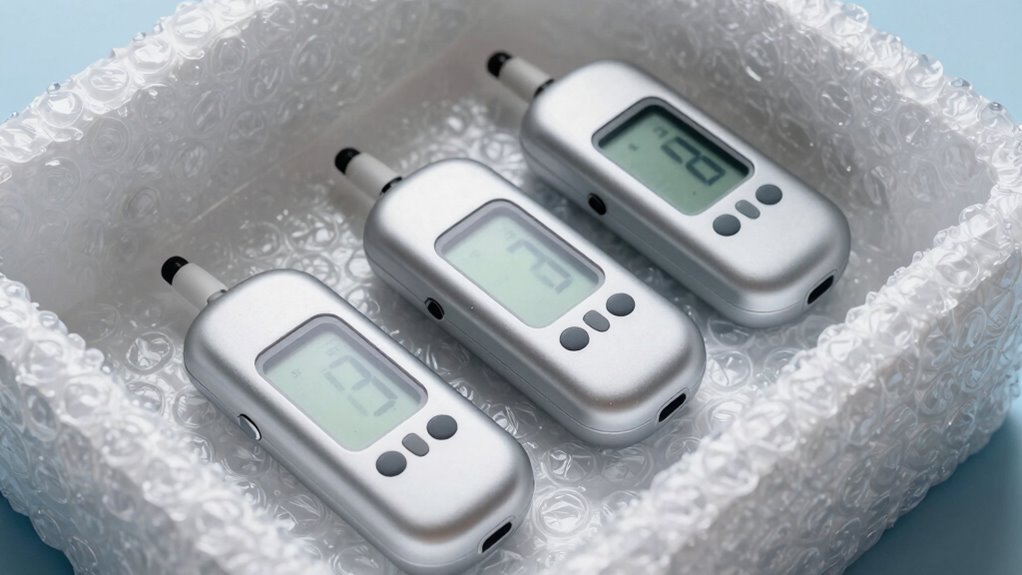

Temperature data loggers offer an easy way for you to monitor and verify the cold chain during storage and transit. They record real-time temperature data, alert you if conditions go outside set ranges, and help maintain product integrity. Proper calibration guarantees accurate readings, preventing misleading data that could compromise safety. Using these devices correctly supports compliance and reduces spoilage risks. Keep going to discover more about choosing, maintaining, and calibrating your loggers effectively.
Key Takeaways
- Temperature data loggers provide reliable, real-time evidence of cold chain integrity during storage and transport.
- Proper calibration ensures accurate readings, helping prove consistent temperature control throughout the supply chain.
- Equipped with alarms and user-friendly features, loggers alert users to temperature deviations, supporting prompt corrective actions.
- Routine maintenance and calibration maintain data accuracy, ensuring compliance and safeguarding sensitive products.
- Using calibrated data loggers simplifies documentation and verification, making it easier to demonstrate cold chain compliance.
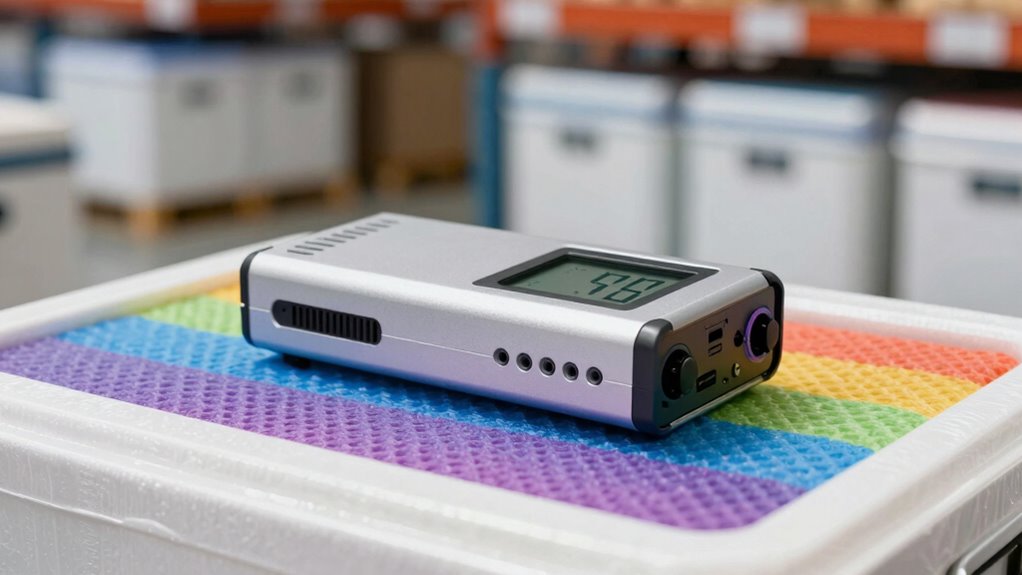
Temperature data loggers are essential tools for accurately recording and monitoring temperature conditions over time. When you’re managing sensitive products—like pharmaceuticals, food, or chemicals—having reliable data is vital to maintaining the integrity of the cold chain. Modern data loggers come equipped with a variety of features designed to make this task straightforward and dependable. These data logger features often include real-time data collection, user-friendly interfaces, and alarms that alert you if temperatures go outside preset ranges. They are built to withstand tough environments, whether it’s refrigeration units, storage warehouses, or transportation vehicles. With these features, you can guarantee continuous temperature monitoring without constant manual oversight, giving you peace of mind that your products remain within the required temperature parameters.
A key aspect of using temperature data loggers effectively is understanding calibration procedures. Calibration ensures that the readings produced by your device are accurate and reliable. If a logger isn’t properly calibrated, the data it records might be misleading, which could jeopardize product safety and compliance. Calibration procedures typically involve comparing the logger’s readings against a known, accurate temperature standard, and then adjusting the device if necessary. It’s a process that should be performed regularly, especially before deploying new loggers or after long periods of use. Proper calibration helps maintain the integrity of your data, making sure that any temperature deviations are genuine and not artifacts of device inaccuracies. Many data loggers support easy calibration, often including step-by-step instructions or automated calibration modes, simplifying the process for users. Additionally, understanding device features can help optimize your calibration routine and ensure consistent performance over time.
Investing time in understanding your device’s features and calibration procedures pays off in the long run. When you select a data logger, look for those with flexible features tailored to your specific needs, such as multiple channels or wireless connectivity. Equally important is establishing a routine calibration schedule, which helps prevent errors and guarantees your data remains trustworthy. Some manufacturers provide calibration services or certified standards, making it easier to keep your loggers properly calibrated. Remember, accurate data logging isn’t just about having the right equipment; it’s about maintaining that equipment properly through regular calibration and understanding how to utilize its features effectively. By doing so, you can confidently prove compliance with cold chain regulations and safeguard your products from temperature-related spoilage or regulatory issues.

iDiAK U60T 10 Pack USB Temperature Data Logger Single Use Temp Recorder with PDF and Excel Recording Thermometer 14400 Points High Accuracy 60 Days Cold Chain Transportation Fresh Tag
- Wide Temperature Range: -22℉ to 158℉ (-30°C to +70°C)
- High Recording Capacity: 14,400 data points over 60 days
- Accurate Temperature Measurement: ±0.5℃ (±0.9℉) accuracy
As an affiliate, we earn on qualifying purchases.
As an affiliate, we earn on qualifying purchases.
Frequently Asked Questions
How Long Do Temperature Data Loggers Typically Last?
You can expect temperature data loggers to last between a few months to a year, depending on their battery life and storage capacity. If they have high storage capacity and efficient batteries, they’ll record data longer without needing replacement or recharging. Always check the manufacturer’s specifications, as some models are designed for short-term monitoring, while others are built for extended use, ensuring you get reliable cold chain validation throughout your shipment.
Are Temperature Data Loggers Reusable or Disposable?
You can choose between reusable options and disposable units for temperature data loggers. Reusable options are designed for multiple uses, allowing you to reset and reuse them after each cold chain cycle, saving money and reducing waste. Disposable units, on the other hand, are intended for single-use, offering a convenient, cost-effective solution for short-term monitoring. Your choice depends on your specific needs, volume, and budget.
What Calibration Is Required for Accurate Readings?
Calibration calibration calibration! To guarantee accurate readings, you should perform calibration procedures regularly, ideally before initial use and periodically thereafter. During calibration, use accuracy adjustment techniques to fine-tune your data logger, matching its readings to a certified temperature standard. This process guarantees your data logger provides precise, reliable data, maintaining the integrity of your cold chain and ensuring your temperature-sensitive products stay safe and effective.
Can Data Loggers Be Integrated With Other Tracking Systems?
Yes, data loggers can be integrated with other tracking systems through wireless integration, allowing seamless data sharing and centralized monitoring. This setup enables you to receive real-time alerts if temperature deviations occur, helping you respond promptly. By connecting your data loggers with your existing logistics or inventory management systems, you enhance visibility, improve cold chain management, and guarantee product integrity throughout transportation and storage.
How Do Data Loggers Perform in Extreme Temperature Conditions?
You might think data loggers fail in extreme temperatures, but many are built to withstand such conditions. Their sensor durability guarantees accurate readings even in harsh environments, and robust battery life keeps them running longer. While some models perform better than others, choosing a high-quality logger tailored for extreme temps guarantees reliable data. So, rest assured, with the right device, your cold chain stays monitored, no matter the temperature challenge.
Conclusion
Using temperature data loggers isn’t just convenient; it’s the most reliable way to prove your cold chain integrity. Some might think manual checks are enough, but data loggers provide undeniable proof, reducing disputes and ensuring compliance. It’s worth questioning whether traditional methods can truly guarantee your products stay safe. Honestly, investing in data loggers gives you peace of mind and confidence that your cold chain remains unbroken. Don’t leave your product’s safety to chance—trust the data.