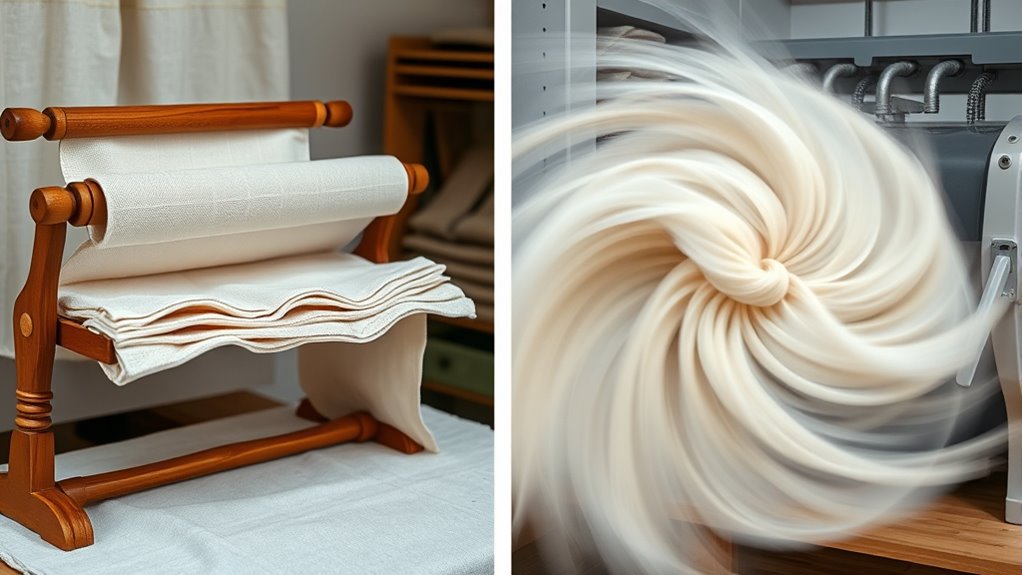

When choosing between rack-and-cloth and centrifugal pressing, consider how each method affects your product. Rack-and-cloth involves gentle stacking that preserves delicate flavors and reduces oxidation, ideal for high-quality juices or wines. Centrifugal presses rapidly extract juice, maximizing efficiency but may introduce heat and oxygen that can impact fermentation. Proper maintenance of equipment is key to maintaining quality and preventing contamination. To understand how these methods shape your process, explore the details further.

Get kitchen staples and gadgets delivered free with Prime
- Fast, free delivery on millions of items
- Prime Video, Amazon Music and more included
- Member-only deals all year
Key Takeaways
- Rack-and-cloth pressing offers gentle, controlled extraction ideal for high-quality products, while centrifugal pressing provides rapid, automated juice extraction.
- Rack-and-cloth pressing reduces oxidation and preserves delicate flavors, whereas centrifugal pressing may increase oxidation and heat exposure.
- Centrifugal presses are suitable for large-scale, high-throughput operations with minimal manual labor, unlike rack-and-cloth methods requiring more maintenance.
- Proper equipment maintenance in both methods prevents contamination, ensures efficiency, and maintains juice quality.
- Choice of pressing method impacts fermentation control, product clarity, and overall quality, depending on the desired outcome.
Crushing and pressing are essential steps in transforming raw materials into finished products, whether you’re extracting juice from fruits or processing minerals. When it comes to fruit juice, the choice of pressing method significantly impacts both the quality of the final product and the efficiency of the process. Two common methods are rack-and-cloth pressing and centrifugal pressing, each with its own advantages and considerations. Understanding how these methods interact with the fermentation process and the importance of equipment maintenance can help you optimize your operation.
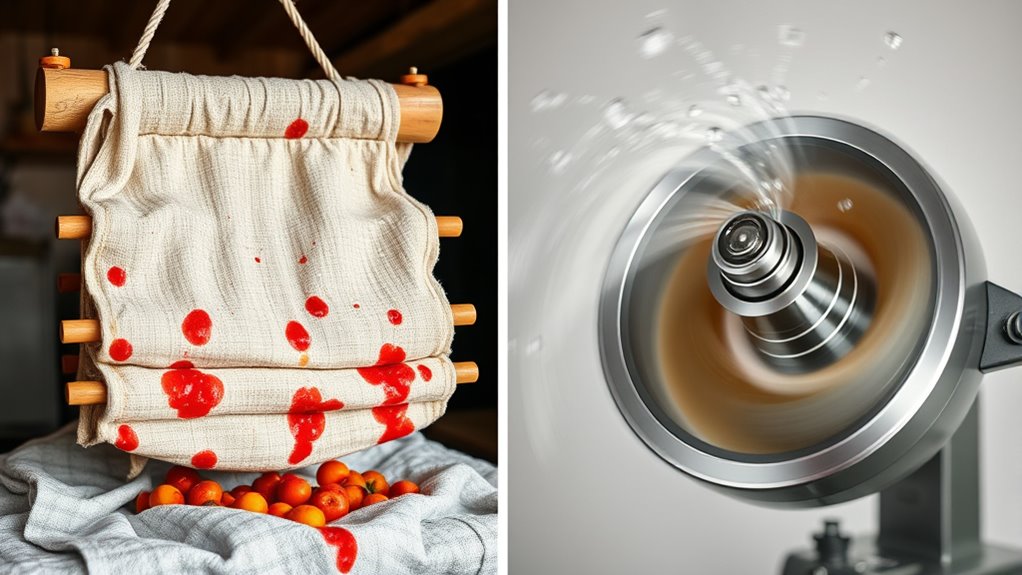
Rack-and-cloth pressing involves gently stacking crushed fruit between layers of cloth and applying gradual pressure. This traditional approach allows for controlled extraction, preserving delicate flavors and reducing oxidation. Because it exerts lower, more consistent pressure, it’s often preferred for high-quality wines and premium juices. However, it requires regular equipment maintenance—checking for tears in the cloth, ensuring even pressure distribution, and cleaning to prevent mold and bacterial growth. Proper maintenance ensures the cloths don’t harbor contaminants that could interfere with the fermentation process or spoil your product.
Centrifugal pressing, on the other hand, uses high-speed spinning to force juice out of the pulp. This method is faster and more automated, making it suitable for large-scale production where efficiency is paramount. The rapid extraction minimizes manual labor and maximizes throughput. Still, centrifugal presses can generate heat and oxygen exposure, which may affect the fermentation process if not properly managed. Equipment maintenance here involves inspecting for wear on the spinning components, ensuring seals are intact, and regularly cleaning to prevent contamination. Neglecting maintenance can lead to bacterial buildup, compromising juice quality and fermentation stability.
Both methods influence how well you control the fermentation process. Gentle rack-and-cloth pressing tends to produce cleaner juice with fewer unwanted compounds, supporting a more predictable fermentation. Centrifugal pressing might require more careful monitoring to prevent oxidation or microbial issues caused by rapid, aggressive extraction. Regular equipment maintenance becomes indispensable in either case to uphold hygiene, prevent cross-contamination, and guarantee consistent results. Properly maintained equipment reduces downtime, ensures safety, and maintains the integrity of your product from pressing through fermentation.
Additionally, understanding the fermentation process and how it interacts with pressing methods can help in fine-tuning your approach for optimal product quality. Recognizing how each pressing method interacts with the fermentation process helps you make informed decisions. Keeping your equipment in top condition is imperative, no matter which method you choose. Well-maintained equipment ensures you can produce high-quality juices efficiently while safeguarding the delicate fermentation process that transforms raw ingredients into exceptional finished products.
As an affiliate, we earn on qualifying purchases.
Frequently Asked Questions
Which Method Yields Higher-Quality Juice Overall?
You’ll find that rack-and-cloth juicing generally yields higher-quality juice overall because it better preserves flavor retention and nutrients. This method gently extracts juice without generating much heat or oxidation, which can degrade quality. Centrifugal juicers, while faster, often produce juice with less flavor and fewer nutrients due to higher speeds and more oxidation. So, if quality matters most, choose the rack-and-cloth method.
How Do Processing Times Compare Between Methods?
Processing times vary wildly between methods—you’ll find centrifugal machines spin out juice in a flash, often in just minutes, while rack-and-cloth involves manual labor that can stretch for hours! The centrifugal process is quick and efficient, thanks to its simple equipment, but the rack-and-cloth method, though labor-intensive, takes longer due to meticulous pressing and filtering. So, if speed matters, centrifugal wins; for quality, rack-and-cloth demands patience.
Are There Specific Types of Produce Better Suited for Each Method?
You’ll find that produce suitability varies; delicate fruits like berries are better suited for rack-and-cloth methods because they retain flavor better and are less likely to be damaged. Conversely, more robust produce such as apples or carrots can handle centrifugal methods, which are faster and efficient but might slightly reduce flavor retention. Choose the method based on your produce’s texture and desired flavor preservation, optimizing your processing results.
What Are the Environmental Impacts of Each Pressing Technique?
Have you considered how your pressing choice impacts the environment? The rack-and-cloth method generally has lower energy consumption and fewer sustainability concerns, making it more eco-friendly. In contrast, centrifugal presses often use more power due to faster operation, increasing their environmental footprint. Your decision influences sustainability considerations—so, choosing a more energy-efficient technique helps reduce your overall ecological impact while producing quality juice or oil.
How Do Costs Differ Between Rack-And-Cloth and Centrifugal Methods?
You’ll find that the cost comparison favors rack-and-cloth methods for lower equipment expenses, especially for small-scale operations. Centrifugal presses require more expensive machinery and maintenance, increasing overall costs. However, they save time and labor, which can offset higher equipment expenses in larger productions. So, your choice depends on your budget and production needs—rack-and-cloth is more budget-friendly initially, while centrifugal can be more efficient for high-volume processing.
Conclusion
As you grasp the difference between rack-and-cloth and centrifugal methods, picture the gentle squeeze of fruit in a cloth versus the swift whirl of a machine. Feel the cool fabric against your hands, releasing juice slowly, or imagine the powerful spin ripping through grapes with a blur of motion. Each technique offers a unique dance of pressure and speed, transforming raw fruit into liquid gold. Choose your rhythm, and savor the artistry in every drop you produce.
Halloween Picks
halloween
As an affiliate, we earn on qualifying purchases.