
To start juicing without cluttering your fridge, focus on making small batches often and store your juice in reusable bottles or jars. Use minimal equipment like a simple juicer or blender that fits your routine and space. Keep ingredients nutritious and familiar, such as apples or carrots, to keep things easy. Proper storage and hygiene help preserve the freshness and nutrients. If you keep these tips in mind, you’ll find it manageable to enjoy fresh juice daily.

Get kitchen staples and gadgets delivered free — and shop member deals
- Fast, free delivery on millions of items
- Access to Prime Big Deal Days deals on October 6–7
- Prime Video, Amazon Music and more included
Key Takeaways
- Make small, frequent batches to minimize storage needs and keep juice fresh.
- Use portable, reusable bottles for on-the-go consumption without cluttering the fridge.
- Prioritize immediate consumption or quick storage in small containers to reduce space.
- Incorporate simple, space-efficient equipment like handheld juicers or small blenders.
- Choose nutrient-dense ingredients to maximize benefits without needing large quantities.
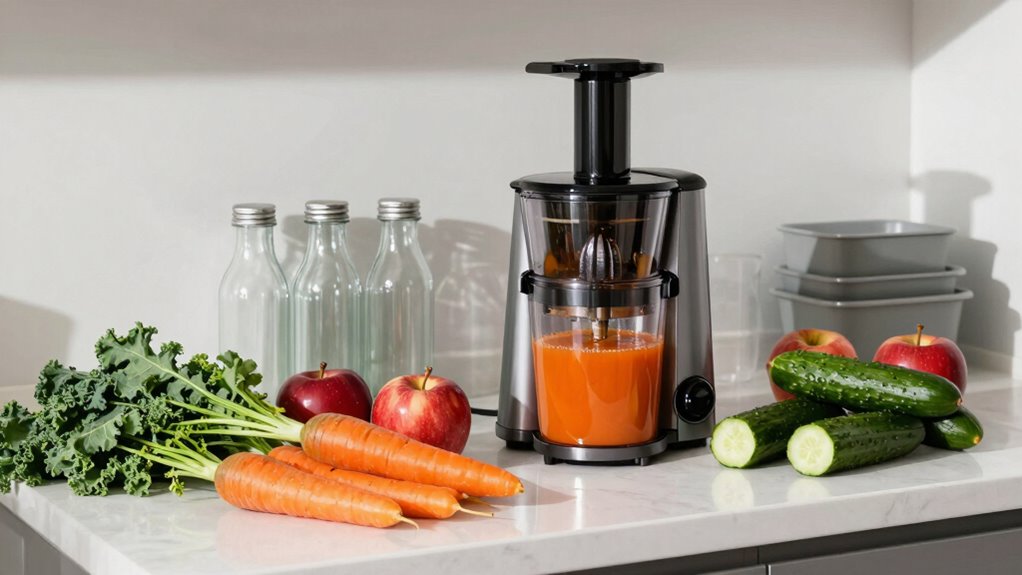
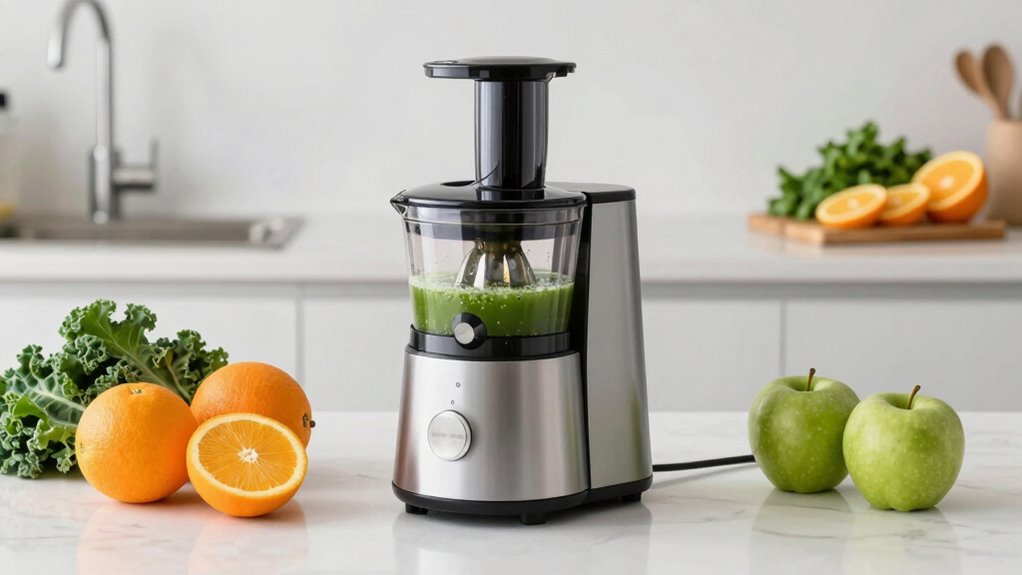
Starting your juicing journey can be simple and rewarding. You don’t need to flood your fridge with bottles or complicated equipment to enjoy the nutritional benefits of fresh juice. The key is to start small, with the right juicing equipment that fits your lifestyle. A basic juicer or a blender can do the job, depending on your preference. A dedicated juicer typically extracts more juice and nutrients from fruits and vegetables, delivering a smoother drink and reducing pulp. However, a good blender can also work if you prefer smoothies, which can include more fiber and keep you full longer. The right equipment makes the process easier and guarantees you get maximum nutritional benefits in every glass.
When you’re just starting, focus on simplicity. Choose a few favorite fruits and vegetables, like apples, carrots, spinach, or cucumbers. You don’t need a wide variety right away; just enough to keep things interesting and nutritious. As you get more comfortable, you can experiment with different combinations. To avoid cluttering your fridge with bottles, consider making smaller batches more frequently. This way, you consume fresh, nutrient-rich juice without the need to store large quantities. You can also portion your juice into reusable bottles or jars, which makes it easy to grab on the go and reduces waste. Incorporating minimal equipment can help you better manage your space and streamline your juicing routine. Additionally, using simple tools can help preserve the nutritional quality of your juice by minimizing exposure to heat and air during preparation. Maintaining proper hygiene practices is essential to prevent contamination and keep your juice safe and healthy. Incorporating knowledge about proper storage techniques can further extend the freshness and nutrient retention of your juice.
As an affiliate, we earn on qualifying purchases.
Frequently Asked Questions
How Long Do Homemade Juices Stay Fresh?
Homemade juices typically stay fresh for about 24 to 48 hours if you follow proper juice preservation and freshness tips. To maximize freshness, store your juice in airtight containers, preferably glass, and keep it in the coldest part of your fridge. Avoid exposing it to light or heat, which can degrade nutrients and flavor. For the best taste and nutrition, it’s ideal to consume your homemade juice within a day or two.
Can I Use Frozen Fruits and Vegetables for Juicing?
Yes, you can definitely use frozen produce for juicing—think of it as nature’s ice cubes. They’re convenient, last longer, and help you control juice consistency, especially when fresh produce isn’t available. Just thaw slightly for easier juicing, or blend directly if you prefer thicker juice. Frozen fruits and vegetables are a smart way to enjoy nutrient-rich, flavorful juices anytime, without worrying about spoilage or waste.
What Are the Best Storage Methods for Leftover Juice?
You should store leftover juice in reusable containers or glass jars to keep it fresh. Make sure they are airtight to prevent oxidation and contamination. Label the containers with the date so you know when to consume the juice. Keep them in the fridge, ideally at the back where it’s coldest. This method helps preserve nutrients and flavors, making your juice last longer without losing quality.
How Do I Clean My Juicer Effectively?
To clean your juicer effectively, start with disassembling all parts promptly after use. Use warm water and a mild brush or sponge for thorough cleaning, focusing on blades and mesh screens. Follow proper juicer maintenance by avoiding harsh chemicals, which can damage components. Utilize cleaning techniques like soaking removable parts in soapy water if stuck residue persists. Regular cleaning ensures your juicer functions well and lasts longer.
Are There Health Risks With Store-Bought Juices?
Store-bought juices can be risky, like walking a tightrope. They often contain added preservatives and are vulnerable to store contamination, which may introduce bacteria or molds. These factors can compromise your health, especially if you’re sensitive or immunocompromised. Always check labels for unnecessary additives, and opt for juices with minimal ingredients. When in doubt, fresh juicing is safer and retains more nutrients, reducing your health risks.
Conclusion
Starting your juicing journey doesn’t mean cluttering your fridge with bottles. Just pick a few favorite fruits or veggies, like apples and carrots, and juice small batches to keep things fresh and simple. For example, Sarah began with just a single glass each morning, gradually expanding her recipes. Now, she enjoys vibrant, healthy drinks without the mess or waste. Remember, small steps lead to big health benefits—so start simple, stay consistent, and enjoy the journey!
Fall Picks
fall essentials
As an affiliate, we earn on qualifying purchases.