To prevent leggy herbs indoors, use full-spectrum LED grow lights positioned 12 to 24 inches above your plants. Make sure they get 12 to 16 hours of light daily and adjust the distance if plants stretch or scorch. Focus on a balanced mix of blue and red wavelengths to promote dense, sturdy foliage and healthy growth. Proper setup and light management help keep your herbs lush and vibrant—continue exploring for more tips to perfect your indoor garden.

Get kitchen staples and gadgets delivered free — and shop member deals
- Fast, free delivery on millions of items
- Access to Prime Big Deal Days deals on October 6–7
- Prime Video, Amazon Music and more included
Key Takeaways
- Position grow lights 12-24 inches above herbs to prevent stretching and encourage dense foliage.
- Use full-spectrum LED lights to mimic sunlight and promote healthy, vigorous growth.
- Maintain 12-16 hours of consistent light daily for optimal herb development.
- Adjust light distance based on plant response to avoid heat stress and legginess.
- Monitor plant health indicators, like vibrant color and sturdy stems, to fine-tune lighting setup.
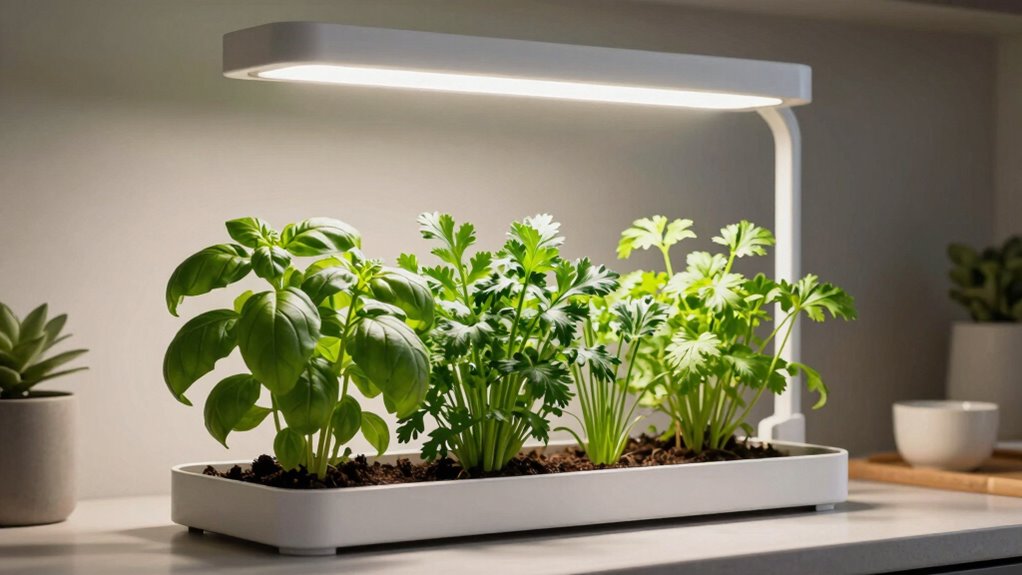
Growing fresh greens in your kitchen is easier than ever with the right grow lights. Whether you want to harvest herbs for cooking or add greenery to your space, the key to successful indoor gardening is providing plants with the proper light. The right grow lights boost plant health by mimicking natural sunlight, encouraging strong, lush growth. When setting up your kitchen greens, understanding the importance of light spectrum becomes essential. Different wavelengths of light influence plant growth in distinct ways, so choosing a light that covers the full spectrum guarantees your herbs develop effectively.
Proper grow lights mimic sunlight, promoting healthy, lush herbs indoors.
A good grow light should emit a spectrum that closely resembles natural sunlight, especially in the blue and red wavelengths. Blue light promotes compact, bushy growth, which is ideal for herbs, preventing them from becoming leggy. Red light, on the other hand, supports flowering and overall development. When the light spectrum is balanced, your herbs grow with sturdy stems and vibrant leaves, avoiding the common problem of legginess—where plants stretch toward the light source, becoming tall and weak. This is often a sign that your plants aren’t getting enough of the right light balance, so selecting a light that offers full-spectrum coverage helps maintain plant health and encourages dense, healthy foliage.
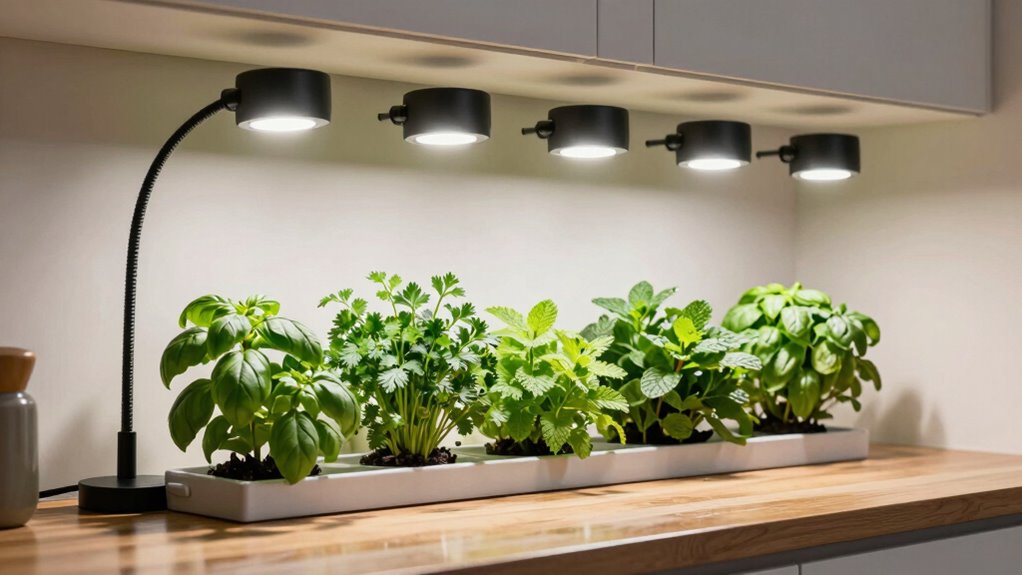
Positioning your grow lights correctly is just as important as choosing the right type. Place them close enough to the plants to provide sufficient energy without causing heat stress—typically about 12 to 24 inches above the herbs. Keep an eye on how your plants respond; if they start to stretch or lean toward the light, it’s a good sign that the light source isn’t strong enough or isn’t positioned properly. Conversely, if the leaves start to curl or scorch, move the lights farther away. Consistent light exposure—around 12 to 16 hours a day—mimics natural sunlight and supports steady growth. Using light spectrum knowledge can help you fine-tune your setup for optimal results. Additionally, choosing energy-efficient lighting options like LEDs can significantly reduce your energy consumption while maintaining plant health. Proper light management also involves understanding how different wavelengths influence plant development, ensuring your greens thrive.
In addition to light spectrum and placement, consider the quality and energy efficiency of your grow lights. LEDs are popular because they emit a full spectrum, produce less heat, and consume less electricity. This means you can keep your greens thriving without worrying about excessive heat or high energy bills. Regularly monitor your herbs for signs of healthy growth—rich green color, sturdy stems, and compact form. When you fine-tune your setup with the right spectrum, proper positioning, and consistent lighting duration, you’ll prevent legginess and cultivate lush, vibrant kitchen greens that thrive year-round. Being aware of light spectrum and how it influences plant growth can significantly improve your indoor gardening success.
full spectrum LED grow lights for herbs
As an affiliate, we earn on qualifying purchases.
As an affiliate, we earn on qualifying purchases.
Frequently Asked Questions
How Long Should I Keep Grow Lights on Daily?
You should keep grow lights on for about 12 to 16 hours daily, aligning with plant growth cycles. This light duration provides your herbs with enough energy without causing stress or leggy growth. Use a timer to maintain consistent cycles, ensuring your kitchen greens thrive. Adjust the timing slightly based on the specific herbs’ needs and the natural light they receive, promoting healthy, compact growth.
Can I Use Regular Household Bulbs for Kitchen Greens?
Yes, you can use household bulbs for your kitchen greens, but they’re like a dim flashlight compared to real grow lights. Household bulbs emit a limited light spectrum, mainly warm or soft light, which isn’t ideal for photosynthesis. They may keep your herbs alive but won’t promote lush, healthy growth. For vibrant greens, opt for full-spectrum grow lights, which mimic sunlight and give your herbs the energy they need.
What Is the Ideal Distance Between Light and Herbs?
You should keep your grow light about 12-18 inches above your herbs. This distance balances light intensity, ensuring your plants get enough energy without causing heat stress or leggy growth. Adjust based on plant spacing—if herbs are tightly packed, bring the light closer; if spaced out, keep it slightly higher. Regularly monitor your herbs for signs of stretching or stress, and tweak the height accordingly.
Do Different Herbs Require Different Light Spectrums?
Yes, different herbs have unique herb light preferences, so spectrum tailoring can boost their growth. For example, basil thrives with more red light, promoting leafy growth, while herbs like parsley benefit from a balanced spectrum. You should adjust your grow lights based on each herb’s needs, ensuring they get the right spectrum to promote healthy, compact growth and prevent legginess. Tailoring the spectrum helps optimize your kitchen garden’s success.
How Do I Prevent Mold Under Grow Lights?
Don’t let mold sneak up on you; it’s a common issue if you don’t stay vigilant. To prevent mold under grow lights, focus on mold prevention by maintaining proper humidity levels and ensuring good ventilation strategies. Use fans or exhaust systems to circulate air and reduce moisture buildup. Keep the grow area clean and avoid overwatering. Regularly check for signs of mold, so your herbs stay healthy and vigorous.
Conclusion
With the right grow lights, your kitchen becomes a lush, sunlit garden where herbs flourish without stretching for light. Imagine your fresh greens thriving, their vibrant leaves reaching upward like a dance beneath a gentle glow. By choosing the proper setup, you turn your kitchen into a verdant haven, transforming everyday cooking into a celebration of nature’s bounty. So, light up your space and watch your herbs grow strong, vibrant, and beautifully unlimbered.
NFL season / tailgating Picks
team gear
As an affiliate, we earn on qualifying purchases.