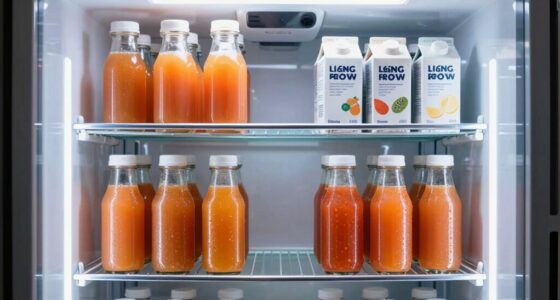
Controlling humidity in produce storage rooms is tougher than it looks because external weather constantly impacts internal conditions. Temperature and humidity fluctuations from outside forces require you to constantly monitor and adjust your dehumidifiers and humidifiers. Poor insulation and leaks make it even more challenging to keep conditions stable. To maintain produce quality, you need to stay proactive with regular equipment checks and environment management strategies. If you keep exploring further, you’ll discover more ways to manage these challenges effectively.
Key Takeaways
- External weather fluctuations directly impact internal humidity, making consistent control challenging.
- Dirty filters and worn components reduce dehumidifier efficiency, especially under variable conditions.
- Proper insulation and sealing are crucial to minimize external climate influence on storage environments.
- Continuous monitoring and proactive adjustments are necessary to maintain stable humidity levels.
- External climate changes increase the workload on dehumidifiers, complicating humidity management.

Have you ever wondered how to keep your produce fresh for longer? Maintaining ideal humidity levels in your storage room isn’t as simple as just turning on a dehumidifier. Climate variation can throw off your carefully balanced environment, making it a constant challenge to preserve produce quality. Outside weather changes—like shifts in temperature and humidity—can quickly alter the conditions inside your storage space. When the weather turns humid, your dehumidifier has to work harder to keep the environment dry enough. Conversely, during drier periods, it might struggle to maintain the right moisture balance. This fluctuation demands that you pay close attention to how your storage room responds to external factors, ensuring you adjust settings or equipment as needed. Proper climate control is essential for preventing spoilage and maintaining produce freshness. Equipment maintenance plays a critical role in ensuring your dehumidifiers perform efficiently. If you neglect regular upkeep, your system might not operate at peak capacity, leading to inconsistent humidity control. Dirty filters, clogged coils, or worn-out components reduce the dehumidifier’s effectiveness, risking spoilage or mold growth on your produce. Routine maintenance—like cleaning filters, inspecting hoses, and checking for leaks—keeps your equipment running smoothly. When your equipment is well-maintained, it responds more reliably to climate variation, maintaining a stable atmosphere that extends the freshness of your produce. Additionally, understanding external weather influences can help you better anticipate changes and adapt your environment proactively. Recognizing the importance of proper insulation can significantly reduce external climate impacts and improve humidity stability. Controlling humidity in a storage room isn’t just about installing a dehumidifier; it’s about understanding the delicate balance between climate factors and equipment performance. You need to monitor the environment continuously, adjusting your dehumidifier settings in response to changes in weather or room conditions. This may involve adding humidifiers during particularly dry spells or increasing dehumidification during humid weather. The key is staying proactive—regularly checking your equipment and making adjustments as needed. Additionally, integrating proper insulation and sealing any leaks can help mitigate climate variation’s impact. When your storage room is well-insulated, external weather changes won’t influence internal humidity as drastically. This reduces the workload on your dehumidifier and minimizes the need for frequent interventions. Ultimately, humidity control is a dynamic process, requiring vigilance, maintenance, and a good understanding of how external and internal factors interact. With consistent effort, you can create a stable environment that keeps your produce fresh longer, avoiding spoilage and maximizing quality.
dehumidifier for produce storage room
As an affiliate, we earn on qualifying purchases.
As an affiliate, we earn on qualifying purchases.
Frequently Asked Questions
How Often Should Dehumidifiers Be Maintained in Produce Storage Rooms?
You should check your dehumidifier for maintenance at least once a month to guarantee peak performance. Regular dehumidifier maintenance involves cleaning filters and coils to prevent mold and debris buildup, which can compromise storage room hygiene. If your storage room has high humidity or frequent use, consider more frequent checks. Proper upkeep helps maintain consistent humidity levels, preserving produce quality and preventing spoilage.
Can Dehumidifiers Prevent Mold Growth Effectively?
Think of dehumidifiers as your first line of defense against mold growth—they can be quite effective if you keep a close eye on humidity monitoring. By maintaining ideal humidity levels, you prevent mold spores from taking hold and spreading. Regularly checking and adjusting your dehumidifier ensures it works efficiently, acting like a vigilant guardian that keeps moisture at bay, protecting your produce and preserving freshness.
What Is the Ideal Humidity Level for Different Produce?
You should aim for specific humidity levels to keep different produce fresh. Use humidity sensors to monitor these levels closely. For most fruits and vegetables, maintaining 85-95% relative humidity slows produce respiration and prevents dehydration. However, some items, like potatoes, prefer lower humidity around 80%. Regularly checking and adjusting humidity helps prevent spoilage, mold growth, and shriveling—making humidity control essential for ideal produce storage.
Are Energy-Efficient Dehumidifiers Available for Large Storage Rooms?
Yes, energy-efficient dehumidifiers are available for large storage rooms. These models help you achieve energy savings by consuming less power while maintaining ideal humidity levels. When comparing costs, consider the initial investment versus long-term savings on energy bills. Energy-efficient units might cost more upfront but can reduce operating expenses over time. Look for units with good energy ratings and features tailored to large spaces to maximize both performance and savings.
How Do Temperature Fluctuations Impact Humidity Control?
Temperature fluctuations can make humidity control tricky because they affect humidity levels directly. When temperatures drop, humidity tends to increase, causing moisture buildup, while rising temperatures can dry out the air. To maintain ideal conditions, you need to guarantee temperature stability, which minimizes humidity fluctuations. Consistent temperatures help your dehumidifier work efficiently, preventing excess moisture or overly dry air, and keeping your produce fresh longer.
Conclusion
Remember, managing humidity in produce storage isn’t as simple as just installing a dehumidifier. It requires careful monitoring and adjustment, because even small changes can impact your stored goods. As the saying goes, “A chain is only as strong as its weakest link,” so don’t overlook the importance of consistent humidity control. By staying vigilant and proactive, you’ll keep your produce fresh and prevent spoilage, making your efforts truly worthwhile.