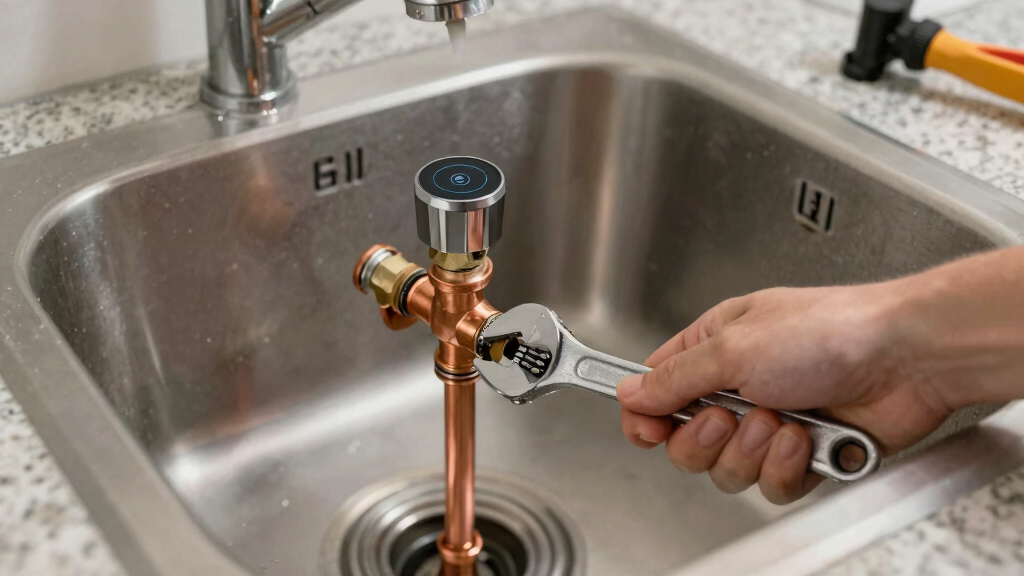

If you’re searching for the best smart water shutoff valve for your kitchen, you’re likely balancing ease of installation, smart home compatibility, and reliable leak detection. The Moen Flo stands out as the overall best with its seamless app control and leak alerts, while the YoLink FlowSmart offers long-range connectivity and extensive ecosystem support for larger setups. Other options like the Frizzlife LP365 excel in real-time flow monitoring, but come with tradeoffs such as installation complexity or higher price tags. Understanding these differences helps you choose the right fit for your home’s needs and budget. Continue reading for a detailed breakdown of each option and how they compare.
Key Takeaways
- The best smart water shutoff valves balance smart home compatibility with reliable leak detection features.
- Long-range connectivity and ecosystem support are key for larger or multi-device setups, as seen with YoLink options.
- Ease of installation varies, with some models designed for DIY setup and others requiring professional help.
- Price ranges significantly; premium models offer more integrations and features, while budget options provide core functions.
- Real-time flow monitoring and automatic shutoff are common features, but their effectiveness depends on sensor quality and app reliability.



More Details on Our Top Picks
Moen Flo 3/4-inch Smart Water Shut Off Valve, Smart Home Water Monitor Leak Detector, Wifi Connected, App Enabled Flow Meter and Shutoff, 900-001
This option stands out for its comprehensive water monitoring capabilities and automatic shutoff feature, making it ideal for homeowners seeking proactive leak prevention. Compared with the Frizzlife LP365, the Moen Flo offers real-time notifications, app control, and integration with smart home systems like Google Assistant and Ring, providing a more connected experience. However, its limited historical data and subscription fee for Flo Protect are notable tradeoffs. The installation is straightforward for those with basic plumbing skills, and its ability to detect small leaks early can save thousands in potential damage. The device learns usage patterns over a few weeks, but the app only displays limited data unless upgraded with a subscription. This product is perfect for those wanting a reliable, automated system with smart home integration, willing to pay a small monthly fee for enhanced features.
Pros:- Automatic leak detection and shutoff based on usage patterns
- Real-time alerts via app, email, and phone call
- Compatibility with Alarm.com, Ring, Google Assistant
Cons:- Requires professional installation for optimal performance
- Limited historical data unless subscribing to Flo Protect plan
- Subscription fee adds ongoing cost
Best for: Homeowners who prioritize automatic leak detection with remote control and smart home compatibility.
Not ideal for: Renters or users looking for a budget-friendly, simple leak detector without automation features.
- Pipe Compatibility:3/4-inch to 1-1/4 inch
- Connectivity:Wi-Fi, App control
- Leak Detection:Learned patterns, real-time alerts
- Installation:Professional recommended
- Compatibility:Alarm.com, Ring, Google Assistant
- Sensor Technology:Flow meter and leak sensors
Bottom line: This system suits those wanting a fully integrated, automated water security setup with remote monitoring, despite some ongoing costs.
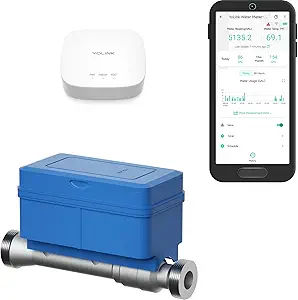
NSF Certified YoLink FlowSmart All-in-One Smart Water Meter & Auto Shutoff for ¾″ Pipes, LoRa Long-Range, Real-Time Leak Detection, 10-Year Battery, 80+ Device Ecosystem, Hub Included – YS5018
This pick makes the most sense for users needing reliable long-range coverage and a robust smart home ecosystem, especially in larger homes or commercial settings. Unlike the Moen Flo, the YoLink FlowSmart operates effectively without internet, thanks to its device-to-device rules and LoRa long-range radio, making it ideal for areas with weak Wi-Fi signals. Its NSF certification and multi-year battery life provide added peace of mind, though the setup requires a YoLink hub and some familiarity with LoRa technology. The ultrasonic flow measurement ensures accurate leak detection and flow monitoring, but its app control is limited when operating on battery—only real-time data and alerts are available in this mode. For those with extensive smart home setups or needing offline resilience, this system offers unmatched reliability, at the cost of initial setup complexity and hub dependency.
Pros:- Long-range LoRa communication for entire home coverage
- Offline operation without internet dependency
- 10-year battery life and NSF certification
Cons:- Requires YoLink hub and some technical setup
- Higher upfront cost and complexity
- Limited app control when operating on battery
Best for: Homeowners with large properties or those in areas with poor Wi-Fi, needing extensive device integration and reliable offline operation.
Not ideal for: Users seeking simple plug-and-play solutions or those with small, Wi-Fi-rich homes.
- Pipe Compatibility:Various sizes including 3/4″
- Connectivity:LoRa, Hub required, app control
- Leak Detection:Ultrasonic flow measurement
- Battery Life:Up to 10 years
- Range:Long-range LoRa
- Installation:Requires hub, plumbing connections
Bottom line: Ideal for users needing extensive coverage, long battery life, and offline resilience in larger or Wi-Fi-challenged environments.
Frizzlife LP365 Smart Water Monitor and Automatic Shutoff – 0.01GPM Ultrasonic Micro Leak Detection, APP Wi-Fi Remote Control, Real-Time Flow/Temp Monitoring, 24/7 Water Usage Reports, 3/4″ and 1″
This model makes the most sense for tech-savvy homeowners who want detailed water usage analytics and micro-leak detection. Compared with the Moen Flo, the Frizzlife LP365 emphasizes precise ultrasonic flow measurement and offers detailed daily, monthly, and yearly reports, making it suitable for users interested in long-term water management. Its real-time alerts and automatic shutoff respond quickly to leaks as small as 0.01 GPM, but installation requires careful pipe sizing and some plumbing skills, which could be a hurdle for DIYers. The app controls are reliable, and its compatibility with smart home systems like Home Assistant opens automation possibilities. However, the device’s limited integration options outside of Wi-Fi and app control, as well as the absence of external leak sensors, mean it’s best for those who want deep analytics instead of total ecosystem integration.
Pros:- Ultrasonic detection of micro leaks as low as 0.01 GPM
- Detailed water usage reports and real-time monitoring
- Works with Home Assistant and other automation platforms
Cons:- Installation can be complex for non-technical users
- Limited ecosystem integration beyond Wi-Fi and app
- No external leak sensors included
Best for: Smart home enthusiasts wanting detailed water analytics and micro-leak detection for proactive management.
Not ideal for: Users seeking a plug-and-play, all-in-one system with extensive third-party ecosystem compatibility.
- Flow Detection:0.01 GPM sensitivity
- Connectivity:Wi-Fi app control
- Pipe Compatibility:3/4″ and 1″
- Monitoring:Flow, temperature, water use reports
- Installation:Requires plumbing skills
- Ecosystem Compatibility:Home Assistant, Alexa, Google
Bottom line: Best for users who value detailed water data and precise leak detection over broad smart home integration.
Haozee WiFi Smart Water Valve and Auto Shut-Off, Automation Scene Works with Leak Detector, Water Flow Meter, Built-in Battery, for 3/4″ Diameter DN20 Pipe
This pick makes the most sense for users seeking a portable, battery-powered solution that can operate independently of mains power, especially in temporary setups or areas with unstable electricity. Unlike the Moen Flo or Frizzlife, the Haozee system works with a rechargeable NiMH battery, lasting 3-6 months, making it ideal for renters or those who want a flexible, non-wired device. Its app control and water flow monitoring are reliable, but it’s limited to 3/4″ pipes, and the app functionality is reduced in battery mode—no remote control when unplugged. Its ability to set alarms and automate shutoff when leak sensors are paired makes it suitable for temporary or mobile applications. The installation is straightforward, but the device’s dependence on battery life and limited control during power outages are notable tradeoffs.
Pros:- Battery-powered, portable with up to 6 months use
- Works with leak detectors for automation scenes
- Easy to install and detach
Cons:- Limited app control when on battery power
- Only compatible with 3/4″ pipes
- Battery life may require frequent recharging
Best for: Renters or users needing a portable, battery-operated water shutoff system with leak detection capabilities.
Not ideal for: Homeowners looking for a permanent, mains-powered system with extensive automation features.
- Power Source:Rechargeable NiMH battery
- Pipe Compatibility:3/4″ DN20
- Connectivity:Wi-Fi, app control
- Leak Detection:Works with leak sensors
- Operation Time:3-6 months per charge
- Automation Support:Scenes with leak sensors
Bottom line: Suitable for flexible, temporary setups where portability and battery independence are prioritized over continuous remote control.
Smart WiFi Water Valve, APP Remote Control, Compatible with Alexa and Google Assistant, iOS/Android Apps, for Kitchen Gas Shutoff Valve, Farm Irrigation
This model makes the most sense for users wanting remote and voice control for applications outside typical home plumbing, such as garden irrigation or gas shutoff. Unlike the other options, it is designed for specific use cases like outdoor water management or gas shutoff, with a focus on remote operation via the Tuya Smart or Smart Life app. It supports scheduling and voice commands but is limited by its compatibility scope—no integration with platforms like SmartThings or robust leak detection features. Its installation and use are straightforward, but it lacks the advanced leak sensors and detailed water analytics seen in the Frizzlife or Moen systems. This product is best suited for users needing simple remote control for non-potable water or gas pipelines, not for comprehensive leak prevention.
Pros:- Remote control via app and voice commands
- Timer scheduling for automatic operation
- No hub required, simple installation
Cons:- Limited leak detection and monitoring features
- Designed mainly for outdoor or gas applications
- No integration with advanced smart home ecosystems
Best for: Gardeners or property managers needing remote control for irrigation or gas shutoff without extensive leak detection.
Not ideal for: Homeowners seeking a dedicated residential leak detection system or detailed water usage analytics.
- Control Method:App, voice
- Compatibility:Alexa, Google Assistant
- Operation:Remote, scheduled
- Pipe Compatibility:21mm-42mm
- Power:Powered via adapter
- Use Case:Irrigation, gas shutoff
Bottom line: Best for users needing remote, scheduled control for outdoor irrigation or gas valves, rather than leak detection or detailed water analytics.
YoLink Wireless Smart Valve Control Kit, NSF Certified 3/4″ Stainless Steel Motorized Valve, Wireless Controller 2, LoRa Long Range, D2D Offline with Leak Sensors, 2 Years Battery Backup
This YoLink kit makes a compelling choice for those needing a dependable, long-range water shutoff system. Its NSF-certified stainless steel valve ensures safe potable water control, surpassing the standard plastic models used in cheaper alternatives. The standout feature here is the LoRa long-range communication, which can cover up to a quarter mile—ideal for larger or multi-building properties—something Wi-Fi-dependent systems like the Haozee often can’t match. Additionally, the device-to-device control allows the valve to close during power or network outages, outperforming Wi-Fi-dependent units like the Frizzlife in reliability. The system’s backup batteries support up to 2 years of operation, providing peace of mind during outages, but the setup does require a hub, which adds complexity and cost. It’s best suited for homeowners with larger properties or those who prioritize offline operation and long-range connectivity. A notable tradeoff is the higher initial cost and installation effort compared to simpler Wi-Fi models. Overall, this kit is ideal for users seeking robust, off-grid functionality with flexible installation options.
Pros:- Long-range LoRa communication up to 1/4 mile, ideal for large properties
- NSF-certified stainless steel valve for safe drinking water control
- Offline D2D control ensures operation during power or network outages
- Battery backup lasts up to 2 years
Cons:- Requires purchase and installation of a hub, increasing complexity and cost
- Higher upfront price compared to Wi-Fi-only alternatives
- Installation may be more involved due to remote sensor placement
Best for: Homeowners with large or multi-zone properties needing reliable, long-range control and offline operation.
Not ideal for: Small apartment dwellers or those seeking a simple plug-and-play solution without hub setup.
- Material:Stainless Steel
- Connection Type:LoRa Long Range
- Power Options:Batteries + 12V Adapter
- Battery Life:Up to 2 years
- Valve Size:3/4 inch
- Wireless Range:Up to 1/4 mile
- Certifications:NSF
- Hub Required:Yes
- Leak Sensors Included:Yes
Bottom line: This pick suits those who need a reliable, long-distance, offline-capable water shutoff system with durable materials and comprehensive coverage.
YoLink DIY Automatic Water Leak Detection & Shut-Off Starter Kit, EVO Valve Operator, Wireless Valve Controller, (3) Leak Sensors, Hub
This YoLink starter kit is tailored for users who want a comprehensive, easy-to-install leak prevention system. Unlike the standalone Wi-Fi models like the Haozee, this kit includes three leak sensors and a hub, enabling full coverage and device-to-device communication even during power or internet outages. Its LoRa technology provides a remarkable 1/4 mile range, allowing sensors to be placed in hard-to-reach areas such as basements or attics—something Wi-Fi-dependent systems struggle with. The included EVO valve manipulator is compatible with existing plumbing, making it a flexible choice for DIY enthusiasts. The system’s device-to-device control ensures immediate response during leaks without reliance on Wi-Fi or cloud servers, outperforming Wi-Fi-only options like the Frizzlife in critical failure scenarios. A significant advantage is the long-lasting battery life of up to 5 years for sensors. The main tradeoff involves initial setup complexity and the need for a hub, which adds to cost, but it offers unmatched reliability and expandability. This kit makes the most sense for homeowners seeking full system coverage with minimal ongoing maintenance.
Pros:- Includes 3 leak sensors for comprehensive coverage
- LoRa long-range communication up to 1/4 mile
- Device-to-device control functions during power outages
- Long battery life up to 5 years for sensors
Cons:- Requires a hub, increasing initial setup cost and complexity
- Installation may be more involved for DIY setup
- System price can be higher compared to basic Wi-Fi models
Best for: DIY-inclined homeowners or property owners wanting a scalable, reliable leak detection and shutoff system with offline capabilities.
Not ideal for: Renters or those preferring a simple, Wi-Fi-only device with minimal installation effort.
- Material:EVO Valve, Plastic & Metal
- Technology:LoRa Long Range
- Number of Leak Sensors:3
- Battery Life:Up to 5 years
- Valve Size:Compatible with existing plumbing
- Communication Range:Up to 1/4 mile
- Hub Included:Yes
- Control Type:Device-to-device
- Leak Detection:Micro Leak Sensors
Bottom line: This kit is best suited for owners wanting a full-featured, reliable, offline-capable leak detection system that can cover large or remote areas easily.

How We Picked
The products in this roundup were selected based on their performance, ease of installation, build quality, and smart home compatibility. Priority was given to models with proven leak detection, reliable app controls, and integration with popular smart home platforms like Alexa and Google Assistant. We also considered long-term value, including battery life and ecosystem scalability, to ensure users can expand or maintain their setups easily. Products were ranked by how well they balance these factors, with a focus on real-world usability and durability in a kitchen setting. This approach ensures each pick serves a specific user need, whether for beginners or experienced smart home enthusiasts.Factors to Consider When Choosing Best Smart Water Shutoff Valve For Kitchen
Choosing the best smart water shutoff valve for your kitchen involves considering several important factors. Beyond just price, think about how the device integrates with your existing smart home system, the ease of installation, and the reliability of leak detection. Additional considerations include connectivity range, sensor accuracy, and whether the system supports automation. Avoiding common pitfalls like incompatible apps or limited sensor coverage ensures you get a setup that truly safeguards your home. The following sections will guide you through these key aspects to help you make a confident decision.Smart Home Compatibility
Ensuring your chosen valve works seamlessly with your existing smart home ecosystem saves hassle and enhances functionality. Devices compatible with Alexa, Google Assistant, or Apple HomeKit allow voice control and automation, making leak prevention part of your daily routines. Beware of models with proprietary apps that don’t integrate well with other systems, which can limit their usefulness. Compatibility also impacts future scalability, especially if you plan to add more smart devices over time.
Ease of Installation
Many smart valves are designed for DIY installation, but complexity varies. Some models come with straightforward instructions and require only basic plumbing skills, while others may need professional installation, especially if your existing pipes are unusual or hard to access. Consider the space available under your sink and whether the device’s size and connection type fit your setup. A simpler installation process reduces upfront costs and minimizes the risk of errors that could compromise leak detection or operation.
Leak Detection and Sensor Reliability
Accurate leak detection is the core of any smart water shutoff system. Look for sensors that can detect very small leaks early, ideally with ultrasonic or micro-flow technology. Sensor reliability depends on build quality and calibration; cheaper sensors may give false alarms or miss slow leaks. Consider whether the system provides real-time alerts via app or voice, and if it offers active shutoff capabilities, which are essential for preventing water damage effectively.
Connectivity and Ecosystem Support
Connectivity range and ecosystem support are crucial, especially if you want comprehensive coverage. Long-range protocols like LoRa, used by YoLink, enable remote control even if your Wi-Fi is spotty or offline. Ecosystem support, including compatibility with existing hubs or smart sensors, allows for more integrated automation. Evaluate whether the device can be expanded later, adding leak sensors or multiple valves, to future-proof your setup.
Price and Long-Term Value
Price varies widely based on features, build quality, and ecosystem support. Budget models may cover basic shutoff functions but lack advanced leak detection or smart integrations. Premium options often include extensive ecosystem compatibility, longer battery life, and more precise sensors, justifying higher costs. Consider your overall smart home budget and whether investing in a more capable system now could save money and stress later by avoiding water damage or needing replacements.
Frequently Asked Questions
How difficult is it to install a smart water shutoff valve in my kitchen?
Installation difficulty depends on the model and your plumbing setup. Many valves are designed for DIY installation with basic tools, especially those with standard 3/4-inch connections. However, some setups may require additional fittings or professional help, particularly if your existing pipes are unusual or hard to access. Reviewing the installation instructions beforehand helps determine if you can handle it yourself or need expert assistance. Proper installation is crucial to ensure the device functions correctly and reliably detects leaks.
Will these smart valves work if my Wi-Fi goes out?
Many models, especially those with local control features or long-range protocols like LoRa, can operate independently of Wi-Fi for basic functions such as shutting off water when a leak is detected. However, full remote control and notifications typically require Wi-Fi connectivity. Devices with cellular backup or mesh networks offer added reliability, so consider these if internet outages are common in your area. Ensuring your system can operate offline is key to ongoing leak protection.
Can I expand my smart water shutoff system later?
Most modern systems are designed with scalability in mind, supporting additional sensors or multiple valves. Ecosystem support, such as Hub-enabled devices or platforms like YoLink, makes it easier to expand your setup later without replacing the core device. Consider whether the system allows for adding leak sensors, remote controls, or integrating with existing smart home routines. Planning for expansion upfront can save time and money as your smart home ecosystem grows.
Are these smart valves safe for use with kitchen appliances like a gas stove?
Some smart valves are specifically designed for water lines, while others can be used for gas or irrigation systems. If you want to control kitchen appliances like a gas stove, ensure the valve is rated and certified for gas use, not just water. Using a water-specific valve on gas lines can be dangerous. Always confirm the device’s certification and intended application before installation, and consider consulting a professional for gas line modifications.
How long do the batteries last in these smart valves?
Battery life varies based on usage, sensor activity, and connectivity protocols. Many models advertise 1-3 years of operation on a single charge or set of batteries, with some premium options promising up to 10 years, like the YoLink YS5018. Regularly checking battery status via the app helps prevent unexpected shutdowns. Investing in models with long-lasting batteries and easy replacement options can reduce maintenance and ensure continuous leak detection.
Conclusion
The best overall choice for most homeowners remains the Moen Flo, offering reliable leak detection and seamless smart home integration. For those seeking the best value, the Frizzlife LP365 provides excellent real-time monitoring at a more accessible price point. If you want a premium, expandable system, the YoLink ecosystem options stand out with long-range connectivity and extensive device support. Beginners should consider models that emphasize simple installation and straightforward controls, while larger households or those with complex setups benefit from systems with long-range protocols and scalability. Matching the right valve to your needs ensures peace of mind and effective water management in your kitchen.