TL;DR
Commercial ozone produce sanitizing machines generate ozone on-site to kill bacteria, viruses, and molds without chemical residues. They improve safety, extend shelf life, and are approved for food processing, but require proper safety measures and system understanding.
Imagine a world where your fruits and veggies come out cleaner, safer, and longer-lasting — without chemical washes or chlorine. That’s the promise of commercial produce sanitizing machines with ozone. These machines generate ozone on-site, using it as a powerful, chemical-free sanitizer that leaves produce fresh and safe.
But how do they work? Are they safe? And what should you look for if you want one that really delivers? This article breaks down everything you need to know — from the science behind ozone to practical tips for choosing the right system.
Ozone effectively reduces surface pathogens without chemical residues, making produce safer and extending shelf life.
Proper safety measures — ventilation, sensors, destruct units — are essential to prevent worker exposure.
Choose a system with the right coverage, ozone output, and automation features based on your space and volume.
Ozone treatment should complement good hygiene practices; it’s not a standalone solution.
Regulatory approval from FDA and USDA means ozone is a safe, legal option for commercial produce sanitation when used correctly.
How Ozone Sanitizes Produce — The Real Power Behind It
Ozone (O₃) is a natural, potent oxidant that destroys bacteria, viruses, and molds on produce surfaces. When generated by commercial machines, ozone quickly reacts with cell walls of pathogens, breaking them apart — much like a microscopic wrecking ball.
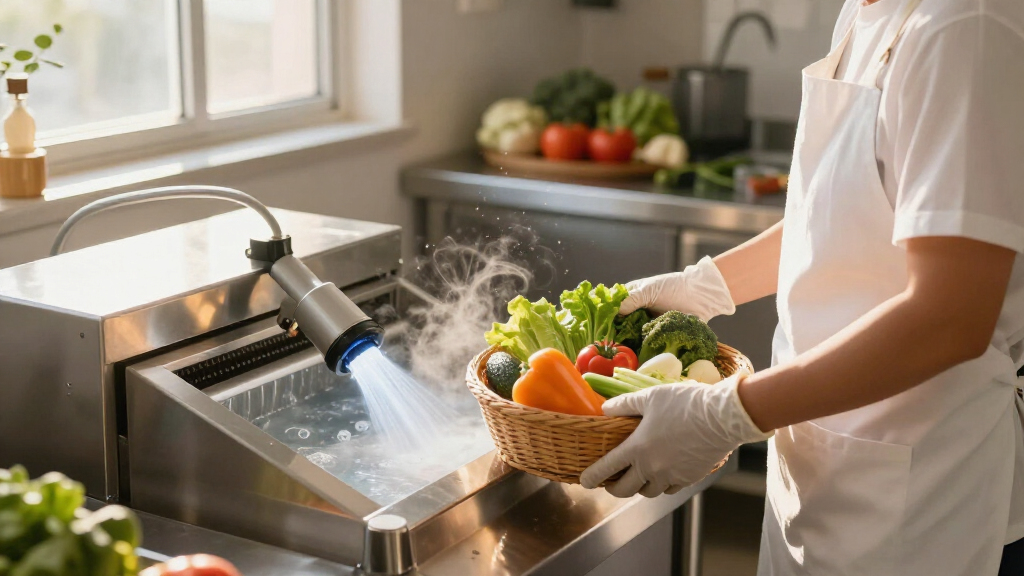
For example, in a typical processing line, a machine injects ozone into wash water or releases it as a gas into sealed chambers. This rapid reaction neutralizes harmful microbes like E. coli and Salmonella, reducing surface contamination by up to 3 log units — a level comparable to traditional chlorinated washes but without chemical residues.
Ozone’s ability to decompose back into oxygen makes it an eco-friendly choice. It leaves no harmful residues, making it safe for both workers and consumers.
commercial ozone produce sanitizer
As an affiliate, we earn on qualifying purchases.
As an affiliate, we earn on qualifying purchases.
Why Ozone Is a Game-Changer for Commercial Produce Safety
Compared to traditional washing methods, ozone offers several clear advantages. It’s faster, leaves no chemical residues, and can be used in closed-loop systems that save water. Plus, ozone treatment can extend produce shelf life by reducing spoilage organisms and mold.
For instance, berry suppliers using ozone systems report shelf life extensions of up to 5 days, reducing waste and increasing profitability. And since ozone breaks down easily, it doesn’t create chlorinated byproducts or require rinsing — saving time and water.
However, high ozone doses can cause surface oxidation or off-flavors, especially on delicate produce like berries or leafy greens. This highlights the importance of proper system design and monitoring. Too high a dose or prolonged exposure can damage the produce’s surface, leading to texture changes or off-flavors that could reduce consumer appeal. Therefore, understanding the precise dosing and contact time is crucial—balancing microbial reduction with produce quality. Proper calibration and monitoring prevent these tradeoffs, ensuring safety without compromising produce integrity.
What Features Should a Commercial Ozone Produce Sanitizing Machine Have?
Choosing the right ozone system depends on your needs. Look for equipment with adjustable timers, sensors, and safety features. Here’s a quick comparison of popular specs:
| Feature | Typical Options |
|---|---|
| Coverage Area | 2000–6000 sq ft |
| Ozone Output | 77,000 mg/h to 198,000 mg/h |
| Timer | Up to 12 hours or 180 minutes |
Additional features like automatic ozone dosing, real-time sensors, and off-gas destruct units increase safety and efficiency. For example, systems with ORP (oxidation-reduction potential) probes automatically adjust ozone levels based on water or air conditions. These features are essential for fine-tuning the process, preventing overexposure that could harm produce or pose safety risks. They also allow operators to optimize ozone levels for different produce types, ensuring microbial safety while maintaining quality. Safety is critical. Machines should include ventilation, ozone monitors, and catalytic converters to protect workers from overexposure. Integrating these features helps prevent accidental ozone buildup, reducing health risks and ensuring compliance with safety standards.
How to Use an Ozone Produce Sanitizer Without Making Mistakes
Proper use is key to getting the benefits without risking damage. Follow these steps:
- Set the correct ozone dose based on produce type and load size.
- Run the system for the recommended contact time — typically 5–15 minutes for most produce.
- Ensure the area is sealed and well-ventilated during treatment.
- Allow off-gassing or ventilation after treatment before opening the chamber.
- Regularly check sensors and replace ozone-resistant parts as recommended.
For example, a berry processor uses a 10-minute ozone cycle, then ventilates the chamber for 5 minutes before handling the produce. This prevents oxidation or off-flavors.
Monitoring ozone levels with sensors and maintaining equipment prevents overexposure and product damage. Consistent operation and adherence to recommended parameters ensure microbial safety without compromising produce quality. Overdosing can lead to oxidation, affecting taste and appearance, while underdosing might not achieve desired microbial reduction. Regular calibration and sensor checks help maintain optimal ozone levels, balancing safety and produce integrity.
Safety First: Protecting Workers When Using Ozone Machines
Ozone is a powerful oxidant that can irritate respiratory systems if misused. OSHA limits exposure to 0.1 ppm over an 8-hour period. That’s why safety features are non-negotiable.
Use ozone destruct units, proper ventilation, and ozone monitors to keep levels safe. Workers should wear masks and gloves during maintenance, and systems should have automatic shutoffs if ozone exceeds safe limits.
In a citrus packing plant, installing ozone sensors and ventilation cut worker exposure risk dramatically. Remember: safety isn’t just a feature — it’s a necessity. Proper safety protocols, including regular training and equipment checks, are essential to prevent accidental overexposure. Implementing redundant safety measures, such as alarms and automatic shutdowns, ensures that even in case of sensor failure, ozone levels remain within safe limits. This proactive approach minimizes health risks and maintains compliance with occupational health standards.
Regulations and What’s Allowed — Is Ozone Safe and Legal?
Ozone’s safety record is solid. The FDA approved ozone for direct contact with food in 1997, and the EPA recognizes it as an effective antimicrobial. It’s also permitted for organic produce under USDA rules.
However, systems must meet strict standards. Generators should be EPA-registered, and operators must follow safety guidelines to prevent overexposure. Proper documentation and adherence to regulations protect both your business and consumers. Understanding the regulatory landscape is crucial because non-compliance can result in fines, product recalls, or legal issues. Also, keeping detailed records of ozone system maintenance, safety checks, and operator training demonstrates compliance and supports quality assurance. When used correctly within regulatory boundaries, ozone remains a safe, legal, and effective method for produce sanitation.
Real-World Results — What Does Ozone Really Do for Produce?
Studies show ozone can reduce pathogens on produce surfaces by 1–3 log units — comparable to chlorine washes. In practical terms, this means a significant drop in bacteria and mold, extending freshness.
For instance, a berry farm reports that after ozone treatment, their strawberries last 3–5 days longer in cold storage, reducing spoilage and waste. These results translate into reduced economic losses and improved consumer satisfaction. But remember, ozone isn’t a magic wand. It’s a surface sanitizer, not a pesticide remover. Combining ozone with good hygiene practices yields the best results. Proper application protocols—such as correct dosing, contact time, and post-treatment ventilation—are essential to maximize benefits and minimize any potential negative effects on produce quality.
Choosing the Right Ozone System for Your Business
Picking the best ozone generator depends on your space, produce volume, and safety needs. Here are key factors:
- Coverage area — match your space, from 2,000 sq ft to 6,000 sq ft.
- Ozone output — higher mg/h for larger loads or sealed chambers.
- Timer and automation features — for precise control.
- Safety features — sensors, destruct units, ventilation.
For example, a mid-sized vegetable processing plant opts for a system with 77,000 mg/h ozone output, a 120-minute timer, and automatic safety shutoffs. That setup balances capacity and safety.
Consult vendors, compare specs, and prioritize safety to find your best fit. Remember, the ideal system should not only meet your capacity requirements but also integrate seamlessly into your workflow while maintaining safety standards. Investing in reputable brands with proven safety features ensures reliable operation and compliance with regulations.
Frequently Asked Questions
Is ozone-treated produce safe to eat?
Yes. Ozone breaks down into oxygen after treatment, leaving no harmful residues. It’s approved by the FDA for direct food contact and is widely used in food processing.
Does ozone change the taste or appearance of produce?
When used at proper doses, ozone does not affect taste or appearance. Excessive ozone can cause oxidation, so following recommended settings is vital.
How effective is ozone against pathogens like Salmonella or Listeria?
Ozone can achieve 1–3 log reductions in surface pathogens, significantly lowering contamination risk. Effectiveness depends on contact time, produce type, and ozone concentration.
Can ozone remove pesticides or wax coatings?
Ozone is not a pesticide remover, but it can degrade some surface residues and wax coatings. It’s best used alongside other cleaning methods for complete produce cleaning.
What safety precautions are needed when operating ozone machines?
Ensure proper ventilation, use ozone sensors, and install destruct units. Workers should wear protective gear during maintenance. Regular safety checks are essential.
Conclusion
Using a commercial ozone produce sanitizing machine isn’t just a quick fix — it’s a smart, sustainable way to boost food safety and reduce waste. When set up and operated properly, ozone can be your secret weapon for cleaner, longer-lasting produce.
Remember, safety and proper maintenance are key. Invest in quality equipment, follow safety protocols, and your produce will benefit both your business and your customers’ health. Ready to make your produce shine with ozone?