Aseptic filling and packaging lines use advanced sterilization and strict quality control to keep products free from microbes from start to finish. You’ll rely on heat, chemicals, or irradiation to sterilize containers and equipment, ensuring no contamination occurs during filling. Continuous environmental monitoring and automation help maintain sterile conditions, guaranteeing product safety and freshness. If you stay tuned, you’ll discover how these technologies work together to produce safe, long-lasting products efficiently.
Key Takeaways
- Aseptic lines utilize sterilization and strict quality control to prevent microbial contamination during filling and packaging.
- They employ heat, chemicals, or irradiation to sterilize containers, equipment, and product contact surfaces.
- Environmental monitoring and routine inspections ensure sterile conditions are maintained throughout the process.
- Automated, sterile equipment minimizes human contact, sealing packages under aseptic conditions post-filling.
- Digital monitoring systems enhance process reliability, traceability, and ensure final product safety and longevity.
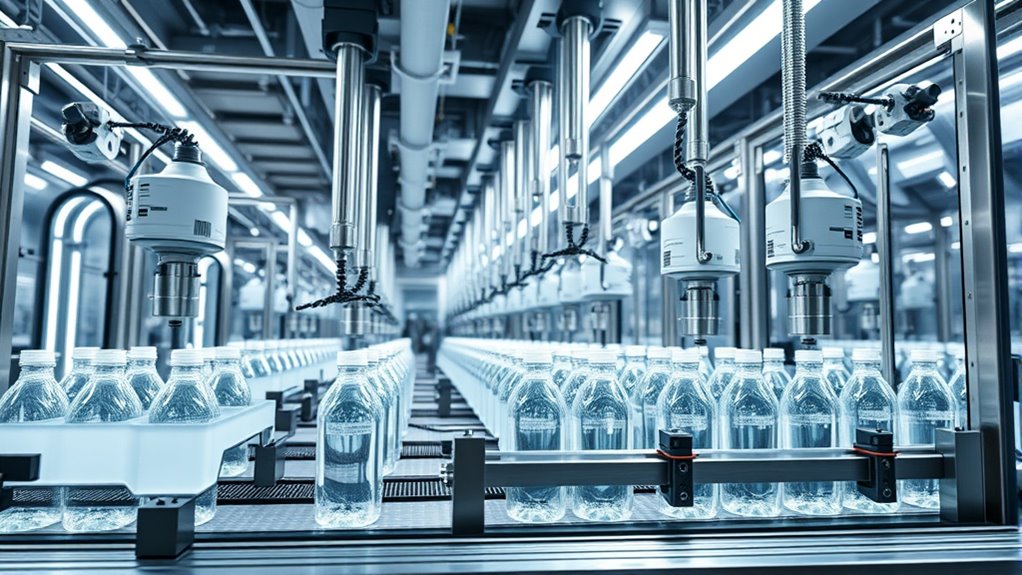
Have you ever wondered how products like juices, dairy, or pharmaceuticals stay fresh without preservatives? The secret lies in advanced aseptic filling and packaging lines, which rely heavily on meticulous sterilization processes and rigorous quality control techniques. These systems are designed to keep products free from microbial contamination from the moment they’re processed until they reach the consumer. The sterilization processes are fundamental because they eliminate all bacteria, yeasts, molds, and viruses that could spoil the product or pose health risks. Usually, this involves applying heat, chemicals, or irradiation to sterilize containers, filling equipment, and the product itself before filling begins. This guarantees that no microorganisms are introduced during the packaging phase.
Once sterilization is complete, quality control techniques come into play to verify that the environment, equipment, and products meet stringent standards. These techniques include environmental monitoring, where air, surface, and water samples are regularly tested for microbial presence. In addition, routine inspections of sterilized containers and equipment are conducted to confirm that sterilization has been effective. Any deviations from the set standards prompt immediate corrective actions, ensuring the integrity of the aseptic process. This continuous monitoring is vital because it guarantees that the product remains sterile throughout the filling and packaging stages.
In an aseptic line, everything must be meticulously maintained to prevent contamination. This means that sterilized containers are kept sealed until they reach the filling station, and the environment is kept under controlled conditions with filtered air and high hygiene standards. The filling process itself is swift and precise, often involving sterile, automated equipment that minimizes human contact, reducing the risk of introducing microbes. After filling, the packages are sealed under aseptic conditions, preventing any microbial ingress. The entire process relies on the synergy of sterilization and quality control techniques, which work together to ensure the final product’s safety and longevity. Additionally, digital monitoring systems are increasingly used to enhance accuracy and traceability throughout the process.
Frequently Asked Questions
What Are the Latest Innovations in Aseptic Filling Technology?
You’ll find that the latest innovations in aseptic filling technology include smart sensors and advanced robotics, which substantially enhance efficiency and safety. Smart sensors monitor conditions in real-time, ensuring ideal sterile environments, while advanced robotics improve precision and speed in filling processes. These advancements reduce contamination risks, minimize waste, and increase overall productivity, allowing you to meet high-quality standards consistently and stay competitive in the rapidly evolving pharmaceutical and food industries.
How Do Aseptic Lines Ensure Product Sterility During Transfer?
You guarantee product sterility during transfer by using sterility barriers like sealed transfer hatches and isolators that prevent contamination. Strict transfer protocols are followed, including maintaining aseptic conditions, disinfecting equipment, and using sterile filters. These measures keep the environment controlled and sterile, preventing microorganisms from entering the product. Properly designed transfer systems and rigorous procedures are essential to maintaining aseptic integrity throughout the process.
What Are Common Challenges Faced During Aseptic Packaging Implementation?
You might face challenges like sterility breaches caused by improper handling or equipment contamination. Ensuring consistent sterility during implementation requires thorough operator training, so staff understand proper procedures. Additionally, maintaining strict environmental controls and regularly monitoring systems helps prevent contamination. Addressing these challenges proactively minimizes risks, improves efficiency, and guarantees the integrity of the aseptic packaging process from start to finish.
How Is Equipment Maintenance Managed in Aseptic Filling Lines?
You manage equipment maintenance in aseptic filling lines through strict maintenance scheduling and regular calibration. Preventive maintenance helps you identify issues early, preventing contamination risks. You also track calibration dates to make certain sensors and controls stay accurate, maintaining product safety. By staying proactive and organized, you minimize downtime and uphold aseptic standards, ensuring the line runs smoothly and efficiently. This approach ultimately protects your product quality and brand reputation.
What Are the Environmental Impacts of Aseptic Packaging Materials?
You should consider the environmental impacts of aseptic packaging materials, focusing on recycling practices and biodegradable materials. These packaging options reduce waste and pollution by making it easier to recycle or decompose, minimizing landfill accumulation. Switching to biodegradable materials helps lessen your carbon footprint and conserves resources. By adopting sustainable practices, you support environmental protection and promote eco-friendly alternatives within the packaging industry.
Conclusion
As you navigate aseptic filling and packaging lines, remember the precision and hygiene that keep the world’s beverages pure—like the meticulous craftsmanship of a master artisan. Just as a well-tuned symphony relies on harmony, your attention to detail guarantees safety and quality. Embrace these processes, knowing you’re part of a tradition that safeguards consumers’ trust, echoing the timeless pursuit of excellence that transforms simple ingredients into trusted products.