
Consuming natural juice after exercise helps you quickly replenish glycogen stores and restore hydration. Juice provides fast-absorbing carbs and essential electrolytes that support recovery and energy levels. Opt for minimally processed options like orange or watermelon juice, which are rich in potassium and minerals. Incorporating juice into your post-workout routine can boost recovery efficiency. To discover more about optimizing your recovery with juice, keep exploring tips tailored for athletes like you.
Key Takeaways
- Juice offers quick carbohydrates that aid in rapid glycogen replenishment post-exercise.
- Consuming juice within 30 minutes after workouts optimizes carbohydrate absorption and recovery.
- Natural, minimally processed juices provide essential electrolytes and water for rehydration.
- Combining juice with protein can enhance muscle repair and overall recovery.
- Incorporating juice into a balanced recovery plan supports sustained energy and hydration levels.
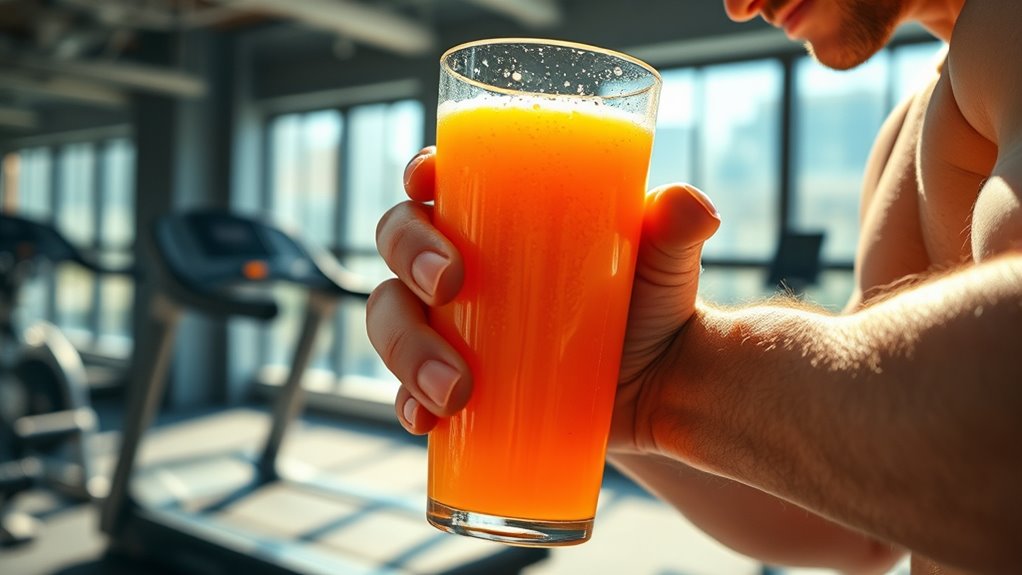
Many athletes turn to juice as a quick way to boost their energy and stay hydrated during intense training sessions. When you’re pushing your body hard, maintaining proper hydration is essential, and juice can be a convenient way to achieve that. But beyond hydration, juice also plays a critical role in your recovery, especially when it comes to replenishing glycogen stores with carbohydrates. To maximize these benefits, you need to think about your hydration strategies and supplement timing carefully.
Hydration strategies are the foundation of effective recovery. Drinking juice during and after exercise can help replace lost fluids and electrolytes, but it’s important to choose the right type of juice. Opt for natural, minimally processed options that contain a good balance of water, sugars, and electrolytes. Fruit juices like orange or watermelon juice are rich in potassium and other minerals that support hydration. Incorporating juice into your hydration plan ensures you’re not only replacing fluids but also providing your muscles with the nutrients they need to recover efficiently. Additionally, selecting hydration-friendly juices that maintain electrolyte balance can further enhance your recovery process.
Choose natural, minimally processed juices rich in water, sugars, and electrolytes to optimize hydration and recovery.
Supplement timing is equally important when using juice for recovery. Drinking juice immediately after your workout allows your body to quickly absorb carbohydrates, which are essential for restoring glycogen levels. The sooner you start replenishing, the better your chances of faster recovery. It’s a good idea to combine juice with a small amount of protein to support muscle repair, but the carbohydrates are the primary focus here. If you wait too long after training to consume juice, you risk missing the ideal window for glycogen synthesis, which can prolong recovery times and reduce your performance in subsequent sessions.
You should also think about how much juice to consume and when. A small glass (around 8 ounces) of juice within 30 minutes of finishing your workout can provide a quick carbohydrate boost. This timing ensures your body is primed to absorb and store those carbs efficiently. Additionally, spacing out your hydration strategies throughout the day can help maintain energy levels and prevent dehydration, especially during heavy training periods. Keep in mind, though, that juice shouldn’t be your only source of hydration or carbs; it’s best used as part of a balanced recovery plan that includes water, other nutrient-rich foods, and electrolytes.
Frequently Asked Questions
Are Fruit Juices Better Than Sports Drinks for Recovery?
Fruit juices can be better than sports drinks for recovery because they provide natural fruit sugar, which replenishes glycogen quickly. They also help boost hydration levels, especially if you prefer natural options over processed drinks. However, be mindful of their sugar content and choose juices with no added sugars. For ideal recovery, combine fruit juice with water and electrolytes to maintain balance and prevent dehydration.
How Much Juice Should I Consume Post-Workout?
You should consume about 8-12 ounces of juice post-workout, depending on your size and activity level. Check the juice calorie content to avoid excess calories, and be mindful of sugar content concerns, as high sugar can cause a crash later. Choose low-sugar, natural options like 100% fruit juice, and pair it with protein for ideal recovery. Adjust your intake based on your energy needs and workout intensity.
Can Juice Replace Solid Carbohydrate Sources?
Did you know that fruit juice contains about 10-15 grams of sugar per 100 ml? Juice can temporarily replace solid carbohydrate sources, but its high sugar content and low fiber mean it lacks sustained energy. The juice concentration affects how quickly sugars are absorbed, making it less ideal for long-lasting fuel. For balanced recovery, combine juice with solid carbs to optimize glycogen replenishment.
Is Natural Juice More Effective Than Processed Juice?
Natural juice is generally more effective than processed juice because it retains more fruit sugar and nutrients essential for recovery. Processing methods often strip away fiber and introduce added sugars or preservatives, reducing the benefits. When you choose natural juice, you get higher quality fruit sugars, which help replenish glycogen stores faster, making it a smarter choice for recovery. Always check labels to verify minimal processing and added ingredients.
Are There Any Risks of Consuming Too Much Juice?
Drinking too much juice can turn your health upside down faster than you can say “sugar overload.” Overdoing it risks nutrient imbalance and spikes in blood sugar, which may lead to energy crashes or long-term health issues. You might think you’re boosting your health, but excess juice can do more harm than good. Moderation is key to enjoying the benefits without risking your well-being.
Conclusion
So, next time you crush a workout, skip the fancy recovery drinks and grab some juice instead. Who needs science-backed sports nutrition when you’ve got a sugary, colorful beverage that’s basically dessert in disguise? After all, nothing screams “winning athlete” like chugging apple juice and pretending it’s a miracle cure. Stay trendy, stay hydrated, and remember: your snack choice might just be the real MVP of your recovery!

Cindy thoroughly researches juicing trends, techniques, and recipes to provide readers with practical advice and inspiration. Her writing style is accessible, engaging, and designed to make complex concepts easy to understand. Cindy’s dedication to promoting the advantages of juicing shines through her work, empowering readers to make positive changes in their lives through the simple act of juicing.