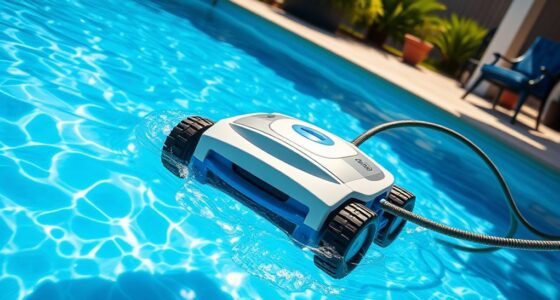
Pressure pool cleaners for inground pools use water pressure from a booster pump to sweep debris into an attached bag, which makes them far better than suction cleaners at handling leaves, acorns, and other large debris. After comparing the leading models, the Polaris Vac-Sweep 360 stands out as the best overall pick because it runs on a dedicated booster line without needing a separate booster pump purchase in some setups, and it balances cleaning power with simpler maintenance. If you want maximum debris-handling muscle, the Polaris Quattro T2 is the premium standout, while the Polaris Vac-Sweep 280 remains the value benchmark thanks to its rugged, easy-to-repair design. The main tradeoff you’ll face in this category is between power and cost: triple-jet and four-wheel models clean faster and climb walls better, but they demand higher water pressure and pricier replacement parts. Keep reading for the full breakdown of all twelve cleaners.

Get kitchen staples and gadgets delivered free with Prime
- Fast, free delivery on millions of items
- Prime Video, Amazon Music and more included
- Member-only deals all year
Complete the kit


Key Takeaways
- The Polaris lineup dominated the top of the ranking because its models have the widest parts availability, meaning a worn tail or backup valve is a five-minute fix rather than a product replacement.
- The generic 4-wheel ‘upgrade sweepers’ (MAKHOON and similar) consistently underperformed the name-brand models on build quality, but they cost a fraction of a Polaris or Pentair, making them a calculated gamble for small, lightly debris-loaded pools.
- Booster pump requirements split the field: the Polaris 360 runs on pool pump pressure alone, while the 280, 380, Quattro T2, and Kreepy Krauly Platinum all require a dedicated booster pump adding cost and plumbing complexity.
- The Polaris 380’s three jets clean faster than the 280’s two jets, but the added jet demands more pressure and more frequent tune-ups — a tradeoff that only pays off for heavy leaf loads.
- Wheel count mattered less than marketing suggests: the four-wheel generic sweepers were more stable on flat floors, but none matched the wall-climbing and corner navigation of the Polaris and Pentair machines.
| Polaris Vac-Sweep P39 Pressure Inground Pool Cleaner, Triple Jet Powered |  | Best Overall | Type: Pressure-side cleaner | Jets: Triple venturi | Drive: All-wheel PosiDrive | VIEW ON AMAZON | See Our Full Breakdown |
| Upgraded Pool Pressure Side Sweeper – 4-Wheel Professional Pool Cleaner (Amptyhub) |  | Best Value | Type: Pressure-side sweeper | Wheels: Four-wheel drive | Connection: 1.5-inch female threaded fitting | VIEW ON AMAZON | See Our Full Breakdown |
| Polaris Vac-Sweep 280 Pressure-Side In-Ground Pool Cleaner |  | Best Proven Workhorse | Model: Polaris Vac-Sweep 280 | Type: Pressure-side automatic cleaner | Jets: Dual venturi | VIEW ON AMAZON | See Our Full Breakdown |
| MAKHOON Upgrade Pool Pressure Side Sweeper – Professional Pool Cleaner, Stable 4-Wheel Structure |  | Best Budget Backup Cleaner | Type: Pressure-side sweeper | Wheels: Four-wheel structure | Connection: 1.5-inch female threaded fitting | VIEW ON AMAZON | See Our Full Breakdown |
| MAKHOON Upgrade Pool Pressure Side Sweeper – 4-Wheel, 1.5″ Female Thread Inlet, 4 Bar Pressure |  | Best for Older Pools with Existing Plumbing | Type: Pressure-side sweeper | Wheels: Four-wheel design | Required Inlet: 1.5-inch female thread | VIEW ON AMAZON | See Our Full Breakdown |
| Polaris Quattro T2 Pressure Side Pool Cleaner for Inground Pools |  | Best Premium Pick | Type: Pressure-side, track-drive | Debris Intake: 2.75 inches | Filtration: Dual-stage canister with reinforced seals | VIEW ON AMAZON | See Our Full Breakdown |
| MAKHOON Upgrade Pool Pressure Side Sweeper (4-Wheel, 1.5-Inch Threaded Inlet) |  | Best Budget Booster-Pump Option | Type: Pressure-side sweeper, booster-pump powered | Wheel Configuration: 4 wheels | Connection: 1.5-inch female threaded inlet, universal wall fitting | VIEW ON AMAZON | See Our Full Breakdown |
| Pentair LL505PMG Kreepy Krauly Platinum Pressure-Side Inground Automatic Pool Cleaner |  | Best for Wall-to-Floor Coverage | Type: Pressure-side cleaner | Coverage: Floor and walls | Compatible Surfaces: Concrete/gunite, vinyl, fiberglass | VIEW ON AMAZON | See Our Full Breakdown |
| Polaris Vac-Sweep 380 Pressure Side Pool Cleaner |  | Best for Heavy Leaf Loads | Model: Vac-Sweep 380 | Type: Pressure side | Pool Type: In-ground | VIEW ON AMAZON | See Our Full Breakdown |
| Polaris Vac-Sweep 360 Pressure-Side Cleaner for In-Ground Pools |  | Best Without a Booster Pump | Type: Pressure-side cleaner | Power Source: Pool return-line pressure (no booster pump) | Jets: 3 venturi jets | VIEW ON AMAZON | See Our Full Breakdown |
| Pentair LL505PM Kreepy Krauly Platinum Pressure-Side Inground Automatic Pool Cleaner, White/Gray |  | Best Premium for Heavy Debris | Cleaner Type: Pressure-side, booster pump powered | Pool Compatibility: Inground — concrete/gunite, vinyl-lined, fiberglass | Coverage: Floor and walls | VIEW ON AMAZON | See Our Full Breakdown |
| Amptyhub Upgrade Pool Pressure Side Sweeper – Professional 4-Wheel Pool Cleaner |  | Best Budget Booster-Pump Alternative | Cleaner Type: Pressure-side, requires separate booster pump | Pool Compatibility: Inground pools | Wheel Configuration: Four-wheel | VIEW ON AMAZON | See Our Full Breakdown |
| pressure pool cleaners for inground pool | Type | Power Source |
|---|---|---|
| Polaris Vac-Sweep P39 Pressure | Pressure-side cleaner | Separate booster pump required |
| Upgraded Pool Pressure Side Sw | Pressure-side sweeper | Separate booster pump required |
| Polaris Vac-Sweep 280 Pressure | Pressure-side automatic cleaner | — |
| MAKHOON Upgrade Pool Pressure | Pressure-side sweeper | Separate booster pump required |
| MAKHOON Upgrade Pool Pressure | Pressure-side sweeper | Hydraulic (separate booster pump) |
| Polaris Quattro T2 Pressure Si | Pressure-side, track-drive | — |
| MAKHOON Upgrade Pool Pressure | Pressure-side sweeper, booster-pump powered | Hydraulic (booster pump, not included) |
| Pentair LL505PMG Kreepy Krauly | Pressure-side cleaner | — |
| Polaris Vac-Sweep 380 Pressure | Pressure side | — |
| Polaris Vac-Sweep 360 Pressure | Pressure-side cleaner | Pool return-line pressure (no booster pump) |
| Pentair LL505PM Kreepy Krauly | — | — |
| Amptyhub Upgrade Pool Pressure | — | — |
More Details on Our Top Picks
Polaris Vac-Sweep P39 Pressure Inground Pool Cleaner, Triple Jet Powered
This option stands out for its triple venturi jets and all-wheel PosiDrive, a combination that delivers more vacuum power than the rest of this lineup. The extra-large 2.5-inch inlet matters more than it sounds: acorns, pebbles, and leaf clumps that would choke a suction-side cleaner or the smaller 2.25-inch inlet on the Polaris Vac-Sweep 280 pass straight into the 5-liter dual-chamber SuperBag, which means fewer mid-cycle cleanouts during heavy leaf season. The included TailSweep PRO also keeps the trailing spray off windows and walkways — a small detail the Amptyhub and MAKHOON budget sweepers don’t address. The tradeoff is that it still requires a dedicated booster pump and plumbing, and parts are pricier than generic models when wear items eventually need replacing.
Pros:- Triple jets with all-wheel drive for strong, consistent coverage
- 2.5-inch inlet and 5L dual-chamber bag handle large debris
- Safe for vinyl, fiberglass, gunite, pebble, and tile surfaces
- TailSweep PRO prevents spray on windows and walkways
Cons:- Requires a separate booster pump and dedicated line
- Genuine replacement parts cost more than generic-brand alternatives
Best for: Owners of inground pools with heavy leaf or acorn loads who want maximum debris capacity and power
Not ideal for: Pools without an existing booster pump setup — adding dedicated plumbing is costly and complicated
- Type:Pressure-side cleaner
- Jets:Triple venturi
- Drive:All-wheel PosiDrive
- Inlet Size:2.5 inches
- Filter Bag:5L dual-chamber SuperBag
- Hose Length:31 feet
- Power Source:Separate booster pump required
- Surfaces:Vinyl, fiberglass, gunite, pebble, tile
Our verdict“The strongest all-around pick for buyers who already have booster pump plumbing and want the most cleaning power per cycle.”
Upgraded Pool Pressure Side Sweeper – 4-Wheel Professional Pool Cleaner (Amptyhub)
For buyers who want pressure-side performance without Polaris pricing, this Amptyhub sweeper makes a case on stability and running cost. Its four-wheel chassis is pitched as more stable than three-wheel designs, and compared with the similarly priced MAKHOON 4-wheel sweeper, it shares the same Polaris 380-compatible debris bags, which keeps consumables cheap and easy to source. Coverage depends on adjusting the jet direction to match your pool’s shape, so expect some tuning before it cleans every corner — that’s the real tradeoff versus the set-and-forget Polaris P39. Like every pressure-side model here, it needs a dedicated booster pump; if your pool doesn’t already have one, the plumbing work will erase any savings.
Pros:- Four-wheel design tracks more steadily than three-wheel budget models
- Uses inexpensive Polaris 380-compatible debris bags
- Fits a variety of pool shapes and sizes with hose adjustment
- Simple, low-cost maintenance
Cons:- Requires jet-direction tuning to achieve full coverage
- No booster pump included — dedicated plumbing is mandatory
Best for: Budget-conscious owners with an existing booster pump setup who don’t need a name-brand cleaner
Not ideal for: Anyone without a 1.5-inch dedicated pressure line — this is not a plug-and-play addition
- Type:Pressure-side sweeper
- Wheels:Four-wheel drive
- Connection:1.5-inch female threaded fitting
- Debris Bag:Compatible with Polaris 380 bags
- Power Source:Separate booster pump required
- Pool Type:Inground
- Adjustment:Adjustable jet direction and feed hose length
Our verdict“A sensible low-cost entry into pressure-side cleaning for pools already plumbed for a booster pump.”
Polaris Vac-Sweep 280 Pressure-Side In-Ground Pool Cleaner
The Vac-Sweep 280 is the longest-running design in this group, and that longevity is its own argument: decades of parts availability and a service network the budget sweepers can’t match. It finishes most pools in three hours or less using dual venturi jets, and the in-line back-up valve automatically frees it from corners and steps — a genuinely useful feature the Amptyhub model leaves to hose adjustment. Compared with the P39, the 280’s 2.25-inch inlet and single-chamber bag hold less coarse debris, so heavy-leaf pools will need more frequent bag emptying. It’s also a leaner machine overall — fewer jets, simpler mechanics — which translates to fewer things to break and easier DIY repairs.
Pros:- Cleans most pools in three hours or less
- Back-up valve automatically escapes corners and steps
- Huge aftermarket parts ecosystem for easy DIY repairs
- Safe on all common pool surfaces including vinyl and fiberglass
Cons:- Requires a booster pump and professional installation is recommended
- Smaller 2.25-inch inlet and single-chamber bag limit heavy-debris capacity
Best for: Owners who value long-term serviceability and easy access to replacement parts over raw cleaning power
Not ideal for: Pools with very heavy acorn or leaf loads — the smaller inlet and single-chamber bag fill fast
- Model:Polaris Vac-Sweep 280
- Type:Pressure-side automatic cleaner
- Jets:Dual venturi
- Inlet Size:2.25 inches
- Filter:Single-chamber bag
- Hose Length:31 feet
- Weight:6.2 pounds
- Dimensions:23″L x 20″W x 10″H
- Cycle Time:3 hours or less
Our verdict“A reliable, easily serviced classic best suited to buyers planning to keep their cleaner for many years.”
MAKHOON Upgrade Pool Pressure Side Sweeper – Professional Pool Cleaner, Stable 4-Wheel Structure
This MAKHOON unit occupies the same budget tier as the Amptyhub 4-wheel sweeper, and the honest comparison is that they’re near-twins: same 1.5-inch threaded connection, same reliance on Polaris 380-compatible debris bags, same booster pump requirement. Where this one earns its slot is as a low-cost replacement or second cleaner — buyers whose old pressure-side unit died mid-season can drop this in on existing plumbing and keep the pool clean while deciding on a bigger upgrade like the Polaris Quattro T2. Coverage requires the same jet-direction tinkering as its sibling, and component quality sits below the Polaris tier, so treat it as a pragmatic stopgap rather than a decade-long investment.
Pros:- Inexpensive way to keep an existing pressure-side setup running
- Four-wheel structure for steady movement
- 380-compatible bags keep consumables affordable
- Adjustable hose suits a range of pool sizes
Cons:- Requires manual jet tuning for complete coverage
- Build quality and longevity fall short of Polaris-level machines
Best for: Owners replacing a failed cleaner on an existing booster pump line who want a cheap, functional stopgap
Not ideal for: Buyers wanting long-term durability and strong warranty support from an established brand
- Type:Pressure-side sweeper
- Wheels:Four-wheel structure
- Connection:1.5-inch female threaded fitting
- Debris Bag:Compatible with Polaris 380 bags
- Power Source:Separate booster pump required
- Pool Type:Inground
- Adjustment:Adjustable feed hose and jet direction
Our verdict“A pragmatic budget buy for pools already plumbed for a booster pump where cost matters more than brand pedigree.”
MAKHOON Upgrade Pool Pressure Side Sweeper – 4-Wheel, 1.5″ Female Thread Inlet, 4 Bar Pressure
What separates this MAKHOON variant from the identical-looking models earlier in this list is documentation and fit clarity. The listing spells out exactly what your pool needs: a 1.5-inch female-threaded dedicated inlet delivering 4 bar of pressure from a booster pump. That specificity makes it the right budget pick for older pools built with this exact legacy setup, where a Polaris 280 or P39 would also work but cost considerably more. The maker even includes practical guidance on preventing hose tangles — sun-relaxing the coiled hose, repositioning the backup valve, adding float balls — which addresses the most common complaint with budget sweepers. The catch remains the same: no dedicated line, no cleaner, and pressure-side maintenance still outpaces suction-side models.
Pros:- Explicit fit requirements remove installation guesswork
- Detailed hose-tangle prevention guidance included
- 380-compatible bags and straightforward maintenance
- Four-wheel design for stable coverage
Cons:- Only works with a 1.5-inch threaded inlet at 4 bar pressure
- Generic-brand durability trails established pressure-side cleaners
Best for: Owners of older pools with a pre-installed 1.5-inch booster line who need an affordable direct-fit replacement
Not ideal for: Newer pools or builds without a dedicated pressure inlet — the required plumbing retrofit is expensive
- Type:Pressure-side sweeper
- Wheels:Four-wheel design
- Required Inlet:1.5-inch female thread
- Required Pressure:4 bar
- Power Source:Hydraulic (separate booster pump)
- Debris Bag:Compatible with Polaris 380 bags
- Pool Type:Inground
- Color:Black & White
Our verdict“The best budget match for legacy pools already equipped with the exact 1.5-inch booster inlet it requires.”
Polaris Quattro T2 Pressure Side Pool Cleaner for Inground Pools
This is the most technically ambitious pressure cleaner in this lineup. Where the Polaris Vac-Sweep 380 relies on three jets and a mesh bag, the Quattro T2 adds TankTrax track drive for genuine wall-climbing traction, front and side scrubbing brushes, and dual-stage filtration inside a sealed canister — meaning it traps fine silt that bag-style cleaners often pass back into the water. The 2.75-inch intake is also the largest here, edging out the 380’s 2.25-inch opening. The tradeoff is straightforward: it’s a premium machine that demands a dedicated booster pump, and its 28-pound build makes retrieval and canister servicing heavier work than lighter sweepers like the MAKHOON. Compared with the Pentair Kreepy Krauly Platinum, it offers more aggressive scrubbing but at a higher ownership commitment. This pick makes the most sense for owners who want pressure-side simplicity with near-robotic scrubbing performance.
Pros:- TankTrax track drive grips steps, slopes, and walls better than wheeled rivals
- 2.75-inch intake swallows acorns, pebbles, and large leaves without clogging
- Dual-stage canister filtration with sealed design captures fine debris, not just leaves
- Front and side brushes actively loosen stuck-on grime from floor to waterline
Cons:- Requires a dedicated booster pump and 28-pound unit is heavy to haul out for cleaning
- Premium build comes with premium upkeep — tracks, brushes, and seals are added wear parts
Best for: Owners of large or heavily soiled inground pools who already have a booster pump and want active scrubbing plus fine-debris filtration
Not ideal for: Buyers without an existing dedicated booster pump line — the added plumbing and pump cost makes this an expensive retrofit
- Type:Pressure-side, track-drive
- Debris Intake:2.75 inches
- Filtration:Dual-stage canister with reinforced seals
- Power Requirement:Dedicated booster pump (sold separately)
- Cable/Hose Reach:Up to 70 ft pools
- Dimensions:15.5 x 15.5 x 10.75 inches
- Weight:28 pounds
Our verdict“If your pool already has a booster pump setup and you want the deepest pressure-side clean available, the Quattro T2 justifies its premium positioning.”
MAKHOON Upgrade Pool Pressure Side Sweeper (4-Wheel, 1.5-Inch Threaded Inlet)
The MAKHOON targets a specific buyer: someone with an older pool already plumbed for a booster-pump cleaner who wants to replace a failing unit without paying Polaris prices. Its 4-wheel layout is more stable on slopes than 3-wheel designs, and the universal wall fitting screws into a standard 1.5-inch female threaded inlet — the same footprint Polaris cleaners like the Vac-Sweep 380 use. The differences show up in refinement: there’s no scrubbing brush, no wall-climbing track system like the Quattro T2, and coverage depends on manually tuning jet direction to your pool’s shape. Hose management also demands patience — the unit ships coiled, and taming it takes sunny-day flattening and float-ball adjustments. Still, for a working cleaner at a fraction of brand-name cost, this option stands out as the value play among booster-pump models.
Pros:- Four-wheel base tracks straighter and resists tipping better than 3-wheel sweepers
- Universal wall fitting matches standard 1.5-inch threaded booster-pump inlets
- Far lower cost than name-brand equivalents while covering floors of varied pool shapes
- Straightforward maintenance with inexpensive replaceable parts
Cons:- Coverage depends on manual jet adjustment, and hose tangling requires hands-on fixes
- No scrubbing brushes or wall-climbing ability — floors only
Best for: Budget-minded owners replacing an old booster-pump cleaner on a pool with an existing 1.5-inch threaded dedicated inlet
Not ideal for: Anyone whose pool lacks a dedicated pressure line — adding a booster pump and plumbing erases the savings entirely
- Type:Pressure-side sweeper, booster-pump powered
- Wheel Configuration:4 wheels
- Connection:1.5-inch female threaded inlet, universal wall fitting
- Required Pressure:4 Bar (approx. 58 psi)
- Power Source:Hydraulic (booster pump, not included)
- Weight:8.19 kg (approx. 18 pounds)
Our verdict“A sensible low-cost swap for an existing booster-pump setup, as long as you accept hands-on tuning and floor-only cleaning.”
Pentair LL505PMG Kreepy Krauly Platinum Pressure-Side Inground Automatic Pool Cleaner
Most budget pressure sweepers in this roundup — the MAKHOON included — clean floors only. The Kreepy Krauly Platinum is the affordable name-brand option that also cleans walls, which matters if your pool collects film and debris lines above the floor line. Its fast 1-3 hour cleaning cycle beats the Polaris Vac-Sweep 380’s three-hour pace, and the included 33-foot hose runs two feet longer, giving oddly shaped pools extra reach. Unlike the Quattro T2, there are no powered scrubbing brushes — it relies on vacuum action rather than agitation — so stuck-on algae won’t be brushed away. It also demands a booster pump like the 380 does. This model is better suited to buyers who want proven brand reliability and wall coverage without stepping up to the Quattro’s price and complexity.
Pros:- Cleans both pool floors and walls, unlike floor-only budget sweepers
- Completes a full cycle in 1-3 hours, faster than the Polaris 380
- Safe on concrete/gunite, vinyl, and fiberglass surfaces
- Includes a generous 33-foot hose for larger pools
Cons:- Requires a separate booster pump, adding cost and plumbing
- No scrubbing brushes, so it struggles with stuck-on deposits
Best for: Owners who want a trusted brand-name cleaner that handles both floors and walls with a quick cycle time
Not ideal for: Pools with heavy algae or grime buildup — with no active brushes, it vacuums but doesn’t scrub
- Type:Pressure-side cleaner
- Coverage:Floor and walls
- Compatible Surfaces:Concrete/gunite, vinyl, fiberglass
- Cleaning Time:1-3 hours
- Included Hose:33 feet
- Power Requirement:Booster pump (not included)
- Color:Gray
Our verdict“A dependable middle path for buyers who want wall coverage and brand-name support without the Quattro T2’s premium.”
Polaris Vac-Sweep 380 Pressure Side Pool Cleaner
The Vac-Sweep 380 remains the reference point for pressure-side cleaning, and its triple-jet propulsion is why: three venturi jets generate more vacuum pull than the twin-jet Polaris 280, letting it finish a full pool in three hours or less. The 2.25-inch inlet and oversized single-chamber filter bag are built around one job — swallowing large debris like acorns, leaves, and pebbles before they ever reach your pump basket, which protects your filtration system from the kind of abuse leaf-heavy yards inflict. Compared with the newer Quattro T2, it gives up scrubbing brushes, track drive, and fine-debris canister filtration, but it’s a simpler machine with fewer wear components and broader parts availability. Like every booster-pump Polaris, it won’t run without that dedicated pump. For yards that bury the pool in leaves each fall, this classic still earns its spot.
Pros:- Triple-jet power cleans the entire pool in three hours or less
- 2.25-inch inlet and large filter bag handle acorns and pebbles without clogging
- Captures debris before it reaches the pump basket, extending filter life
- Safe on vinyl, fiberglass, gunite, pebble, and tile surfaces
Cons:- Requires a separate booster pump to operate
- Single-chamber mesh bag lets fine particles through and needs frequent emptying
Best for: Pool owners in leaf-heavy or debris-prone yards who need large-debris capacity and a proven, serviceable design
Not ideal for: Buyers hoping for fine-silt filtration or scrubbing action — the mesh bag and jet-only design pass on both
- Model:Vac-Sweep 380
- Type:Pressure side
- Pool Type:In-ground
- Cleaning Time:3 hours or less
- Inlet Size:2.25 inches
- Filter Type:Single-chamber filter bag
- Hose Length:31 feet
- Compatible Surfaces:Vinyl, fiberglass, gunite, pebble, tile
Our verdict“The go-to choice when big debris is your main enemy and you value a time-tested design over the newest features.”
Polaris Vac-Sweep 360 Pressure-Side Cleaner for In-Ground Pools
The 360 occupies a unique slot in this lineup: it delivers Polaris triple-jet pressure cleaning without requiring a booster pump, running directly off your pool’s return-line pressure. That single difference saves buyers the cost of a pump, the electricity to run it, and a plumbing retrofit — which is why it ranks above the similarly performing Vac-Sweep 380 for anyone without an existing booster setup. The tradeoff is pressure dependency: return-line pressure is weaker than a dedicated pump, so performance dips on pools with undersized circulation, and a standard return may need the retrofit eyeball kit to properly propel the unit. Debris handling matches the 380’s 2.25-inch inlet and filter bag, and the 31-foot hose covers most residential pools. Compared with the MAKHOON, it costs more but brings far more consistent navigation and brand-name parts support.
Pros:- Runs on existing return-line pressure — no booster pump purchase or wiring
- Three venturi jets with a 2.25-inch inlet capture large debris reliably
- Filter bag protects the pump basket and extends filtration-system life
- Safe on vinyl, fiberglass, gunite, pebble, and tile with easy attachment
Cons:- Cleaning power depends on return-line pressure, which varies by pool setup
- Standard return lines may need a retrofit eyeball kit for proper propulsion
Best for: Owners without a dedicated booster pump who still want Polaris-quality pressure cleaning from a standard return line
Not ideal for: Pools with weak circulation or a single standard return — low pressure and the extra eyeball-kit step make performance unpredictable
- Type:Pressure-side cleaner
- Power Source:Pool return-line pressure (no booster pump)
- Jets:3 venturi jets
- Inlet Size:2.25 inches
- Filter Type:Single-chamber filter bag
- Included Hose:31 feet of feed hose
- Compatible Surfaces:Vinyl, fiberglass, gunite, pebble, tile
- Retrofit Option:Eyeball kit (part 9-100-8001) for standard return lines
Our verdict“The smartest pressure-side entry point if you lack a booster pump, provided your circulation system delivers solid return pressure.”
Pentair LL505PM Kreepy Krauly Platinum Pressure-Side Inground Automatic Pool Cleaner, White/Gray
The Kreepy Krauly Platinum stands out as the closest thing to an industrial-grade sweeper a residential pool can get. Its dual thrust jets and oversized intake throat let it swallow whole leaves that would clog a Polaris Vac-Sweep 280, which makes this model the pick for pools surrounded by heavy landscaping. The four-wheel design with front-wheel drive and deeply treaded tires solves the tipping problem that plagues three-wheel cleaners, holding the wall line on inclined surfaces instead of sliding back down. Cleaning cycles land in the 1–3 hour range, so it finishes fast and leaves the skimmer free to work the surface. The tradeoffs are real: it requires a dedicated booster pump, the disposable debris bags are an ongoing expense, and it costs considerably more than the Polaris 360, which needs no booster at all. Compared with the Polaris Quattro T2, it trades sweeping modern design for raw debris capacity.
Pros:- Huge intake throat and large-capacity debris channel handle whole leaves without clogging
- Four-wheel design resists tipping and maintains traction on walls and inclines
- Dual thrust jets clean most pools in 1-3 hours
- Works on concrete/gunite, vinyl, and fiberglass surfaces
- Independent booster pump keeps surface skimming unimpeded
Cons:- Requires a separate booster pump and dedicated plumbing line
- Disposable debris bags create a recurring consumable cost
- Premium price point well above three-wheel alternatives
Best for: Owners of inground pools with lush landscaping, heavy leaf fall, or large organic debris who already have a booster pump setup
Not ideal for: Buyers on a budget or without an existing booster pump — the added pump and piping, plus disposable debris bags, push total cost of ownership well beyond entry-level pressure cleaners
- Cleaner Type:Pressure-side, booster pump powered
- Pool Compatibility:Inground — concrete/gunite, vinyl-lined, fiberglass
- Coverage:Floor and walls
- Hose Length:33 feet
- Wheel Configuration:Four-wheel, front-wheel drive with treaded tires
- Cleaning Cycle:1-3 hours
- Dimensions:12″ L x 12″ W x 12″ H
- Weight:21 pounds
- Color:White/Gray
Our verdict“If your pool battles heavy leaf loads and you already run a booster pump, this is the pressure cleaner built specifically for that job — everyone else can spend far less elsewhere.”
Amptyhub Upgrade Pool Pressure Side Sweeper – Professional 4-Wheel Pool Cleaner
This Amptyhub four-wheel sweeper is the pragmatic pick for anyone who wants Polaris-style performance without the Polaris price. It threads into a standard 1-1/2″ female fitting and uses a 380-compatible debris bag, which means replacement parts stay cheap and easy to find — a genuine advantage over proprietary systems like the Polaris Quattro T2. The four-wheel layout gives it the stability that budget three-wheel cleaners lack, keeping coverage consistent on walls and uneven floors. The honest catch, which the listing is upfront about, is that it will not run without a separate booster pump. That single requirement separates its audience sharply: if you already have booster plumbing, it’s a bargain; if you don’t, the added pump and piping costs erase the savings, and something like the Polaris Vac-Sweep 360, which runs off the main filter pump, makes more sense. Expect some tinkering — the jet direction often needs adjusting to match your pool’s shape before coverage is complete.
Pros:- Four-wheel design is more stable and consistent than three-wheel budget cleaners
- Debris bag and replacement parts are compatible with Polaris 380 components
- Standard 1-1/2″ threaded fitting installs quickly on existing booster lines
- Adjustable feed hose and jet direction suit a variety of pool shapes and sizes
Cons:- Requires a separate booster pump to operate at all
- Jet direction needs manual adjustment before full pool coverage is achieved
- Generic brand means less proven long-term reliability than Polaris or Pentair units
Best for: Budget-conscious owners who already have a booster pump installed and want cheap, replaceable parts
Not ideal for: Pools without a dedicated booster pump and pressure line — the required pump and plumbing additions wipe out the cost advantage entirely
- Cleaner Type:Pressure-side, requires separate booster pump
- Pool Compatibility:Inground pools
- Wheel Configuration:Four-wheel
- Inlet Fitting:1-1/2″ female threaded pipe
- Debris Bag Compatibility:Fits Polaris 380 replacement bags
- Hose:Adjustable feed hose to fit pool length
- Body Material:High-quality plastic
Our verdict“A sensible money-saving swap for an existing booster-pump system — but anyone lacking that plumbing should look at pump-independent models instead.”

How We Picked
I judged each cleaner on five factors that actually drive long-term satisfaction with pressure pool cleaners for inground pools. Cleaning performance came first — floor coverage, wall climbing, and the ability to capture large debris without clogging. Booster pump requirements came next, because a cleaner that forces you to buy and plumb a booster pump carries a hidden cost the sticker price never shows. Build quality and parts availability weighed heavily: pressure cleaners live in harsh, chlorinated water for years, and a model with no replacement parts is disposable by design.
From there, I scored ease of maintenance — how simple it is to empty the debris bag, replace a worn tail sweep, or rebuild a backup valve — and value relative to durability. This is why the ranking favors name-brand Polaris and Pentair models at the top even though generic sweepers undercut them on price: the cheap models are ranked for buyers with modest needs and tight budgets, not as equals. When two cleaners performed similarly, the one with better parts support and simpler upkeep ranked higher.
| pressure pool cleaners for inground pool | Type | Power Source |
|---|---|---|
| Polaris Vac-Sweep P39 Pressure | Pressure-side cleaner | Separate booster pump required |
| Upgraded Pool Pressure Side Sw | Pressure-side sweeper | Separate booster pump required |
| Polaris Vac-Sweep 280 Pressure | Pressure-side automatic cleaner | — |
| MAKHOON Upgrade Pool Pressure | Pressure-side sweeper | Separate booster pump required |
| MAKHOON Upgrade Pool Pressure | Pressure-side sweeper | Hydraulic (separate booster pump) |
| Polaris Quattro T2 Pressure Si | Pressure-side, track-drive | — |
| MAKHOON Upgrade Pool Pressure | Pressure-side sweeper, booster-pump powered | Hydraulic (booster pump, not included) |
| Pentair LL505PMG Kreepy Krauly | Pressure-side cleaner | — |
| Polaris Vac-Sweep 380 Pressure | Pressure side | — |
| Polaris Vac-Sweep 360 Pressure | Pressure-side cleaner | Pool return-line pressure (no booster pump) |
| Pentair LL505PM Kreepy Krauly | — | — |
| Amptyhub Upgrade Pool Pressure | — | — |
Factors to Consider When Choosing Pressure Pool Cleaners For Inground Pools
Before you settle on a specific model, it helps to understand the landscape of pressure pool cleaners for inground pools — because the most common buying mistakes happen before installation, not during use.Booster Pump: The Hidden Cost That Changes Everything
The single biggest decision is whether your pool already has a dedicated booster pump and pressure line. Most pressure cleaners — including the Polaris 280, 380, Quattro T2, and Pentair Kreepy Krauly Platinum — require a 3/4 HP booster pump running on its own dedicated return line. If your pool wasn’t plumbed for one, adding it means several hundred dollars in equipment plus electrical work, which can double the true cost of a ‘budget’ cleaner. The Polaris 360 is the notable exception: it runs off your existing pool pump’s pressure, though it performs best when your pump produces strong, consistent flow. Buyers who skip this check are the ones writing frustrated reviews a week after installation, so verify your plumbing before anything else.
Debris Load: Match the Cleaner to Your Yard
The whole point of pressure-side cleaning is large debris capacity, so be honest about what your pool collects. If you back onto trees that dump leaves and acorns every autumn, you need a cleaner with a large-capacity bag, a wide throat, and multiple jets — that’s where the Polaris 380 and Quattro T2 earn their premium pricing. Pools that mostly collect fine silt, sand, and the occasional bug don’t need triple-jet power; a dual-jet model like the 280 handles light loads and saves money both upfront and in parts. Under-buying means daily bag emptying and frustration; over-buying means paying for jets and features your pool will never use. Walk your yard, watch what settles in the skimmer over a week, and size accordingly.
Parts Availability: The Difference Between a Cleaner and a Paperweight
This is where name-brand and generic cleaners diverge the most, and it’s the mistake most first-time buyers make. Polaris and Pentair have decades-deep parts ecosystems — backup valves, feed hoses, wheel bearings, and tail sweeps are stocked at every pool supply store and online. When a Polaris stops working in year four, you replace a $20 part. The generic 4-wheel sweepers on this list have thin or nonexistent parts support, so a single cracked fitting or worn turbine can end the product’s life. If you’re tempted by a low price, ask yourself whether you’d rather repair a cleaner for ten years or replace a cheap one every two. For most buyers, parts availability is worth more than any feature on the box.
Pool Shape, Size, and Surface Type
Cleaner performance varies with your pool’s geometry more than most buyers expect. Long, narrow pools favor cleaners with predictable backup-valve patterns like the Polaris 280 and 380, which reverse direction on a timer and cover the floor in methodical passes. Complex shapes with tight corners, benches, and tanning ledges tend to trap simpler cleaners, while models with more sophisticated navigation like the Quattro T2 handle obstacles better. Surface matters too: pressure cleaners climb plaster and pebble finishes well, but very smooth surfaces can cause wheel slip on cheaper models. Measure your pool, note its features, and read each review with your layout in mind — the same cleaner can be a star in one pool and a dud in another.
Maintenance Habits and Total Cost of Ownership
Every pressure cleaner has consumables, and pretending otherwise is how budgets get blown. Expect to replace tail sweep hoses, debris bags, and feed hose sections every one to two seasons depending on use, plus periodic rebuilds of the backup valve and wheel assemblies. Name-brand consumables are easy to find but cost more per part; generic cleaners use cheaper parts that can be harder to source. Jet count also affects upkeep — the Polaris 380’s three jets mean more pressure demand and more frequent tune-ups than the 280’s simpler two-jet system. Factor roughly a modest annual maintenance budget into your decision, because the purchase price is only the first of many payments.
When a Pressure Cleaner Isn’t the Right Choice at All
An honest buying guide has to say this: pressure cleaners excel at large, heavy debris, but they aren’t automatically the best category for every pool. If your problem is fine algae and dust rather than leaves, a robotic cleaner with fine filtration will outperform any pressure model. If your pool has no dedicated pressure line and you don’t want to add a booster pump, a suction-side cleaner plugs into your existing skimmer for far less money. Pressure cleaners also add strain on your pump and can increase energy use since they typically run on a timer with the booster engaged. Choose pressure-side when your debris is chunky, your plumbing supports it, and you want debris captured in a bag rather than sent to your filter.
Frequently Asked Questions
Do I need a booster pump for a pressure pool cleaner, or can I run one without?
It depends entirely on the model. The Polaris 280, 380, Quattro T2, and both Pentair Kreepy Krauly Platinum cleaners require a dedicated booster pump on a 3/4 HP, 1.5-inch threaded pressure line — running them without one means weak movement and poor debris pickup. The Polaris 360 is the main exception, designed to operate on your existing pool pump’s pressure, which makes it the go-to choice for pools never plumbed for a booster. Check your equipment pad for a second, smaller pump before buying anything; if it’s absent, either budget for a booster pump installation or choose a cleaner like the 360 that doesn’t need one. This single compatibility check prevents the most common installation disappointment in the category.
Why is the Polaris 280 often recommended over the more powerful 380?
Because power isn’t the only variable that matters over a cleaner’s lifespan. The 380 uses three jets to cover the floor faster and handle heavier debris, but those jets demand more water pressure, wear faster, and require more frequent tune-ups to stay in balance. The 280’s two-jet design is simpler, more forgiving of imperfect pressure, and its parts are the cheapest and easiest to find in the entire category. For a typical residential pool with moderate debris, the 280 cleans nearly as well with less fuss. The 380 makes sense when leaf load is genuinely heavy and you’re willing to maintain it — otherwise the 280’s simplicity wins.
Are the generic 4-wheel pressure sweepers actually worth buying?
They can be, but only with clear expectations. Compared with a Polaris or Pentair, the generic 4-wheel sweepers cut costs through lighter plastics, simpler jet assemblies, and minimal parts support — so when something wears out, replacement parts may simply not exist. Where they make sense is a small pool with light debris, a tight budget, and an owner who accepts the cleaner may be disposable after a couple of seasons. Their four-wheel stability on flat floors is real, but none of them match the wall-climbing and navigation of name-brand models. If you can stretch to a Polaris 280, the longevity difference pays for itself; if you truly can’t, a generic sweeper is a reasonable short-term bridge.
How often should I run a pressure cleaner, and will it raise my energy bill?
Most pressure cleaners do their best work running 2 to 3 hours per day on a timer, typically alongside your filtration cycle when the booster pump is engaged. Running it longer rarely improves results — once the debris bag is full, the cleaner just stirs water around while the booster pump burns electricity. Because booster pumps draw real power, adding several hours of daily runtime does show up on your bill, which is why sizing your runtime to your actual debris load matters. During heavy leaf season you might extend the cycle; in quiet months you can cut it back. Automating this with a simple timer is the easiest way to balance cleanliness and cost.
What regular maintenance does a pressure pool cleaner need?
Plan on three recurring tasks. First, empty the debris bag whenever it’s half full — an overfull bag reduces jet pressure and forces the cleaner to work harder, and it’s the most neglected chore in pool care. Second, inspect the tail sweep and hose sections monthly for cracks and wear, since these are the cheapest parts to replace and the first to fail. Third, every season or two, rebuild the backup valve and check wheel bearings or turbine vanes, which are available as inexpensive kits for Polaris and Pentair models. Skipping maintenance doesn’t just reduce cleaning performance; it shifts strain onto the booster pump. Fifteen minutes of monthly attention is the difference between a cleaner that lasts five years and one that lasts fifteen.
Conclusion
The right choice among these pressure pool cleaners for inground pools comes down to your plumbing, your debris load, and your appetite for maintenance. For most buyers, the Polaris Vac-Sweep 360 is the best overall pick — it delivers Polaris-grade cleaning and parts support without requiring a booster pump, which removes the category’s biggest hidden cost. If value is your priority and you already have a booster line, the Polaris Vac-Sweep 280 is the smartest money in the lineup: simple, rugged, and cheap to keep alive for a decade.
Buyers with heavy leaf loads and larger budgets should step up to the Polaris Quattro T2 as the premium choice, with the Polaris 380 as a close alternative for faster coverage at a slightly lower tier. For those who want a different brand’s take on premium cleaning, the Pentair Kreepy Krauly Platinum is a proven wall-climber worth a look. Beginners who want the simplest possible ownership experience should lean toward the 280 for its forgiving two-jet design and universal parts availability. And for tight budgets on small, low-debris pools, a generic 4-wheel sweeper works as an entry point — just go in knowing it’s a short-term tool, not a decade-long companion. Match the pick to your pool, and the cleaner will do the rest.
NFL season / tailgating Picks
team gear
As an affiliate, we earn on qualifying purchases.