
TL;DR

Get kitchen staples and gadgets delivered free — and shop member deals
- Fast, free delivery on millions of items
- Access to Prime Big Deal Days deals on October 6–7
- Prime Video, Amazon Music and more included
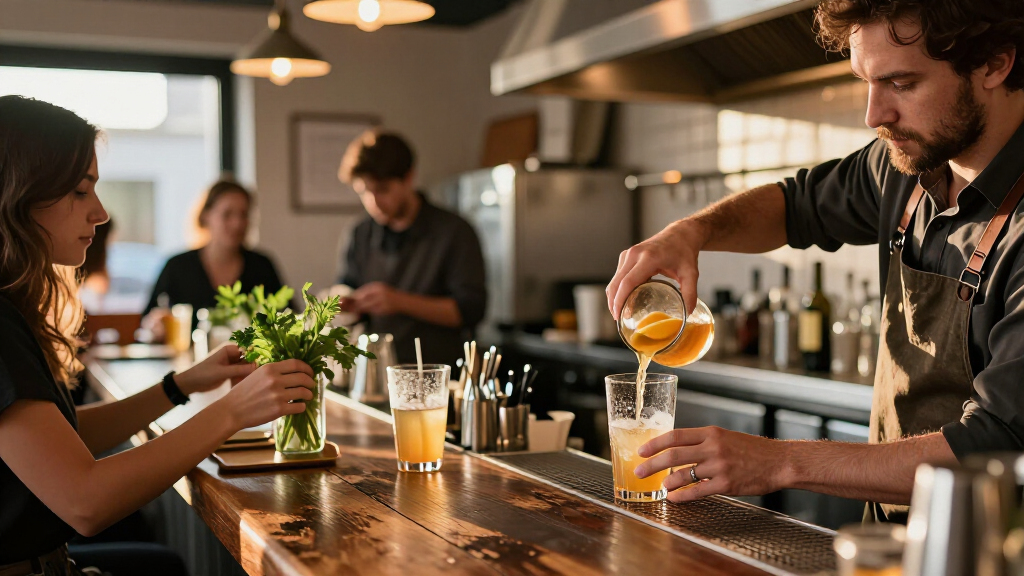
A VinePair report describes how restaurant beverage professionals are adapting to rising costs, supply disruption and limited storage and staff time. Their approaches include offering alternatives to expensive wines, setting prices with guest demand in mind and coordinating larger purchases when storage allows.
Restaurant beverage directors are adjusting wine selections, pricing and purchasing as rising costs, tariffs and disruption in the wholesale market make it harder to maintain beverage programs, according to a report by VinePair. The strategies vary by business: some buyers look for less expensive wines that still appeal to guests, while others pursue volume discounts when they have room to store stock.
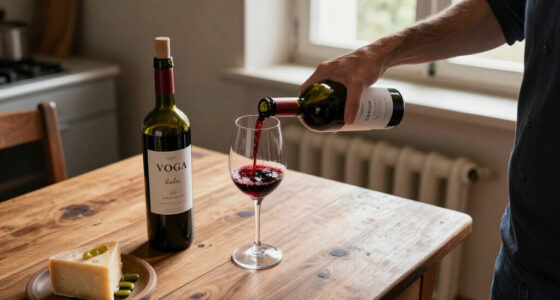
For wine programs, one response to steep prices in famous regions is to offer alternatives rather than simply pass the cost on to guests. Will Jones, wine director at The Hope Farm and Little Bird in Fairhope, Alabama, said he may recommend wines from Hautes-Côtes de Beaune or Hautes-Côtes de Nuits, or Bourgogne Rouge and Bourgogne Blanc, instead of Premier Cru Burgundy. He said he cannot sell Premier Cru Burgundy at the same price as five years ago.
Felipe de Assis Villela, beverage director at Bluepoint Hospitality Group in Easton, Maryland, said he can introduce guests to wines from northern Italy, Austria or Germany that offer a compelling story at a lower price than top Burgundy. In his comparison, a Grand Cru German wine might cost less than $200, while a Grand Cru Burgundy could cost $1,800. Those are examples from his program, not a general price survey.
Pricing choices also reflect the need to balance restaurant revenue with what guests will pay. De Assis Villela said he is not focused solely on a percentage markup and tries to price some wines so they sell while still making money. Another option is buying in volume: Amanda Reed of Seattle’s E3 Co. Restaurant Group said distributors sometimes offer discounts for five or 10 cases. Because storage is limited at most of the group’s properties, she may arrange to commit to a larger purchase but receive it in smaller deliveries.
The decisions described in the report affect both what guests can order and what restaurants can afford to stock. When a well-known wine becomes much more expensive, offering a different region or style can give customers another option without removing the sense of discovery that a beverage program is meant to provide.
Buying more at once may reduce unit costs or help guard against shortages, but it depends on available cash, storage and the ability to take deliveries in stages. Meanwhile, adding steep markups may protect margins but make already costly bottles less accessible. The report presents these as practical trade-offs rather than one solution that works for every venue.
As an affiliate, we earn on qualifying purchases.
Costs, Supply and Buyer Workloads
VinePair describes several pressures shaping beverage operations: inflation and tariffs, supply-chain difficulties, labor costs and changes in the wholesale sector. The report points to the collapse of Republic National Distributing Company, once the country’s second-largest beverage wholesaler, and its Chapter 11 bankruptcy as part of recent disruption. The supplied source material does not provide dates or detailed market figures for those developments.
Buyers also face a crowded market of products and categories, alongside administrative work. Johannus Grevelink, beverage director for José Andrés Group, told VinePair that his inbox can receive 40 to 60 product pitches a day, some with the company’s name spelled incorrectly. The volume illustrates the time pressure buyers face, though the report does not quantify how that workload affects sales or staffing across the industry.
““I cannot sell Premier Cru Burgundy for the same price we could five years ago.””
— Will Jones, wine director at The Hope Farm and Little Bird
Where the Strain Varies by Venue
The report offers examples from individual operators, but it does not quantify how much costs have risen, how widespread each strategy is, or whether the approaches improve overall profitability. It also does not provide current wholesale data or a detailed account of the scale and timing of RNDC’s market impact. Storage capacity, distributor terms and guest preferences differ between businesses, so the examples should not be read as a standard industry playbook.
The source material also does not explain the “hidden costs” referenced in the article’s introduction in detail. It remains unclear which additional expenses are most significant for the businesses discussed or how those costs affect their menus and staffing.
How Operators May Adjust Purchases
The report describes ongoing adjustments rather than a scheduled industry decision or policy change. Beverage directors are likely to keep weighing availability, storage limits and guest demand as they choose products and negotiate orders, but VinePair’s supplied material does not identify a specific next milestone or forecast.
For readers, the practical signal is that a wine list may change as prices and supply change: an alternative bottle could stand in for a familiar region, and discounts may depend on a restaurant’s ability to purchase and store several cases. The report does not say which particular wines, distributors or pricing strategies will become more common.
Key Questions
What pressures are beverage programs facing?
VinePair cites inflation, tariffs, supply-chain problems, labor costs and disruption in the wholesale sector. It also describes the time required to review product pitches and handle administrative work.
How are restaurants responding to higher wine prices?
Some beverage directors offer wines from other regions or appellations at lower prices, aiming to give guests a satisfying alternative to increasingly expensive bottles. The examples in the report come from individual restaurant professionals.
Why don’t all restaurants buy wine in bulk?
Volume discounts may require purchases of several cases, but restaurants need storage space and the capacity to pay for and manage larger orders. Reed said her group can sometimes commit to a larger quantity while taking delivery in smaller batches.
Does the report show that these strategies are increasing profits?
No. The report gives examples of operators’ approaches but does not provide profit data or compare results across restaurants. De Assis Villela said his program still makes money, while acknowledging that its percentage margin may be lower.
Source: rss
Fall Picks
fall essentials
As an affiliate, we earn on qualifying purchases.