
Bottle caps are designed to keep your beverages fresh and prevent leaks through careful engineering of torque, liners, and seals. Torque ensures the cap is tight enough to avoid spills but easy enough to open. Liners form an airtight barrier that stops oxygen and contaminants from spoiling the drink. Properly designed caps maintain carbonation and prevent leaks, extending shelf life. Interested in how these features work together? Keep exploring to uncover the full details behind bottle cap technology.
Key Takeaways
- Proper torque in bottle caps balances ease of opening with maintaining a tight seal to prevent leaks and preserve beverage freshness.
- Liners provide an airtight barrier, conforming to the bottle opening to prevent leaks, contamination, and preserve carbonation.
- Tight seal integrity, supported by appropriate torque and liner fit, is essential for leak prevention and extending shelf life.
- Child-resistant caps and tamper-evident seals enhance safety, ensuring accidental opening and contamination are minimized.
- Innovative materials and designs improve leak prevention, environmental sustainability, and overall cap performance.
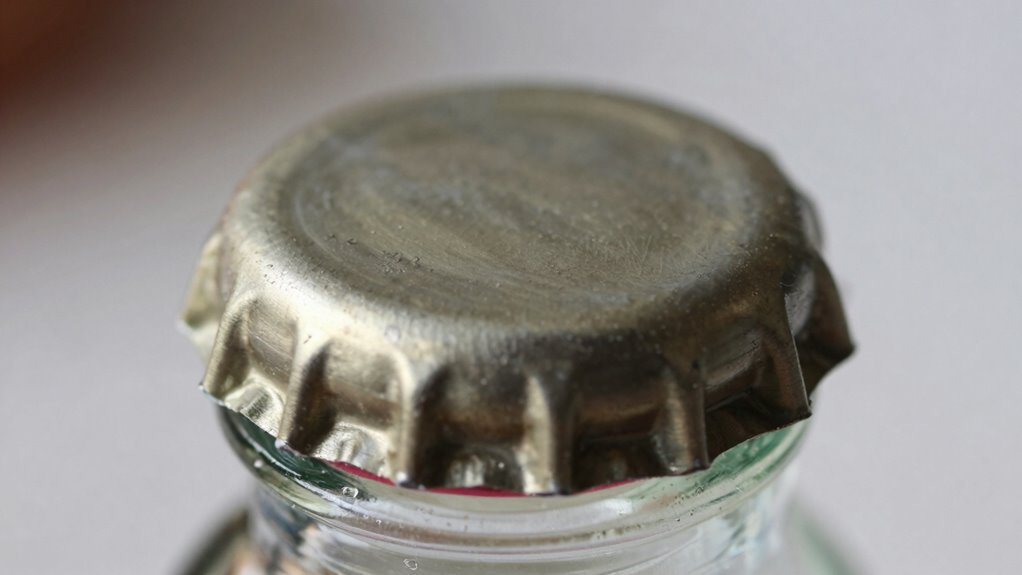
Have you ever wondered about the small metal or plastic pieces that top your favorite bottled beverages? These humble bottle caps might seem simple, but they play a vital role in keeping your drinks fresh and secure. When it comes to child safety, bottle caps are designed to prevent young children from accidentally opening bottles and ingesting harmful substances. Many caps now feature tamper-evident seals or child-resistant mechanisms, which require a specific action—like pressing down while turning—to open. This added layer of protection helps parents feel more confident that their children won’t get into sugary drinks or other hazardous liquids.
Beyond safety, bottle caps also have a notable environmental impact. Since most caps are made from metal or plastic, their disposal adds to the global waste problem. Many caps aren’t recyclable enough or are too small for standard recycling systems, leading to them ending up in landfills or polluting natural environments. That’s why manufacturers are increasingly exploring eco-friendly materials and alternative designs, like biodegradable or reusable caps, to reduce this impact. As a consumer, you can contribute by properly recycling caps or choosing brands that prioritize sustainability.
The functionality of a bottle cap goes beyond child safety and environmental concerns. It’s also engineered to create a tight seal that prevents leaks and preserves the beverage’s freshness. This involves considering factors like torque—the amount of force needed to open or close the cap. A cap with the right torque ensures that it’s secure enough to prevent leaks during transportation but not so tight that it’s impossible to open. Manufacturers carefully test the torque to balance ease of use with leak prevention, so your drink stays fresh until you pop it open.
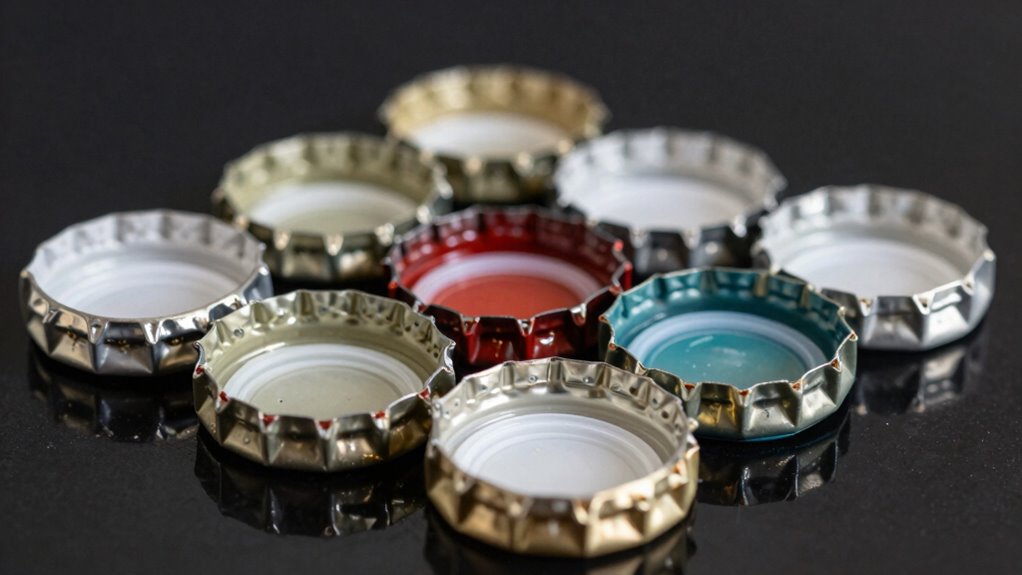
Another vital element is the liner inside the cap. Liners act as an additional barrier to protect against oxygen and contaminants, which can spoil your drink or cause it to go flat. These liners are typically made from foil or plastic and are designed to conform tightly to the bottle’s opening, ensuring an airtight seal. Proper liner design and placement are essential for leak prevention, especially for carbonated beverages where pressure builds up inside the bottle. When the liner fits perfectly, it stops leaks and keeps carbonation intact, providing you with a satisfying, fizzy experience every time. Additionally, innovations in liner materials are helping improve the overall leak prevention and extend shelf life for beverages.
Frequently Asked Questions
What Materials Are Commonly Used for Bottle Cap Liners?
You’ll find that common liner materials include polyethylene, polypropylene, and foil seals, which provide excellent sealing capabilities. These materials are chosen for their compatibility with sealing compounds, ensuring a tight, leak-proof fit. You might also encounter rubber or foam liners for specific applications. Using the right combination of liner materials and sealing compounds is essential to prevent leaks and maintain the integrity of your bottle’s contents.
How Does Temperature Affect Bottle Cap Torque?
As temperature rises, you might notice the cap feeling tighter or looser—here’s why. Thermal expansion causes the metal or plastic to expand, affecting the torque needed to open or close the cap. Conversely, cold temperatures cause contraction, making the cap harder to turn. This material deformation influences your sealing process, so adjusting torque settings for temperature variations guarantees leak-proof closures. Stay alert; temperature changes can surprise you!
Can Reusing Bottle Caps Cause Leaks?
Reusing bottle caps can indeed cause leak risks. When you reuse caps, they may not seal as tightly as new ones, especially if they’ve been previously opened or damaged. Over time, the liner may wear out or deform, reducing its effectiveness. Always inspect caps carefully before reusing, and consider replacing damaged or worn caps to prevent leaks and guarantee your bottled liquids stay fresh and secure.
Are There Eco-Friendly Alternatives to Traditional Bottle Caps?
Imagine you’re in a future where eco-friendly choices are the norm. You can opt for bottle caps made from biodegradable plastics or recycled materials, which greatly reduce environmental impact. These alternatives maintain sealing quality while being kinder to the planet. Switching to such caps helps you minimize waste and supports sustainability, making your everyday actions part of a larger movement toward greener living. It’s a simple step with a big impact.
What Innovations Are Improving Leak Prevention in Bottle Caps?
You’ll find that innovations like advanced sealing technologies, improved liner materials, and precision manufacturing processes are enhancing leak prevention. These advancements help caps meet strict safety standards by creating a tighter, more reliable seal. By focusing on better design and materials, manufacturers can reduce leaks, increase shelf life, and ensure product safety. As a result, you get a more secure closure, giving you confidence in the product’s integrity during storage and transportation.
Conclusion
So, next time you screw on a bottle cap, remember it’s more than just sealing your drink. With the right torque, liners, and leak prevention, your beverage stays fresh and secure. You might think it’s a small detail, but it makes a big difference. Don’t overlook the importance of a good cap—it keeps your drink safe and spill-free. Trust in the design, and enjoy your beverage without worries.