Brix testing measures the sugar content in fruit and juice, which directly impacts flavor and sweetness. If your juice tastes flat, it likely has a low Brix level, meaning there’s not enough sugar to provide vibrancy and balance. Conversely, too high Brix can lead to overly sweet flavors. Understanding Brix helps you adjust ripeness or blend ingredients for the perfect taste. Keep exploring to learn how Brix influences juice quality and flavor nuances.
Key Takeaways
- Brix measures sugar concentration, directly influencing the sweetness and flavor profile of juice.
- Low Brix levels often lead to flat, tart-tasting juice lacking vibrancy.
- High Brix can produce overly sweet juice that masks natural flavors, resulting in flatness.
- Achieving optimal Brix ensures balanced sweetness and better-tasting juice.
- Monitoring Brix helps producers adjust harvest timing and processing for consistent, flavorful juice.
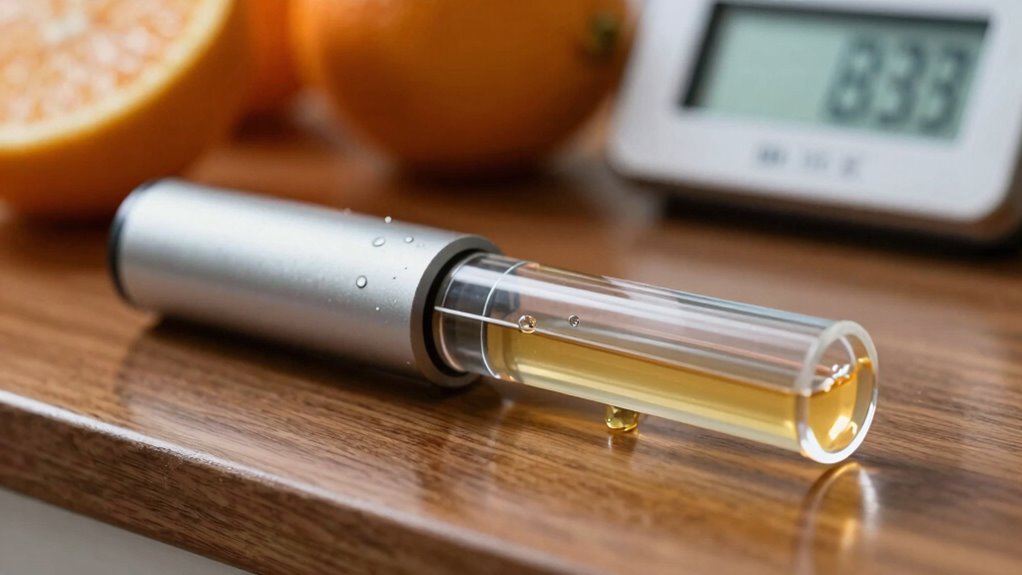
Have you ever wondered how producers determine the sweetness and ripeness of fruits and juices? It all comes down to measuring sugar concentration, which provides a clear picture of how ripe the fruit is and how sweet the final product will taste. This process, called Brix testing, helps producers guarantee their products meet quality standards and deliver consistent flavor profiles. When you see a Brix reading on a label or a test result, it’s essentially a snapshot of the fruit’s sugar content. The higher the Brix, the more sugar is present, indicating a fruit that’s ripe and ready for harvest or processing. Conversely, lower Brix readings suggest less sugar, often implying under-ripeness or a fruit that might not be as sweet.
Understanding fruit ripeness through sugar concentration is fundamental because it directly impacts flavor, texture, and overall quality. For example, a perfectly ripe grape will have a specific Brix level that indicates peak sweetness and ideal ripeness. Picking fruit before it reaches that Brix level might result in a tart or bland taste, while waiting too long could lead to overripeness or spoilage. By measuring sugar concentration, producers can decide the perfect harvest time, ensuring the fruit is at its flavor peak. This precision helps prevent under- or overripe produce from reaching consumers, maintaining consistency across batches.
Measuring sugar helps determine the perfect harvest time for optimal flavor.
In juice production, Brix testing becomes even more essential. The Brix level influences the final flavor profile and sweetness. If a juice has a low Brix, it might taste flat or sour, lacking the vibrant sweetness consumers expect. On the other hand, excessively high Brix values can lead to overly sweet products that mask natural fruit flavors. Producers often adjust blending or add sugar to achieve the desired Brix level, which guarantees the juice tastes balanced and appealing. This consistency is key to customer satisfaction and brand trust.
Moreover, Brix testing isn’t just about quality control; it’s a tool for refining operations. If a batch of fruit shows a lower than expected Brix, producers can decide whether to harvest earlier, apply ripening agents, or adjust processing methods. This data-driven approach helps maximize yield quality and minimize waste. Understanding the chemical composition of the fruit, including sugar levels, enables producers to make informed decisions that optimize product quality and efficiency. Whether you’re tasting fresh fruit or enjoying processed juices, understanding the significance of sugar concentration and fruit ripeness through Brix levels gives you insight into the effort and precision involved in making your favorite beverages. It’s a simple yet powerful measure that guarantees flavor, quality, and consistency from farm to table.
Frequently Asked Questions
How Does Brix Testing Vary Between Different Fruit Types?
You’ll find that brix testing varies between fruit types due to fruit variation and sugar content. For example, testing techniques may require adjustments for high-water-content fruits like berries versus denser fruits like apples. You should calibrate your refractometer accordingly and consider the natural sugar levels of each fruit. This guarantees accurate readings, helping you gauge ripeness and sweetness levels effectively across different fruit varieties.
What Equipment Is Essential for Accurate Brix Measurements?
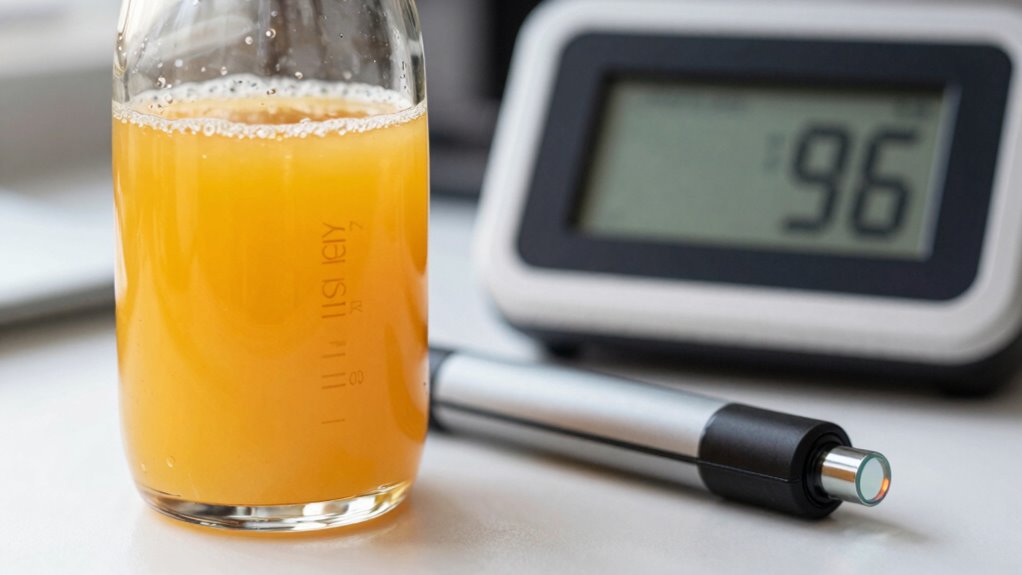
You need a refractometer for accurate Brix measurements, acting as your compass in the sweet journey. Make certain to calibrate it regularly for precision, like tuning a fine instrument. Proper sample preparation techniques, such as cleaning the prism and ensuring a clear, liquid sample, are essential. These steps ensure you get reliable readings, helping you gauge fruit ripeness and juice quality accurately, avoiding the pitfalls of flat-tasting results.
Can Brix Levels Predict the Overall Quality of Juice?
Yes, brix levels can help predict the overall quality of juice by indicating sugar concentration, which directly impacts sweetness and flavor profile. Consistent brix readings ensure flavor consistency, so you can maintain a uniform product. However, don’t rely solely on brix; other factors like acidity and aroma also influence quality. Use brix as a useful tool, but combine it with sensory evaluation for the best results.
How Often Should Brix Testing Be Performed During Harvest?
You should perform Brix testing daily during harvest to monitor fruit ripeness and optimize harvest timing. Regular testing helps you identify when Brix levels reach their peak, ensuring you pick the fruit at ideal ripeness for quality juice. By consistently checking, you can adjust your harvest schedule, avoid underripened or overripened fruit, and produce consistently high-quality juice with the right balance of sweetness and flavor.
Are There Any Health Implications Related to High Brix Levels?
Think of high brix levels as a sugar overload, like a flood of sweetness that can harm your health. Excessive sugar intake may lead to sugar overdose, increasing risks for diabetes and weight gain, and damaging your dental health with cavities and decay. While high brix itself isn’t directly toxic, it signals the need to moderate consumption to protect your overall well-being. Keep an eye on those numbers to stay healthy.
Conclusion
Now that you know the ins and outs of Brix testing, you can confidently gauge the sweetness of your juice and make adjustments as needed. Remember, a little knowledge goes a long way—think of it as planting seeds for better flavor. Just like a gardener tends to their crops, your careful testing guarantees a sweeter, more satisfying sip every time. Keep practicing, and soon you’ll have the juice tasting just the way you want it.