

If your KitchenAid Artisan Series 5 Quart Tilt Head Stand Mixer is making a grinding noise, it can be both annoying and a sign of an underlying issue. This guide provides practical, step-by-step instructions to diagnose and resolve the problem, ensuring your mixer runs smoothly again while maintaining safety.

Get kitchen staples and gadgets delivered free with Prime
- Fast, free delivery on millions of items
- Prime Video, Amazon Music and more included
- Member-only deals all year
Regular maintenance and troubleshooting can extend the life of your mixer and prevent costly repairs. Follow these clear steps to identify the cause and fix common issues causing grinding sounds.
Key Takeaways
| Identify the noise source | Grinding noise often indicates a mechanical issue or debris. |
| Check for debris or obstructions | Foreign objects or dried ingredients can cause grinding sounds. |
| Inspect the gears and attachments | Worn gears or misaligned attachments may be the culprit. |
| Lubricate moving parts if needed | Proper lubrication can reduce friction and noise. |
| Seek professional repair if unresolved | Persistent noise might require expert servicing. |
Step 1: Unplug and Inspect the Mixer
- Ensure the mixer is unplugged before starting any inspection for safety.
- Remove the attachment (such as the flat beater or dough hook).
- Examine the attachment and the bowl for any stuck debris or dried ingredients that could cause grinding.
Step 2: Check the Gears and Internal Components
- Carefully remove the mixer’s head if possible, following the user manual instructions.
- Inspect the gears for signs of wear, damage, or debris buildup.
- Look for any misaligned or loose parts that may be causing grinding noises.
Step 3: Clean and Lubricate if Necessary
- Clean all accessible gears and moving parts with a dry cloth or soft brush.
- If the mixer’s manufacturer recommends, apply a small amount of food-grade lubricant to the gear shafts or moving joints.
- Reassemble the mixer carefully, ensuring all parts are correctly aligned and secured.
Step 4: Test the Mixer
- Plug in the mixer and run it on a low speed (such as speed 2).
- Listen for any unusual grinding sounds and observe its operation.
- If the noise persists, proceed to professional repair or contact KitchenAid customer service.
Tips and Warnings
- Always unplug the mixer before inspection or maintenance to avoid electrical shock.
- Use only manufacturer-approved lubricants and replacement parts.
- Do not force or forcefully remove parts to avoid damage.
- If unsure about disassembly or repair, consult a professional technician.
The Products in This Guide
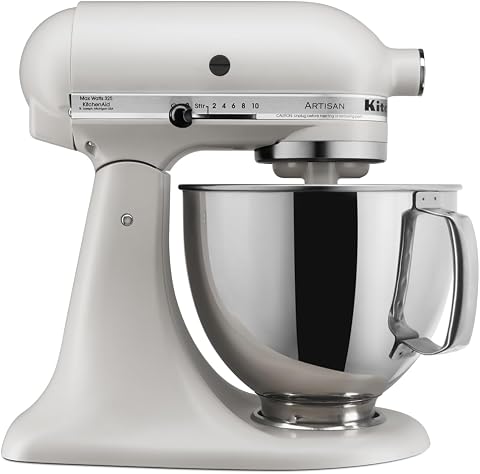
KitchenAid Artisan Series 5 Quart Tilt Head Stand Mixer
- ✔ Power: 325 watts
- ✔ Weight: 26 pounds
- ✔ Dimensions: 14 x 8 x 14 inches

KitchenAid Stand Mixer Attachment
- ✔ Power: N/A (powered by mixer)
- ✔ Weight: 3 pounds
- ✔ Dimensions: 12 x 8 x 4 inches
KitchenAid Artisan Series 5 Quart Tilt Head Stand Mixer
The KitchenAid Artisan Series 5 Quart Tilt Head Stand Mixer is built with durable metal construction and offers a variety of speeds for versatile tasks. Its tilt-head design makes adding ingredients easy, and it’s suitable for both small and large batches, making it a popular choice among home bakers.
Pros:
- Sturdy metal construction
- Tilt-head for easy access
- Multiple speed options
- Large 5-quart bowl
Cons:
- Can be heavy to move
- May require occasional gear lubrication
- Pricey compared to basic models
Best for: Home bakers and cooking enthusiasts seeking reliable performance
Not ideal for: If you prefer a lightweight or budget-friendly mixer
Bottom line: A durable, versatile mixer ideal for serious home baking.
KitchenAid Stand Mixer Attachment
The KitchenAid Metal Food Grinder attachment enhances your mixer’s capabilities, allowing you to grind meats, vegetables, and more with ease. It’s a practical accessory for those who want to expand their culinary options.
Pros:
- Sturdy metal build
- Multiple grinding plates included
- Easy to attach and use
- Large food tray
Cons:
- Requires freezer chilling for best results
- Additional cost for attachment
- Cleaning requires care
Best for: Homemade sausage, ground meat, and food prep enthusiasts
Not ideal for: If you only do basic mixing tasks
Bottom line: A versatile, durable grinder attachment for creative cooks.
Frequently Asked Questions
Why is my KitchenAid mixer making a grinding noise?
Grinding noises can be caused by debris stuck in the gears, worn gear components, or lack of lubrication. Inspecting and cleaning these parts often resolves the issue.
Can I fix the grinding noise myself?
Yes, with careful inspection, cleaning, and lubrication, many minor issues can be fixed at home. However, if the problem persists, professional repair is advised.
Is it safe to open my KitchenAid mixer?
Only perform internal inspections if you are comfortable with small appliance repair and have unplugged the mixer. Always follow safety precautions in the user manual.
How often should I lubricate the gears?
Lubricate the gears only if you notice increased noise or resistance. Check the manufacturer’s manual for recommended maintenance intervals.
Keep Your Mixer Running Smoothly
Regular maintenance and careful inspection can prevent grinding noises and extend the life of your KitchenAid stand mixer. Always prioritize safety and consult a professional if you’re unsure about disassembly or repair. With proper care, your mixer will continue to serve you well for years to come.
Affiliate disclosure: As an Amazon Associate we earn from qualifying purchases. Prices and availability are accurate as of the time of publishing.
Fall Picks
fall essentials
As an affiliate, we earn on qualifying purchases.