
If you’re passionate about fresh, flavorful juice, a hydroponic garden is worth the counter space. It allows you to grow herbs, greens, and vegetables year-round, reducing reliance on store-bought produce. Compact and often stylish, these systems can fit into your kitchen decor while providing a steady supply of nutrient-rich ingredients. Modern technology makes maintenance easy, and the benefits of sustainable, home-grown produce make it a smart investment. Curious? Keep exploring to learn more.

Get kitchen staples and gadgets delivered free with Prime
- Fast, free delivery on millions of items
- Prime Video, Amazon Music and more included
- Member-only deals all year
Key Takeaways
- Hydroponic gardens provide fresh, nutrient-rich greens and herbs for juicing, enhancing flavor and nutritional value.
- Compact and vertical designs maximize limited kitchen space while increasing produce yield.
- They promote sustainability by enabling indoor urban farming and reducing reliance on store-bought produce.
- Modern systems feature automation and smart controls, simplifying maintenance and operation.
- Incorporating a hydroponic garden adds practical, health-conscious value to the kitchen environment.
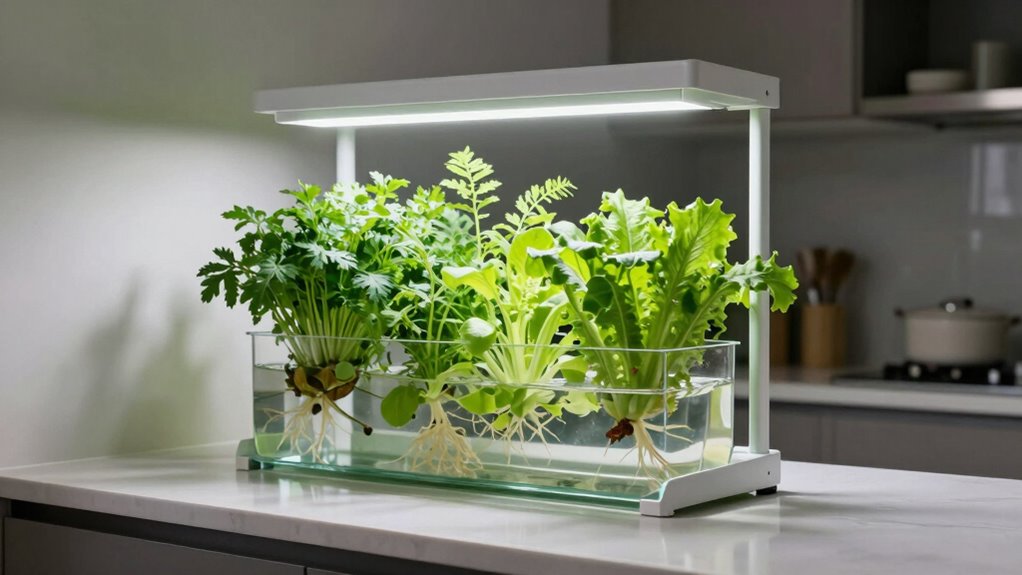
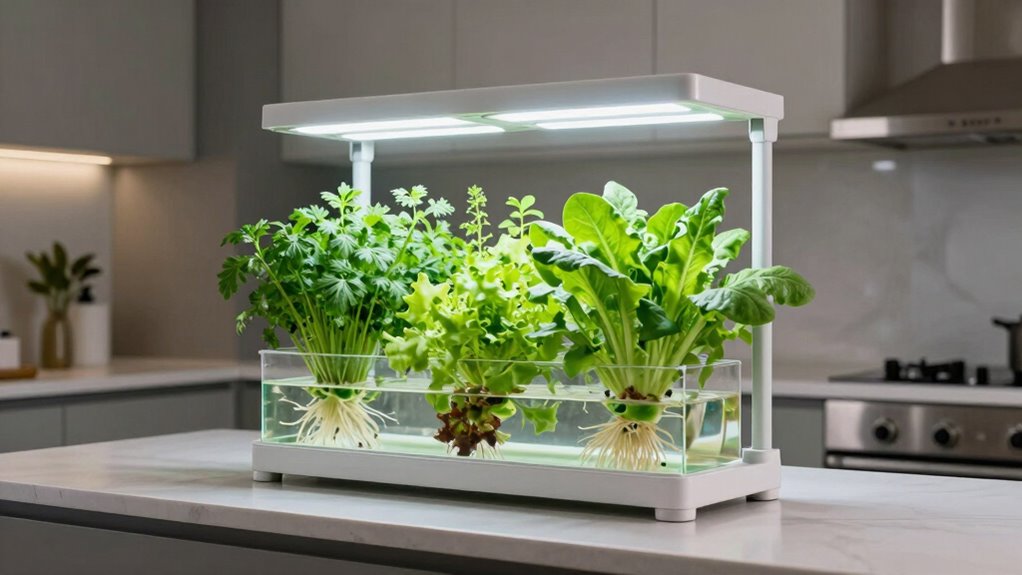
If you love fresh juice, setting up a hydroponic garden in your kitchen can be a game-changer. It allows you to grow your own herbs, greens, and vegetables right at home, making every sip of juice fresher and more flavorful. With urban farming becoming more popular, indoor gardening has become an attractive solution for city dwellers who lack outdoor space. A hydroponic system fits perfectly into this trend, letting you cultivate produce without soil, in a controlled environment, and on your countertop.
You might wonder if dedicating space to a hydroponic garden is worth it, especially when your counter is already busy with appliances and clutter. But think of the benefits: you’ll have a constant supply of nutrient-rich greens like kale, spinach, and herbs such as basil and mint, all of which are essential for nutritious, tasty juices. Growing these indoors means you don’t have to worry about seasonal changes or pests, and you can harvest at peak freshness every day. This level of control is a major advantage for indoor gardening enthusiasts who want high-yield, sustainable growth.
The space a hydroponic garden takes up depends on the system you choose, but many are compact enough to fit on a kitchen counter or a dedicated shelf. If you’re concerned about space, consider vertical hydroponic setups that maximize your area while still providing plenty of produce. These systems are designed for small spaces and can be integrated seamlessly into your kitchen decor. While it might seem like a luxury or an unnecessary use of counter space, many find that the convenience of having fresh ingredients within arm’s reach outweighs the initial investment of space. Indoor gardening also promotes a sense of wellbeing and mindfulness, making it a rewarding hobby. Additionally, because hydroponic systems are a form of urban farming, they support sustainable and efficient food production right in your home.
Furthermore, maintaining a hydroponic garden isn’t complicated. You’ll monitor water levels, nutrient solutions, and light, but modern systems often come with automation and user-friendly controls. This ease of maintenance makes indoor gardening accessible, even if you’re new to hydroponics. In fact, some systems now incorporate smart technology that simplifies the process further. Plus, the growing process involves a controlled environment, which can lead to faster and more consistent growth compared to traditional soil gardening. The act of growing your own food can be incredibly rewarding, giving you a sense of connection to your food source that’s often missing in urban farming.
In the end, whether a hydroponic garden is worth your counter space comes down to how much you value fresh juice, sustainable living, and the joy of indoor gardening. If you’re passionate about healthy eating and want to cut down on store-bought produce, this setup can be a practical and enjoyable addition to your kitchen. It transforms your space into a mini urban farm, providing fresh ingredients straight from your countertop to your glass.
hydroponic garden for kitchen countertop
As an affiliate, we earn on qualifying purchases.
As an affiliate, we earn on qualifying purchases.
Frequently Asked Questions
How Much Maintenance Do Hydroponic Kitchen Gardens Require?
Hydroponic kitchen gardens require moderate maintenance, mainly involving regular nutrient management to keep plants healthy and pest control to prevent infestations. You’ll need to check water levels and nutrient solutions weekly, ensuring pH balance and proper nutrient concentration. Additionally, monitoring for pests helps keep your garden thriving. Overall, with consistent attention, you can enjoy fresh herbs and greens without much hassle, making it a manageable addition to your kitchen.
Can Hydroponic Gardens Grow All Types of Herbs and Greens?
Yes, hydroponic gardens can grow a wide variety of herbs and greens, but your herb variety choices may be limited compared to soil gardening. You’ll get lush green growth with most leafy greens like lettuce, spinach, and kale, alongside herbs like basil, mint, and cilantro. Keep in mind, some delicate herbs or root vegetables might not thrive as well in a hydroponic setup, so choose your plants accordingly.
What Is the Typical Lifespan of a Hydroponic Garden System?
A typical hydroponic garden system lasts about 1 to 3 years, depending on usage and maintenance. You’ll need to regularly replace hydroponic nutrient solutions to support healthy plant growth rates and prevent clogging. Proper care, including cleaning and monitoring nutrient levels, can extend your system’s lifespan. Over time, parts may wear out, but with attentive upkeep, your hydroponic setup can continue thriving and providing fresh greens for years.
Do Hydroponic Gardens Increase Electricity Bills Significantly?
Hydroponic gardens do increase your energy consumption and impact your electricity bills, but the cost implications vary. You’ll use energy to power LED grow lights, pumps, and fans, which can add up over time. However, if you optimize your system and choose energy-efficient equipment, you can minimize these expenses. So, while they do raise electricity costs, the benefits of fresh, homegrown produce often outweigh the increased energy use.
Are There Any Safety Concerns With Indoor Hydroponic Setups?
Yes, there are safety concerns with indoor hydroponic setups. You should focus on plant pest management to prevent infestations that could harm your plants or spread indoors. Additionally, monitor indoor air quality, as excess humidity or mold growth might develop if ventilation isn’t adequate. Proper maintenance, regular cleaning, and ensuring good airflow help keep your hydroponic garden safe, healthy, and enjoyable without compromising your indoor environment.
Conclusion
Whether you decide to bring a hydroponic garden into your kitchen or not, it’s like planting a tiny green oasis right on your counter. They can turn your daily juicing routine into a fresh, vibrant experience, making every sip feel like a garden burst. While they do take up space, the rewards of fresh herbs and greens are worth it. Ultimately, it’s your kitchen—your personal slice of nature’s bounty waiting to be harvested.
NFL season / tailgating Picks
team gear
As an affiliate, we earn on qualifying purchases.