
To keep juice safe for kids and pregnant people, always choose pasteurized options and check labels carefully. Store juice in the fridge at or below 40°F and consume it within 7 to 10 days after opening. If you’re homemade or fresh, freeze it for longer storage and thaw safely in the fridge. Proper handling, storage, and selecting the right juice can help prevent foodborne illnesses—continue to learn more for added safety tips.
Key Takeaways
- Always select pasteurized juice to reduce the risk of harmful bacteria for children and pregnant individuals.
- Store juice in the refrigerator at or below 40°F (4°C) and consume within 7-10 days after opening.
- Avoid unpasteurized or fresh-squeezed juices unless properly heated to pasteurization temperatures.
- Freeze homemade juice to prolong safety and freshness, thaw in the refrigerator before use.
- Check labels and handling guidelines carefully to ensure juice is safe and suitable for vulnerable populations.

Juice can be a tasty and convenient way for kids and pregnant people to get their daily servings of fruit, but it’s important to handle it safely. One of the most essential steps in ensuring juice safety is understanding pasteurization guidelines. Pasteurization involves heating juice to a specific temperature for a set period to kill harmful bacteria, yeasts, and molds. When buying juice, always check labels to confirm it’s been pasteurized, especially if it’s fresh-squeezed or unpasteurized, as these can harbor pathogens. If you opt to make your own juice at home, follow recommended pasteurization procedures—generally, heating the juice to about 160°F (71°C) for a short time can effectively reduce microbial risks without compromising flavor or nutrients. Adhering to these guidelines is imperative in preventing illnesses that can be especially dangerous for young children and pregnant people.
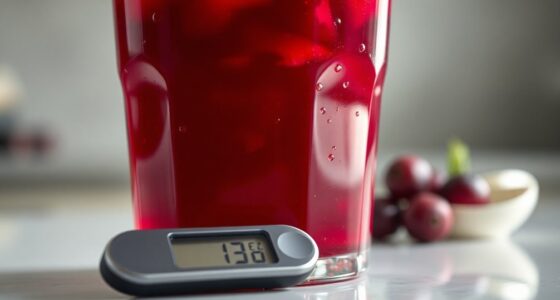
Storage tips are equally important in maintaining juice safety. Once you bring juice home, keep it refrigerated at or below 40°F (4°C) to slow bacterial growth. Always store juice in clean, airtight containers to prevent contamination and spoilage. If you open a bottle or container, consume it within the time frame specified on the label—usually within 7 to 10 days for refrigerated juice. Avoid leaving juice out at room temperature for extended periods, as bacteria can multiply rapidly at warmer temperatures. For homemade or freshly squeezed juice, it’s best to drink it within 24 to 48 hours. If you’re storing juice for longer periods, consider freezing it to preserve freshness and safety; just make sure to leave space in the container for expansion. Proper refrigeration and storage practices help prevent spoilage and keep the juice safe for everyone, especially vulnerable groups like children and pregnant individuals.
Additionally, choosing juices with appropriate filtration processes can further reduce potential contaminants and ensure safer consumption. Handling juice with care isn’t just about taste—it’s about protecting health. By paying attention to how juice is processed, stored, and checked, you can enjoy its benefits without risking foodborne illnesses. Taking these simple precautions helps guarantee that the juice you serve is both delicious and safe for your family or yourself.
Frequently Asked Questions
Can Pasteurized Juice Be Unsafe for Children or Pregnant Women?
Pasteurized juice is generally safe for children and pregnant women because it reduces contamination risks. However, it’s still important to check for proper pasteurization labels and storage instructions. Sometimes, contamination can occur after pasteurization if the juice isn’t handled properly or stored at the right temperature. Always buy from reputable sources, and keep the juice refrigerated to maintain safety and prevent bacterial growth.
Are Organic Juice Options Safer Than Conventional Ones?
Organic juice is like a fresh breeze—generally safer for kids and pregnant people. With organic certification, you’re more likely to avoid high pesticide residues, which can be harmful. While organic doesn’t guarantee zero risk, it markedly reduces exposure to potentially hazardous chemicals. Choosing organic juice helps you feel more confident about what you’re giving your loved ones, making it a smarter, cleaner option in your health journey.
How Long Can Freshly Squeezed Juice Be Stored Safely?
You can store freshly squeezed juice safely in the refrigerator for up to 24 to 48 hours, following proper refrigeration guidelines. To maintain its freshness and prevent bacteria growth, keep it in an airtight container and refrigerate it promptly. After this period, the juice may lose quality and pose health risks, so it’s best to consume it within this window for ideal safety and taste.
Are Juice Boxes More Hygienic Than Bottled Juice?
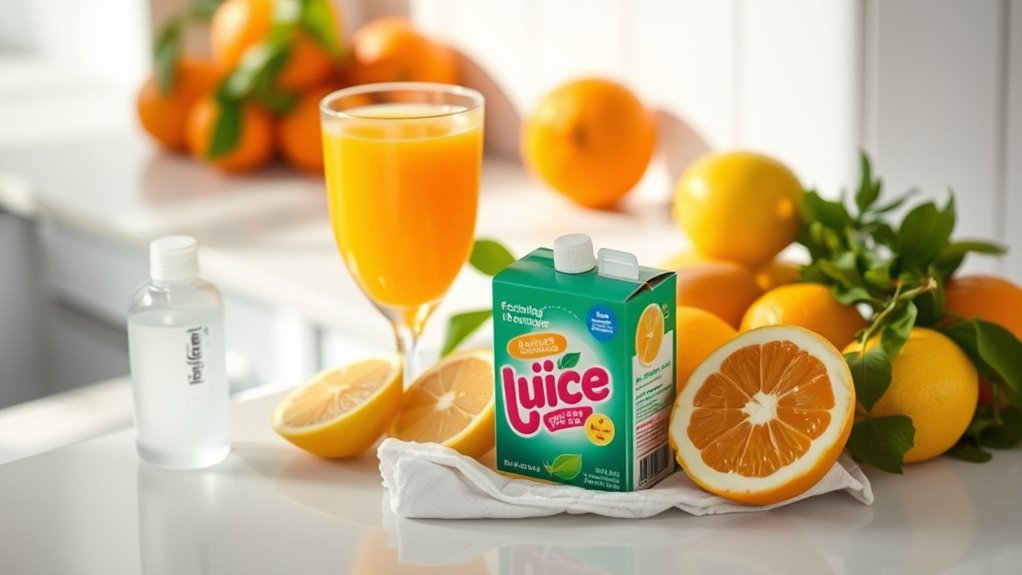
Juice boxes are generally more hygienic than bottled juice because their packaging offers better durability and minimizes contamination during handling. The sealed, single-serving design enhances consumer convenience and reduces the risk of germs reaching the juice. Bottled juice, especially if opened multiple times, can be exposed to more bacteria and contamination. So, choosing juice boxes can help keep the juice safer and more convenient to enjoy on the go.
What Are the Signs of Juice Contamination or Spoilage?
You’ll know juice is contaminated or spoiled if you see mold growth or notice an unusual odor. Mold appears as fuzzy spots or discoloration, and the smell might be sour, rancid, or off-putting. Always check the expiration date, and if the juice looks or smells weird, don’t drink it. Trust your senses—discard any juice with mold or an unusual odor to keep yourself and your kids safe.
Conclusion
Think of juice safety like tending a delicate garden. With careful watering and proper care, your little plants—kids and pregnant loved ones—can flourish. But neglect or rushing can invite weeds—bacteria and contaminants—that threaten their health. By choosing safe, pasteurized juice and following proper storage, you’re like a vigilant gardener, nurturing their well-being. Your mindful actions guarantee your garden remains vibrant, healthy, and full of life, just like the bright futures you’re protecting.

Cindy thoroughly researches juicing trends, techniques, and recipes to provide readers with practical advice and inspiration. Her writing style is accessible, engaging, and designed to make complex concepts easy to understand. Cindy’s dedication to promoting the advantages of juicing shines through her work, empowering readers to make positive changes in their lives through the simple act of juicing.