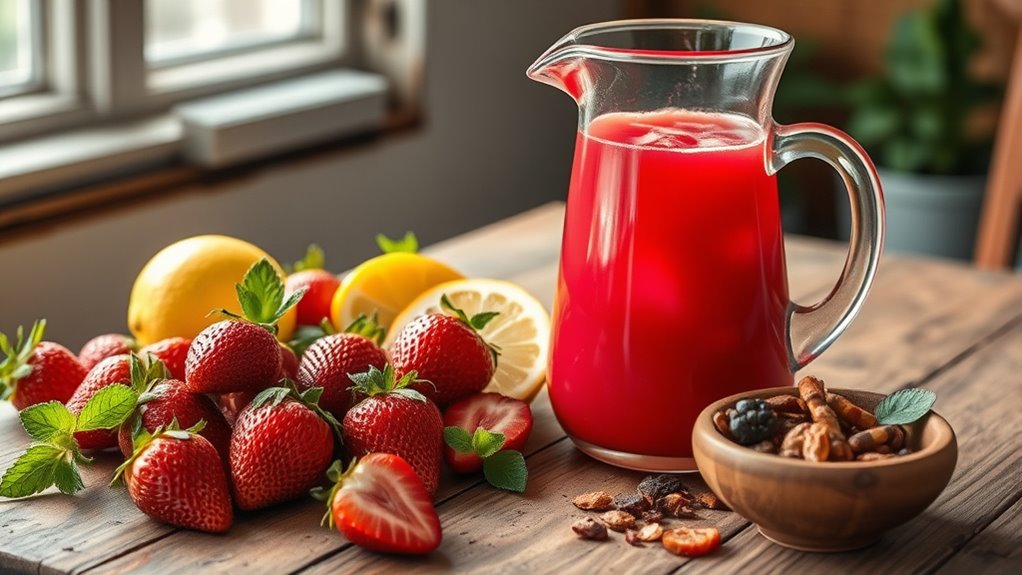

To make low-sugar juices without artificial sweeteners, rely on natural ingredients like ripe fruits such as mango or pineapple that add natural sweetness. Enhance flavors with fresh lemon, herbs, or spices like cinnamon to create complexity without extra sugar. Combine fruits and vegetables like berries and carrots for balanced flavor and nutrition, and incorporate natural flavorings like vanilla or coconut water. To learn more about crafting delicious, healthy low-sugar juices, continue exploring these effective strategies.
Key Takeaways
- Use naturally sweet fruits like mango, pineapple, and ripe bananas to enhance flavor without added sugars.
- Incorporate flavor enhancers such as fresh lemon, lime, herbs, and spices to boost taste naturally.
- Blend tart and sweet fruits, like berries with apples or oranges, for balanced sweetness.
- Add natural flavorings like vanilla or coconut water to deepen flavor profiles without sugar.
- Adjust fruit-to-vegetable ratios to naturally increase sweetness while maintaining nutritional balance.
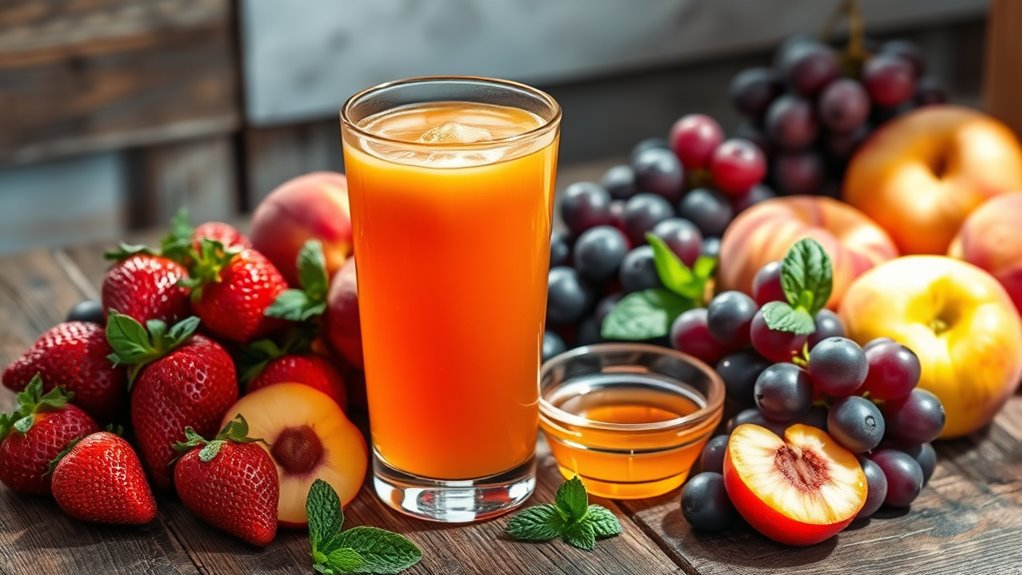
If you want to enjoy fresh juice without the excess sugar, adopting low-sugar strategies is essential. One effective way to cut down on sugar while maintaining great taste is to incorporate natural sweeteners. Unlike refined sugars, natural options like honey, maple syrup, or agave nectar can add the desired sweetness without overwhelming your juice with empty calories. These sweeteners also bring their unique flavors, which can enhance the overall profile of your juice, making it more appealing and balanced. When used sparingly, natural sweeteners serve as excellent alternatives that allow you to enjoy the natural essence of your fruits while still satisfying your sweet tooth.
Another key to making your juice taste delicious with less sugar is flavor enhancement. You can achieve this by adding ingredients that boost the natural flavors of the fruits and vegetables you’re using. For example, a splash of fresh lemon or lime juice can brighten the overall taste, making it seem sweeter without adding sugar. Herbs like mint or basil can also add a fresh note that complements the natural sweetness of your produce. Spices such as cinnamon or ginger can introduce warmth and depth, creating a more complex flavor profile that distracts from the need for additional sugar. Combining these elements carefully ensures that your juice remains flavorful and satisfying, even with reduced sugar content.
To further enhance flavor without relying on sugar, consider blending different fruits and vegetables. Combining tart apples with sweet berries or adding a handful of carrots or cucumbers can create a naturally balanced sweetness. These combinations not only improve flavor but also add nutritional variety. Additionally, using whole fruits rather than juice concentrates allows you to retain more of the fruit’s natural sugars and flavors, resulting in a sweeter, more flavorful drink without needing extra sweeteners.
Another helpful tip is to experiment with natural flavoring options like vanilla extract or coconut water, which can add depth and sweetness without sugar. Lastly, adjusting your fruit-to-vegetable ratio can markedly impact the sweetness level of your juice. Use more naturally sweet fruits like mango, pineapple, or ripe bananas, which can make your juice taste sweeter naturally. This way, you can reduce added sweeteners altogether, relying on the fruit’s inherent sweetness to enhance flavor. By being mindful of your ingredient choices and exploring natural sweeteners and flavor enhancement techniques, you can craft delicious, low-sugar juices that satisfy your palate and support your health goals.
Frequently Asked Questions
Can I Add Natural Sweeteners to Low-Sugar Juices?
Yes, you can add natural sweeteners to low-sugar juices. Instead of artificial sweeteners or sugar substitutes, try honey, maple syrup, or agave nectar. These options enhance sweetness naturally, keeping your juice low in sugar while avoiding artificial ingredients. Just start with small amounts, taste as you go, and adjust accordingly. This way, you maintain a healthier, naturally sweetened juice that satisfies your cravings without overdoing it on sugar.
What Are the Best Fruits for Naturally Low-Sugar Juices?
Think of fruits like gentle whispers rather than loud shouts—they’re naturally low in sugar. Citrus fruits like lemons, limes, and grapefruits are great for low-sugar juices, especially when paired with berries or cucumbers. Seasonal variations matter; in summer, think of watermelon and strawberries, while in winter, consider cranberries and citrus. These pairings keep your juice light, invigorating, and naturally sweet without artificial additives.
How Can I Enhance Flavor Without Increasing Sugar Content?
You can enhance flavor without increasing sugar by experimenting with ingredient combinations like fresh herbs, spices, or citrus zest. Try adding a splash of lemon or lime juice for brightness, or incorporate mint or basil for a fresh twist. Using natural flavor enhancers like ginger or cinnamon also boosts taste without extra sugar. These methods allow you to achieve richer flavor through creative flavor enhancement techniques that keep your juice low-sugar.
Are There Specific Storage Tips for Low-Sugar Juices?
Think of your juice as a treasure that needs safeguarding. To keep it fresh, always refrigerate it promptly with proper sealing to prevent oxidation and spoilage. Use airtight containers and store it in the coldest part of your fridge. Avoid frequent opening, which lets in air and bacteria. These refrigeration tips preserve flavor and nutrients, ensuring your low-sugar juice stays delicious and safe to enjoy longer.
How Does Juice Pasteurization Affect Natural Sweetness?
Pasteurization effects can slightly reduce natural sweetness in your juice because the heat process may break down some sugars. However, if you choose gentle pasteurization techniques, you can preserve most of the sweetness. To maintain maximum natural flavor, opt for minimal heat treatment and store your juice properly. This way, you enjoy fresh-tasting juice with as much sweetness preserved as possible without artificial sweeteners.
Conclusion
By choosing natural sweetness and smart blending, you’re steering your health ship away from artificial reefs. These low-sugar juice strategies act as a guiding compass, helping you navigate toward vibrant, nourishing choices. Remember, each sip can be a step toward a healthier lifestyle, turning your daily routine into an invigorating voyage. Embrace these ideas, and watch your wellness blossom like a garden in full bloom—bright, lively, and full of promise.

Cindy thoroughly researches juicing trends, techniques, and recipes to provide readers with practical advice and inspiration. Her writing style is accessible, engaging, and designed to make complex concepts easy to understand. Cindy’s dedication to promoting the advantages of juicing shines through her work, empowering readers to make positive changes in their lives through the simple act of juicing.