If you’re making spinach juice, be aware it contains high oxalates, which can affect kidney health and interfere with mineral absorption. Consuming large amounts may increase your risk of kidney stones, especially if you have existing kidney issues. Cooking methods like boiling or blanching can considerably reduce oxalate levels, making it safer. To learn more about safe practices and alternative greens, keep exploring how to enjoy spinach juice without health risks.
Key Takeaways
- Spinach contains high levels of oxalates, which can impact mineral absorption and kidney health if consumed excessively.
- Cooking methods like boiling reduce soluble oxalates, making spinach safer for individuals sensitive to oxalate intake.
- Rinsing, soaking, and discarding boiling water further decrease oxalate content before juicing.
- People with kidney problems or history of kidney stones should limit high-oxalate spinach juice consumption.
- Proper preparation is essential to reduce oxalates and minimize health risks associated with spinach juice intake.
Understanding Oxalates and Their Role in Plants
Oxalates are naturally occurring compounds found in many plants, including spinach. They serve as a plant defense mechanism, deterring pests and herbivores from eating the plant. By forming insoluble crystals, oxalates make the plant less appealing and harder to digest. Additionally, oxalates play a role in mineral chelation, binding to minerals like calcium and magnesium. This process helps regulate mineral levels within the plant, preventing toxicity and ensuring proper growth. The presence of oxalates also influences the plant’s overall nutrient composition, which can impact how these nutrients are absorbed during digestion. The formation of oxalate crystals can also affect the digestibility of plant tissues, making some nutrients less bioavailable. For example, their ability to bind minerals can lead to nutrient deficiencies if consumed in excess. For you, understanding oxalates’ dual function in plant defense and mineral chelation reveals why these compounds are so common in leafy greens. Their presence is a natural part of plant biology, designed to protect the plant and maintain nutrient balance. Recognizing this helps you appreciate the complex roles oxalates play in plant health and the importance of plant defense mechanisms in sustaining healthy growth. Moreover, these compounds can influence nutrient absorption in humans, highlighting the importance of nutritional considerations when consuming high-oxalate foods.
The Oxalate Content of Spinach
You should know that spinach contains high levels of oxalates, which can affect your health. These levels vary depending on how the spinach is grown and prepared, impacting their potential risks. Learning how to reduce oxalate content can help protect your kidney health while still enjoying spinach juice. Incorporating proper preparation methods can significantly decrease oxalate levels and make spinach safer for regular consumption.
Oxalate Levels in Spinach
Have you ever wondered how much oxalate is packed into a single serving of spinach? The oxalate levels can vary, but spinach is known for its high content, which influences oxalate absorption. This affects your body’s ability to process nutrients and antioxidants present in spinach. Additionally, floating on water techniques can help reduce oxalate levels in some foods through soaking processes. Here’s a snapshot of oxalate content in common servings:
| Serving Size | Oxalate Content (mg) | Spinach Antioxidants |
|---|---|---|
| 1 cup raw | 755 | Rich in Vitamin C |
| 1/2 cup cooked | 970 | Contains flavonoids |
| 100g fresh | 970 | Offers beta-carotene |
Knowing these numbers helps you make informed decisions about consuming spinach and its beneficial antioxidants while managing oxalate intake.
Impact on Kidney Health
Because spinach contains high levels of oxalates, consuming large quantities can pose risks to kidney health, especially for individuals with pre-existing conditions. During spinach cultivation, the plant absorbs oxalates from the soil, which then accumulate in the leaves. When you eat spinach juice, your body absorbs these oxalates through your digestive system. Excess oxalate absorption can lead to the formation of kidney stones, particularly calcium oxalate stones, which can cause pain and blockages. If you have kidney issues or a history of stones, it’s important to monitor your intake. Regular consumption of high-oxalate foods like spinach may increase kidney stress over time. Being aware of spinach’s oxalate content helps you make informed choices to protect your kidney health. Additionally, understanding air purifier features can help improve indoor air quality, supporting overall respiratory health. Knowing your health risks related to oxalate intake enables better dietary management and kidney health preservation. Incorporating proper hydration strategies can also help reduce oxalate buildup and lower the risk of stone formation. Implementing nutritional guidance can further aid in balancing oxalate consumption with other dietary considerations.
Reducing Oxalate Content
To reduce the oxalate content in spinach, several preparation methods can be employed that considerably lower oxalate levels before consumption. Soaking or boiling spinach helps leach out soluble oxalates, decreasing their concentration and making it safer for your kidneys. Blanching spinach not only reduces oxalates but also improves nutrient absorption by breaking down cell walls, making vitamins and minerals more accessible. Keep in mind, these methods may slightly alter the flavor, so you might notice a milder or less bitter taste, which some find preferable. Additionally, incorporating Ford Tuning techniques such as performance upgrades can optimize nutrient absorption by improving overall digestion and health. Understanding oxalate content in foods is crucial for individuals prone to kidney stones or oxalate sensitivities. For better health, consider nutrient balance and avoid over-processing, which can impact nutrient density. By adopting these techniques, you can enjoy spinach juice with a lower oxalate content, supporting overall health without sacrificing flavor.
Potential Health Risks Associated With High Oxalate Intake
High oxalate intake can pose significant health risks, especially for individuals prone to kidney stones or with existing kidney conditions. When you consume foods high in oxalates, your body absorbs some of the oxalate, which can combine with calcium in your kidneys, leading to oxalate crystallization. These crystals may grow and form stones, causing pain and potential kidney damage. Excessive oxalate absorption can also contribute to mineral imbalances and interfere with nutrient absorption. If your kidneys aren’t functioning well, your body might struggle to eliminate oxalates efficiently, increasing the risk of complications. Additionally, preppy dog names often include names inspired by fashion and culture, reflecting a refined aesthetic that might appeal to those seeking a sophisticated touch in their pet naming choices. Accordingly, consuming high-oxalate foods like spinach juice requires caution, particularly if you have a history of kidney stones or other renal issues. It is important to be aware that oxalate absorption can vary among individuals, influencing their risk level. Furthermore, understanding the oxalate content of various foods can help you manage your intake more effectively, especially as research highlights the importance of on-device AI capabilities in health tracking devices to monitor dietary intake.
Who Should Be Cautious With Spinach Juice

If you have kidney problems or a history of kidney stones, you should be cautious with spinach juice. Its high oxalate levels can increase the risk of complications. Talk to your doctor before making it a regular part of your diet.
High Oxalate Levels
People with a history of kidney stones or certain medical conditions should be cautious when consuming spinach juice due to its high oxalate levels. Oxalate can disrupt oxalate metabolism, increasing the risk of stone formation. Since spinach is rich in oxalates, drinking large amounts can lead to excessive oxalate accumulation in your body. This impairs nutrient absorption, especially minerals like calcium and magnesium, which bind with oxalates and are essential for your health. High oxalate levels can also irritate your digestive system or contribute to other health issues. If you’re sensitive or prone to kidney problems, it’s best to limit your spinach juice intake or seek alternative greens with lower oxalate content. Additionally, understanding your body’s oxalate processing ability can help you make more informed dietary choices. Recognizing individual oxalate tolerance is key to maintaining overall health. Exploring dietary management strategies can further support those at risk. Always consult your healthcare provider to tailor your diet accordingly.
Kidney Risk Factors
Are you at greater risk of kidney issues when consuming spinach juice? If you have a history of kidney stones or kidney disease, you should be cautious. Spinach’s high oxalate content can hinder nutrient absorption and increase stone formation risk. People with certain health conditions need to limit intake to prevent complications. Additionally, consuming spinach juice for taste enhancement may seem appealing, but moderation is key. Incorporating nutrient absorption about your health can help you make better dietary choices. Consider these factors:
- Existing kidney stone history
- Kidney disease diagnosis
- Difficulty metabolizing oxalates
- Calcium deficiency
- High fluid intake to dilute oxalates
Monitoring your intake helps protect your kidneys while still enjoying the benefits of nutrient absorption and flavor. Always consult your healthcare provider if you’re unsure about your risk level.
How Cooking Affects Oxalate Levels in Spinach
Cooking spinach considerably reduces its oxalate content, making it safer for those prone to kidney stones. Different cooking methods, such as boiling, steaming, or sautéing, impact oxalate levels by influencing oxalate solubility. Boiling, in particular, is effective because it causes soluble oxalates to leach into the cooking water, markedly decreasing the overall oxalate content in the spinach. Steaming retains more nutrients but has a lesser effect on oxalate reduction, since fewer oxalates dissolve in water. Sautéing or stir-frying may have minimal impact because they involve less water contact. By understanding how cooking methods affect oxalate solubility, you can choose techniques that lower oxalate levels, making spinach a safer option for your diet.
Techniques to Reduce Oxalates Before Juicing
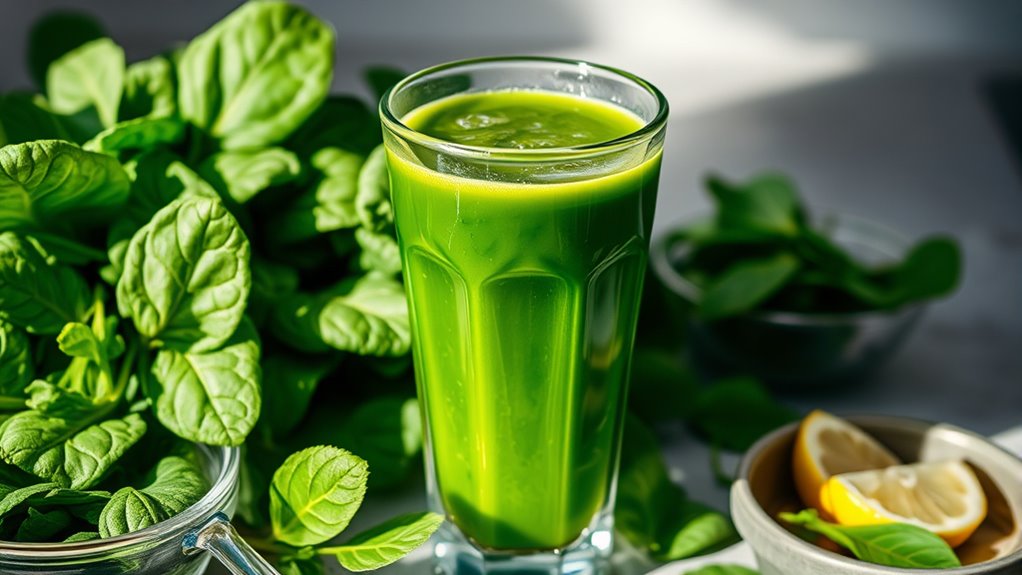
Before you juice spinach, applying specific techniques can substantially reduce its oxalate content. Rinsing spinach thoroughly helps remove pesticide residues and dirt, lowering potential contaminants. Soaking the leaves in water for 10-15 minutes with a pinch of salt can further wash away residues and reduce oxalates. Blanching spinach briefly in boiling water for 1-2 minutes is effective; it also enhances flavor and decreases oxalates. Discard the boiling water afterward to eliminate soluble oxalates. Additionally, combining these methods can improve taste and remove unwanted residues. Keep in mind, these techniques not only lower oxalates but also make the juice safer and more enjoyable. Incorporate these steps to maximize health benefits and flavor enhancement before juicing spinach.
Alternative Greens With Lower Oxalate Content

If you’re looking to reduce oxalate intake from leafy greens, consider switching to alternatives with naturally lower oxalate levels, like kale, collard greens, or Swiss chard. These greens still offer nutrient synergy, providing essential vitamins and minerals while minimizing oxalate concerns. When choosing greens, think about flavor pairing; some vegetables complement each other better, enhancing your juice’s taste without sacrificing nutrition. For example, kale’s mild bitterness pairs well with sweet fruits, balancing flavor while keeping oxalates in check. By selecting greens lower in oxalates, you can enjoy nutrient-rich juices without risking oxalate buildup. This approach supports your health goals while maintaining the vibrant flavors you love.
Incorporating Spinach Juice Safely Into Your Diet

To incorporate spinach juice safely into your diet, it’s important to balance consumption with awareness of oxalate levels. Moderation ensures you enjoy its nutritional benefits without risking oxalate buildup. To maximize flavor enhancement and nutritional value, try mixing spinach juice with other fruits or vegetables. Keep portion sizes reasonable, especially if you’re prone to kidney stones. Stay hydrated and include diverse greens to avoid high oxalate intake from a single source. Regularly consult with a healthcare professional if you have concerns. Here’s how to enjoy spinach juice safely:
- Limit daily intake to recommended servings
- Combine with low-oxalate ingredients
- Use fresh, organic spinach for quality
- Incorporate variety in your greens
- Monitor your body’s response and adjust accordingly
Frequently Asked Questions
Are There Supplements to Counteract Oxalates in Spinach Juice?
If you’re concerned about oxalate absorption from spinach juice, you might wonder about supplement options. While there’s no specific supplement proven to reduce oxalate absorption directly, taking calcium or magnesium supplements with spinach can help bind oxalates in your gut, reducing their absorption. Always consult a healthcare professional before adding supplements, especially if you’re prone to kidney stones or have other health issues related to oxalates.
How Does Storage Affect Oxalate Levels in Fresh Spinach?
Did you know that storage degradation can markedly affect spinach’s oxalate levels? When you store fresh spinach, oxalate leaching occurs, especially with moisture exposure or extended periods. This process can either increase or decrease oxalate content depending on conditions. To minimize oxalate variations, store spinach in airtight containers in the fridge, ideally consume it within a few days. Proper storage helps maintain consistent oxalate levels, ensuring your health and recipe outcomes.
Can Oxalates in Spinach Juice Cause Kidney Stones?
Yes, oxalates in spinach juice can increase your kidney stone risk. When you consume spinach juice, your body absorbs oxalates, which can combine with calcium to form stones. Higher oxalate absorption raises your chances of developing kidney stones, especially if you’re prone or don’t hydrate well. To minimize this risk, limit high-oxalate foods and balance your diet with calcium-rich items to help prevent oxalate buildup.
What Are the Signs of Oxalate Overconsumption?
If you overconsume oxalates, you might notice symptoms like joint pain, stomach upset, or difficulty urinating. These oxalate symptoms can indicate toxicity signs, especially if you develop kidney stones or experience blood in your urine. Pay attention to how your body reacts after eating high-oxalate foods. If you see signs of oxalate overload, it’s best to reduce intake and consult a healthcare professional to prevent further health issues.
Is Organic Spinach Lower in Oxalates Than Conventionally Grown?
You wonder if organic spinach has lower oxalate content than conventional varieties. Organic farming often emphasizes soil health and natural methods, which can influence nutrient levels, but research shows oxalate content in spinach is similar regardless of farming method. So, whether you choose organic or conventional spinach, be mindful of oxalate intake, especially if you’re sensitive or prone to kidney stones. The key is moderation and balanced consumption.
Conclusion
While spinach juice is a nutritious powerhouse, remember that oxalates are like hidden landmines lurking within. By choosing lower-oxalate greens and preparing spinach wisely, you can enjoy its benefits without stepping into health trouble. Think of it as dancing carefully on a tightrope—balance is key. With mindful choices, you can savor spinach juice as part of a healthy, vibrant diet without letting oxalates trip you up.

Susannah expertise lies in researching and compiling evidence-based content on juicing, nutrition, and overall health. She is committed to ensuring that The Juicery World offers accurate, up-to-date, and trustworthy information to empower readers to take control of their health. Susannah’s goal is to inspire individuals to embrace juicing as a way to nourish their bodies and live their best lives.