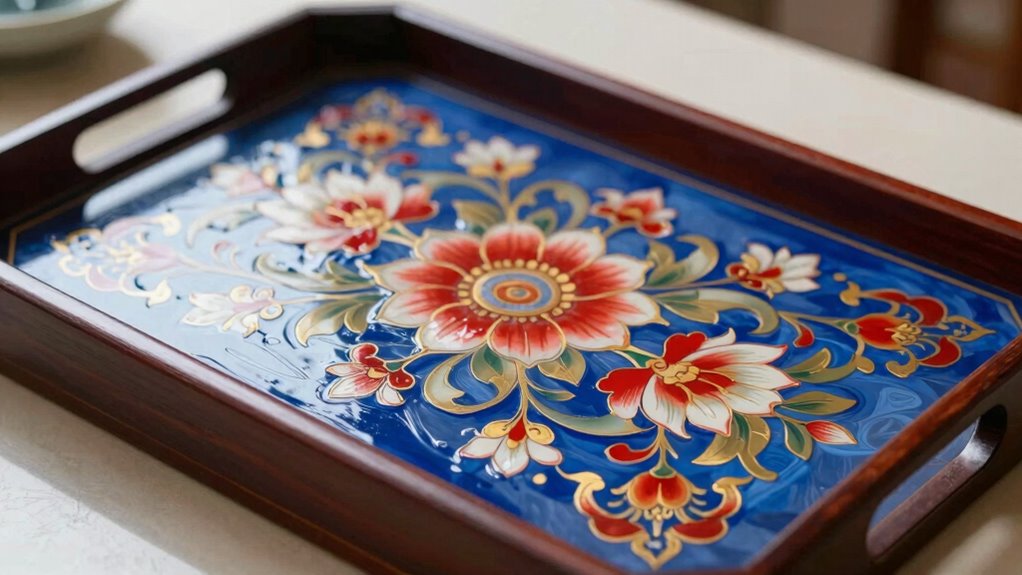

To seal painted wood trays for juice service, start by ensuring the paint is fully dry, then lightly sand the surface with fine-grit paper to smooth and improve adhesion. Use a food-safe, water-based polyurethane or sealant and apply thin, even coats with a high-quality brush, brushing along the grain. Allow each coat to dry, lightly sand, and repeat for 2-3 layers. Proper sealing protects the tray from moisture and enhances its appearance—learn more about perfect sealing techniques as you continue.

Get kitchen staples and gadgets delivered free with Prime
- Fast, free delivery on millions of items
- Prime Video, Amazon Music and more included
- Member-only deals all year
Key Takeaways
- Ensure the painted surface is completely dry and lightly sanded for smoothness and better adhesion.
- Select a food-safe, water-resistant sealant like water-based polyurethane suitable for liquids.
- Apply thin, even coats of sealant along the wood grain in a well-ventilated area, allowing each coat to dry thoroughly.
- Lightly sand between coats to remove bubbles and dust, then apply 2-3 coats for durability and shine.
- Allow the final coat to fully cure to protect the tray from moisture, stains, and daily use.
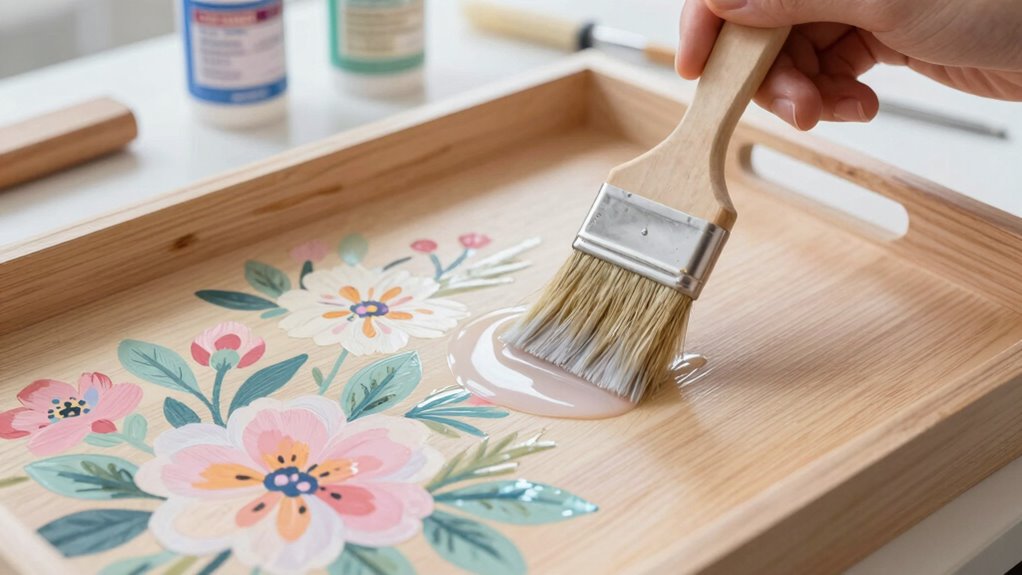
Have you ever painted a wooden tray only to wonder if it’ll hold up over time? When you’re planning to serve juice from a painted tray, sealing it properly becomes essential. The right sealant not only protects the paint but also preserves the wood’s natural beauty, especially its wood grain, and enhances the vibrant colors you’ve applied. If you skip sealing or use the wrong product, your tray risks peeling, water damage, or staining, which can ruin its appearance and functionality.
First, ensure your painted tray is completely dry before applying any sealant. Lightly sand the surface with fine-grit paper to smooth out any brush strokes or imperfections, and to open up the surface for better adhesion. This step also helps bring out the natural wood grain, allowing it to subtly show through or complement your painted design. When choosing a sealant, opt for a clear, water-based polyurethane or a food-safe, water-resistant sealant designed for wood surfaces. These options provide a durable barrier against moisture and scratches, crucial for a tray used with liquids like juice. Additionally, selecting a proper sealing technique can make a significant difference in the final appearance and durability of your project. Using the appropriate sealing products also helps prevent common issues like bubbles or uneven coverage.
Ensure your painted tray is fully dry, then lightly sand to enhance adhesion and reveal the wood grain.
Applying the sealant in thin, even coats is key. Use a high-quality brush or foam applicator, and work in a well-ventilated area. Start by brushing along the wood grain to enhance the natural pattern of the wood and to ensure even coverage. After the first coat, let it dry thoroughly according to the manufacturer’s instructions. Lightly sand the surface again with fine-grit paper to remove any bubbles or raised fibers, then wipe away dust with a clean cloth. Applying multiple coats—usually two or three—will give your tray maximum protection and a smooth, glossy finish. Proper sealing techniques ensure the longevity of your project and a professional look.
Keep in mind that sealing not only protects your painted surface but also brings out the color enhancement of your artwork or design. A good sealant deepens the hues, making the colors pop while maintaining their vibrancy over time. It also seals the wood grain, giving a more polished look and adding a layer of depth to the overall appearance. Additionally, choosing a sealant that is food-safe ensures that your tray remains safe for serving beverages. Using the right application method can also prevent common issues like drips or uneven coverage. Once fully cured, your tray will be better equipped to withstand daily use, spills, and cleaning, all while showcasing the beauty of the wood grain and your painted design. Proper sealing is a key step in safeguarding your work and maintaining its aesthetic appeal.
food safe water-based polyurethane for wood
As an affiliate, we earn on qualifying purchases.
As an affiliate, we earn on qualifying purchases.
Frequently Asked Questions
How Long Does the Sealing Process Take to Fully Cure?
The sealing process usually takes 24 to 72 hours to fully cure, depending on the sealant type and curing temperature. Oil-based sealants often need more time, while water-based options cure faster. To guarantee proper curing, keep the trays at the recommended curing temperature, typically around 70°F (21°C). Avoid using the trays until the sealant is completely cured for a durable, food-safe finish.
Can I Use Any Paint for Decorating the Trays?
Choosing the right paint is like picking the perfect brushstroke for a masterpiece. You shouldn’t use any paint for decorating trays; instead, opt for food-safe, water-based paints or those with non-toxic, decorative finishes. These types guarantee safety and durability, preventing chipping or peeling. Look for paints labeled safe for indoor or furniture use, and always seal with a food-safe topcoat to keep your design protected during juice service.
Is It Safe to Wash Sealed Trays in the Dishwasher?
Yes, it’s safe to wash sealed trays in the dishwasher if you’ve used a food-safe sealant. Make certain the sealant provides good seal durability, so it withstands regular washing without peeling or chipping. Always follow the manufacturer’s instructions for curing and cleaning to maintain food safety. Avoid harsh detergents or high heat settings, and consider hand washing if you want to extend the tray’s lifespan.
How Often Should I Reseal the Trays?
Did you know that properly maintained trays can last up to five years? For tray maintenance, you should reseal your painted wood trays every 1-2 years, depending on usage. Frequent resealing keeps the protective layer intact, preventing water damage and stains. If you notice the sealant wearing thin or chips, it’s time to reseal. Regular upkeep guarantees your trays stay safe and beautiful for juice service.
What Are the Best Cleaning Methods for Sealed Trays?
You should clean your sealed trays regularly, ideally after each use, to maintain their appearance and hygiene. Use a soft cloth or sponge with mild soap and warm water for routine cleaning. For stain removal, gently scrub with a soft-bristled brush or use a mixture of baking soda and water. Avoid harsh chemicals or abrasives, as they can damage the sealant. This practice keeps your trays looking fresh and safe for juice service.
Conclusion
Sealing painted wood trays guarantees they stay beautiful and safe for juice service. By applying a clear sealant, you protect the paint from moisture and daily wear, extending the tray’s lifespan. Fun fact: Did you know that using a food-safe sealant can make your trays suitable for serving even acidic juices? With just a little effort, you’ll have stunning, durable trays that impress your guests and keep your setup looking fresh longer.
NFL season / tailgating Picks
team gear
As an affiliate, we earn on qualifying purchases.