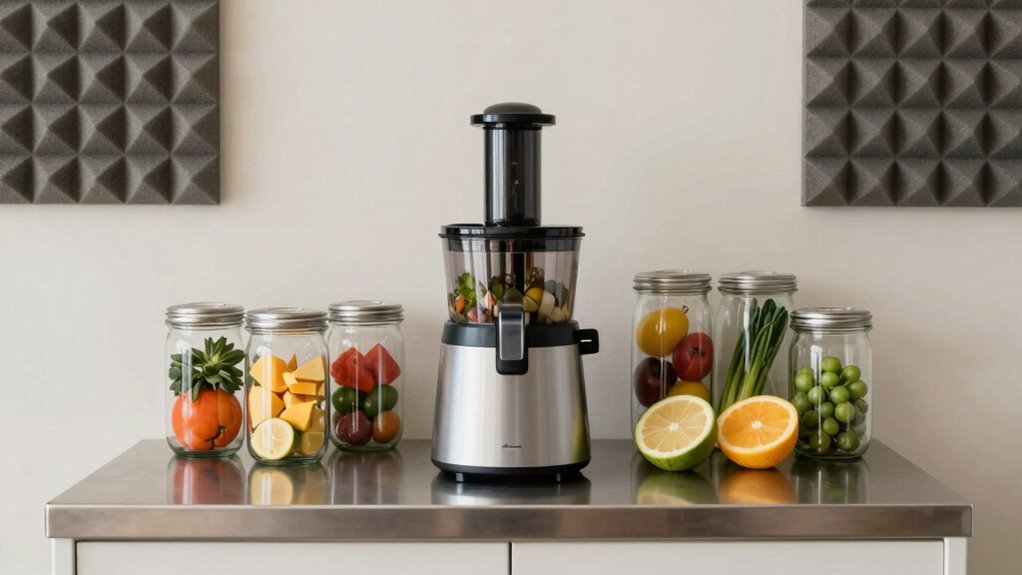
To create a quiet juicing setup, start by placing your juicer on vibration-absorbing pads and a sturdy, level surface. Use thick rubber mats or foam underneath to dampen noise and consider enclosing the machine in a soundproof shield for extra silence. Keep it away from walls and reflective surfaces, and regularly tighten loose parts. Combining insulation, vibration dampening, and strategic positioning can markedly reduce noise—discover more tips for a peaceful juicing experience ahead.
Key Takeaways
- Place the juicer on vibration-absorbing pads inside a soundproof enclosure for maximum noise reduction.
- Use thick rubber mats or foam underneath the juicer to dampen sound transmission.
- Position the juicer away from walls and reflective surfaces to minimize sound reflection and echo.
- Secure loose parts and tighten screws regularly to prevent vibrations that increase noise.
- Choose a juicer with an insulated casing and quiet motor features for inherently lower noise levels.
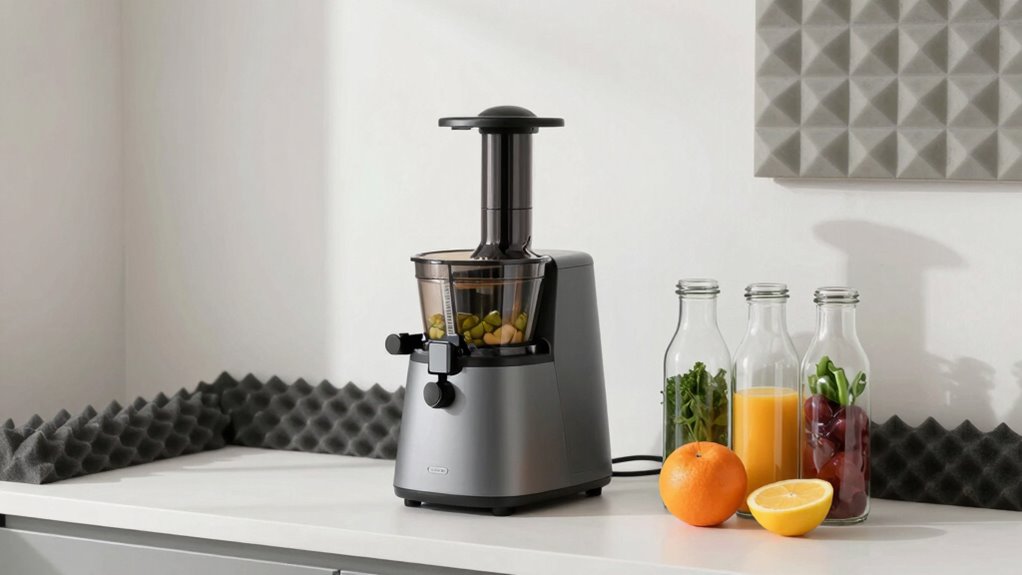
If you enjoy fresh juice but dislike the noise of traditional juicers, a quiet juicing setup can make a big difference. The key to creating a peaceful environment starts with understanding noise insulation and vibration dampening. Noise insulation involves reducing the sound that escapes from your juicer, while vibration dampening focuses on minimizing the vibrations that cause noise and movement. When combined, these elements considerably cut down the loud, disruptive noise that often accompanies juicing.
To improve noise insulation, consider placing your juicer on a thick rubber mat or a piece of foam. These materials absorb some of the sound waves and prevent vibrations from transferring to the countertop. You can also build or buy a dedicated enclosure or sound shield around your juicer, which traps sound and keeps it contained. This is especially helpful if you’re sharing a space with others or want to enjoy quiet mornings. Keep in mind that the tighter the seal and the more soundproofing materials you use, the more noise you’ll reduce. Additionally, selecting a quiet motor model designed for noise reduction can significantly enhance your setup.
Use foam or rubber mats under your juicer to absorb sound and reduce vibrations.
Vibration dampening is equally critical. Juicers naturally vibrate during operation, but this movement amplifies noise when transmitted to surfaces. To combat this, you can attach vibration dampening pads or feet to your juicer’s base. These pads absorb vibrations before they reach the countertop or other surfaces, preventing noise from reverberating and spreading. Additionally, securing loose parts and ensuring your juicer is stable minimizes unnecessary vibrations and noise.
Combining noise insulation with vibration dampening creates a more effective noise-reduction setup. For example, placing your juicer on a vibration-absorbing pad inside a soundproof enclosure maximizes the impact. Another practical tip is to choose a quieter model of juicer, specifically one designed with noise reduction in mind, which often features insulated casings and quieter motors.
You’ll also want to pay attention to placement. Keep your juicer away from walls and other surfaces that can reflect sound waves, and position it on a sturdy, level surface to prevent extra vibrations. Regular maintenance, like tightening loose screws and cleaning components, can also help keep noise levels low.
Frequently Asked Questions
Can I Use These Noise Reduction Tips for Commercial Juicing Machines?
Yes, you can use these noise reduction techniques for commercial juicing machines. While some tips are designed for smaller setups, many principles like soundproofing, vibration dampening, and strategic placement work well in a commercial environment. Implementing these methods helps reduce noise levels, making your commercial juicing process more efficient and less disruptive. Adjust the techniques as needed to suit the scale of your commercial juicing operation for the best results.
How Do I Maintain Noise Reduction Equipment Over Time?
Think of your noise reduction equipment as a garden that needs regular care. To maintain soundproofing, you should routinely check for wear and tear, clean surfaces, and tighten any loose components. Consider noise reduction upgrades when you notice persistent noise leaks or outdated materials. Regular soundproofing maintenance guarantees your setup stays effective, allowing your juicing process to remain quietly efficient. Stay proactive, and your equipment will keep humming smoothly.
Are There Specific Brands That Are Quieter Than Others?
You’ll find that brand comparisons and noise level ratings vary, but some brands are consistently quieter. Look for models with high noise reduction ratings and positive reviews for quiet operation. Brands like Vitamix and Blendtec often receive praise for their quieter motors, while others like Ninja may be noisier. Always check the latest noise level ratings before purchasing, ensuring you select a juicing setup that meets your quietness needs.
What’s the Cost Range for a Complete Quiet Juicing Setup?
A complete quiet juicing setup typically costs between $150 and $500, depending on the quality of your equipment. Your cost estimate includes a quiet juicer, noise-reducing accessories, and soundproofing materials. The price range varies based on brand, features, and soundproofing sophistication. Investing in a higher-end juicer usually offers better noise reduction, but you can find budget-friendly options that still maintain a quieter operation without breaking the bank.
Can I Retrofit My Existing Juicer for Noise Reduction?
Think of your juicer as a symphony waiting to be tamed. Yes, you can retrofit your existing juicer with DIY modifications and retrofitting techniques to cut down noise. Add soundproof mats, install rubber gaskets, or enclose it in a sound-absorbing box. These simple steps help transform your noisy appliance into a quieter performer, making your juicing experience more peaceful and enjoyable.
Conclusion
By following this simple noise-reduction checklist, you can enjoy a quieter juicing experience and keep your peace of mind. Did you know that noise levels above 85 decibels can cause hearing damage over time? With just a few tweaks, you’ll reduce your juicing noise well below that threshold, making your kitchen a more peaceful space. So, give these tips a try and savor the tranquility alongside your fresh juice!