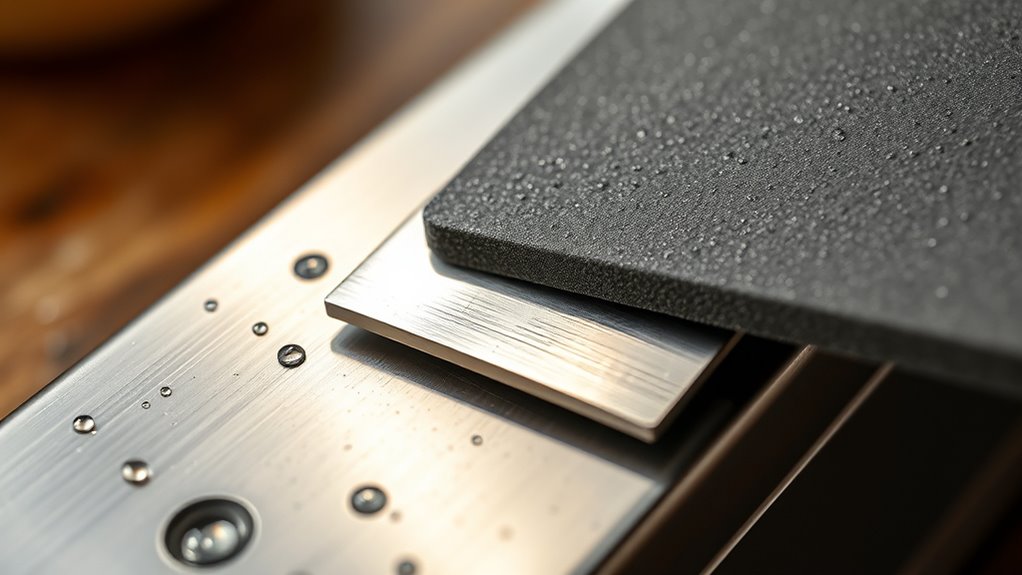
To keep your juicer blades sharp and functioning well, clean them after each use with warm water and a gentle brush, avoiding harsh scrubbers. Sharpen the blades regularly using a sharpening stone or a specialized sharpener, maintaining the correct angle and applying gentle strokes. Store your juicer in a dry place and protect the blades from rust and damage. If you follow these steps, you’ll maintain ideal performance—if you want to learn more, keep exploring these tips.
Key Takeaways
- Regularly clean blades with warm water and mild soap to prevent buildup and corrosion.
- Use a sharpening stone or blade sharpener, maintaining a 20-30 degree angle for effective sharpening.
- Sharpen both sides evenly with gentle strokes to preserve blade integrity and performance.
- Store the juicer in a dry, covered space, applying food-safe mineral oil for long-term protection.
- Watch for signs like increased motor strain or dull appearance to determine when to sharpen blades.
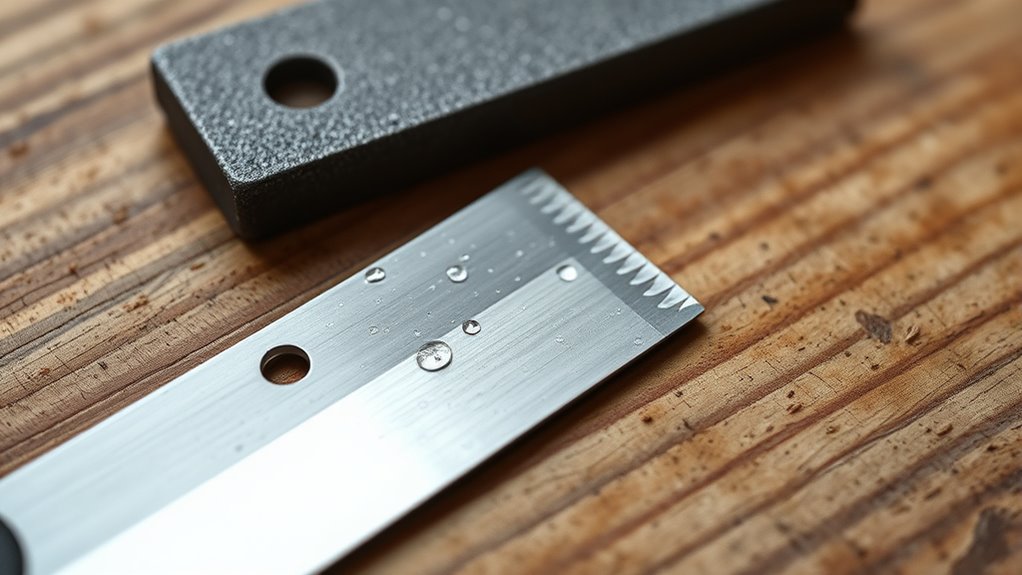
Keeping your juicer blades sharp and well-maintained is essential for extracting maximum juice and ensuring smooth operation. Dull blades can reduce efficiency, leading to longer processing times and less juice yield. To keep your blades in top shape, understanding how to preserve blade durability is key. High-quality blades are designed to withstand frequent use, but even the best blades need proper care. Regular sharpening helps maintain their cutting edge, preventing them from becoming dull too quickly. When blades lose their sharpness, you’ll notice increased strain on the motor and more pulp in your juice, both signs that it’s time for maintenance.
Regular sharpening and proper cleaning keep your juicer blades sharp and efficient.
Cleaning techniques play a vital role in preserving blade durability. Proper cleaning removes pulp, fruit residues, and sticky buildup that can cause corrosion or dull the blades over time. After every use, rinse the blades thoroughly with warm water to eliminate loose debris. For a deeper clean, you can use a brush or sponge with mild soap, paying special attention to the blades’ edges. Avoid abrasive scrubbers, which can scratch and weaken the metal. If your juicer’s manual recommends it, disassemble the blades for more thorough cleaning, but ensure you handle each part carefully to prevent damage.
When it comes to sharpening your juicer blades, use the right tools. A sharpening stone or a specialized blade sharpener designed for metal blades works best. Hold the blade at the correct angle—usually around 20 to 30 degrees—and gently run the blade across the sharpener. Repeat this process a few times, ensuring you sharpen both sides evenly. Be cautious not to over-sharpen, as this can weaken the blade’s structure. Regular sharpening, combined with diligent cleaning, extends the life of your blades and keeps your juicer operating at peak performance.
Storage also impacts blade durability. Store your juicer in a dry, safe place where the blades won’t be knocked or bent. Covering the blades or keeping the juicer in a closed cabinet prevents dust and moisture from settling on the metal, which can lead to rust and corrosion. If you won’t be using your juicer for a while, consider applying a light coat of food-safe mineral oil to the blades to protect against rust.
Frequently Asked Questions
How Often Should Juicer Blades Be Sharpened?
You should sharpen your juicer blades every 3 to 6 months, depending on usage. Regular blade maintenance keeps them cutting efficiently and ensures safety precautions are met. Always unplug your juicer before sharpening, and use appropriate tools to avoid injury. Keep blades clean and dry between uses. If you notice reduced juicing performance or strange noises, it’s time for sharpening. Proper maintenance prolongs your juicer’s lifespan and guarantees safe, effective operation.
Can I Sharpen Juicer Blades at Home?
Did you know that most juicer blades are made of stainless steel or carbon steel? You can sharpen them at home if you’re careful. Use a fine grit sharpening stone or honing rod suited for blade material, and always prioritize sharpening safety. Keep your fingers clear, work on a stable surface, and follow manufacturer guidelines. With patience, you can restore your blades without professional help, saving time and money.
What Tools Are Best for Sharpening Juicer Blades?
You should use grinding stones or honing steels to sharpen juicer blades effectively. Grinding stones help restore a sharp edge by removing dull metal, while honing steels realign the blade’s edge for better performance. Keep the tools steady and follow the blade’s angle to avoid damage. Using these tools regularly guarantees your juicer blades stay sharp, efficient, and safe during use, prolonging their lifespan.
How Do I Prevent Corrosion on Juicer Blades?
You can prevent corrosion on juicer blades by consistently using proper cleaning methods and understanding the blade material. Steel blades are prone to rust if not dried thoroughly, while stainless steel resists corrosion better. To protect your blades, wash them immediately after use with warm, soapy water, dry completely, and occasionally apply a light coat of food-safe oil. This simple routine keeps your blades sharp and corrosion-free, ensuring longevity.
Is It Better to Replace or Sharpen Dull Blades?
You should sharpen dull blades rather than replace them, especially if they’re made from high-quality materials like stainless steel. Regular sharpening, based on your juicer’s usage and sharpening frequency, keeps blades effective and extends their lifespan. Replacing blades can be costly, while sharpening maintains their cutting power. Plus, a well-sharpened blade performs better, ensuring you get the most juice and minimal waste from your fruits and vegetables.
Conclusion
By regularly sharpening and maintaining your juicer blades, you guarantee they perform at their best, delivering smooth, efficient juice every time. Proper care not only extends the life of your blades but also enhances the quality of your juice. Isn’t investing a few minutes now worth the delicious, fresh juice you’ll enjoy later? Keep your blades sharp and your juicing experience effortless—your taste buds will thank you for it.

Cindy thoroughly researches juicing trends, techniques, and recipes to provide readers with practical advice and inspiration. Her writing style is accessible, engaging, and designed to make complex concepts easy to understand. Cindy’s dedication to promoting the advantages of juicing shines through her work, empowering readers to make positive changes in their lives through the simple act of juicing.