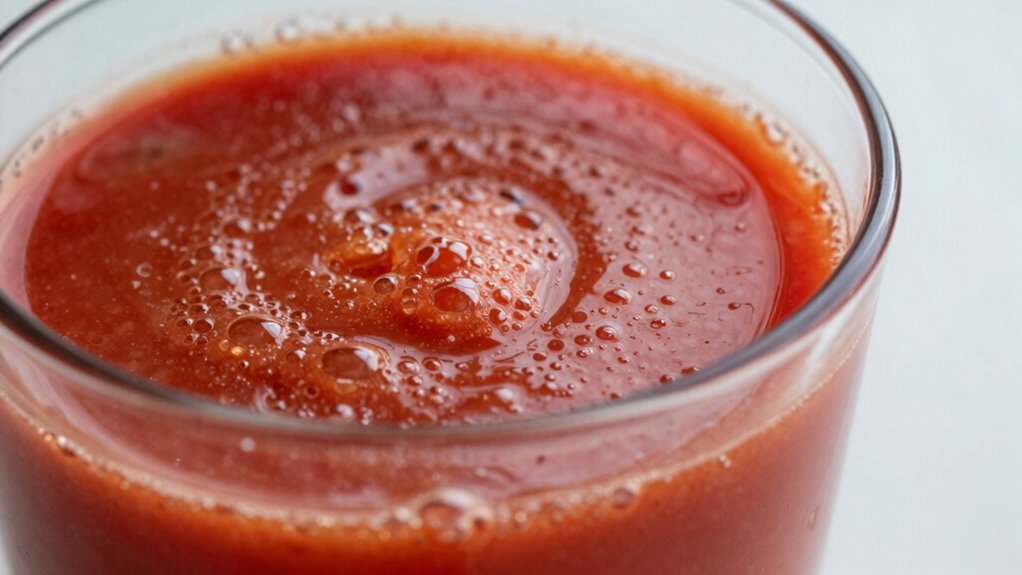

To make tomato juice feel heavier, focus on preparation methods like blending thicker ingredients or cooking the tomatoes to intensify flavor and increase viscosity. Using natural thickeners such as tomato paste or cornstarch also helps achieve a denser texture. Proper storage, keeping the juice at a consistent low temperature, prevents separation and maintains thickness. The natural qualities of the tomatoes and how you handle them play a big role too. If you want to explore these factors further, there’s more to discover.

Get kitchen staples and gadgets delivered free with Prime
- Fast, free delivery on millions of items
- Prime Video, Amazon Music and more included
- Member-only deals all year
Key Takeaways
- Adding natural thickening agents like tomato paste or cornstarch increases the juice’s viscosity and weight.
- Cooking tomatoes before juicing intensifies flavor and thickens the juice naturally.
- Proper storage techniques prevent water separation, maintaining a heavier, consistent texture over time.
- Blending thicker ingredients or reducing concentrates enhances the juice’s overall heaviness.
- Temperature fluctuations during storage accelerate separation, affecting the perceived thickness and weight.
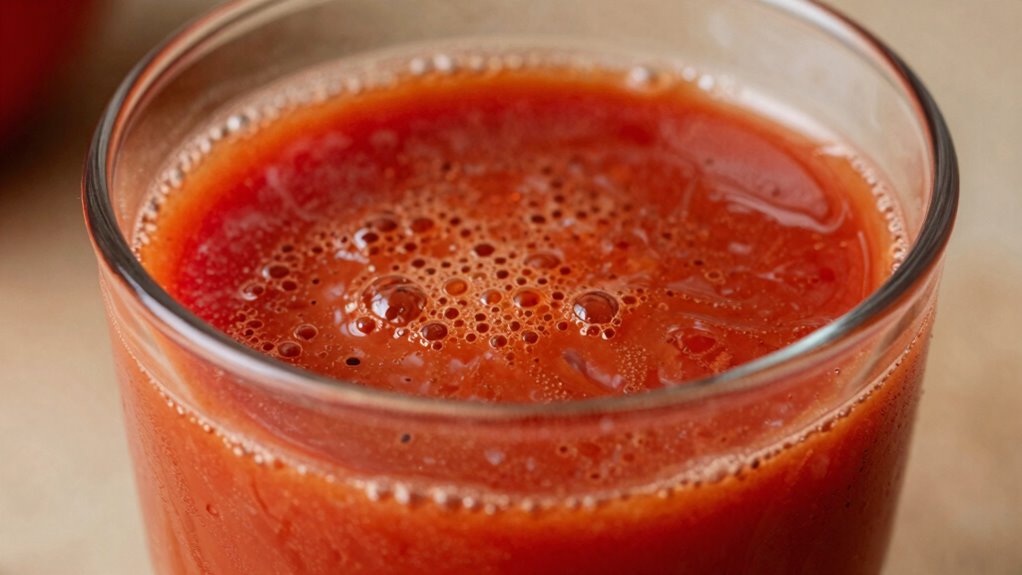
Storage effects also play a crucial role in the thickness of tomato juice. If you store your juice in the refrigerator for a day or two, you might notice it thickening slightly. This is because, over time, the natural water content can separate or evaporate slightly, resulting in a denser texture. Conversely, if you shake or stir the juice before serving, you might thin it out again, restoring some of its original consistency. Additionally, prolonged storage can lead to the breakdown of tomato cell walls, which can change the texture, either making it thicker as pulp releases or thinner if water separates out. So, how you store your tomato juice impacts its final thickness, and understanding these storage effects can help you decide whether to serve it as-is or adjust it accordingly. Storage conditions also influence the texture, as temperature fluctuations can accelerate natural separation processes. If you want to make your tomato juice feel heavier right from the start, consider blending in thicker ingredients or reducing the juice to concentrate flavors. Cooking the tomatoes down before juicing is an effective method to enhance flavor and increase viscosity simultaneously. This process intensifies the tomato flavor and naturally thickens the juice without the need for added thickeners. You can also experiment with adding a small amount of natural thickening agents like tomato paste or a pinch of cornstarch dissolved in water, which can help achieve that heavier feel without altering the flavor substantially. Proper storage techniques can also help maintain the desired consistency over time. Understanding the natural properties of tomatoes and how they change during processing can further help in controlling the final texture. Ultimately, the thickness of your tomato juice hinges on a combination of preparation choices and how you handle it during storage. By understanding these factors, you can tailor your juice to be just the right weight and flavor intensity you’re after. Whether you prefer a slightly thinner, more invigorating beverage or a rich, hearty one, knowing how to manipulate ingredients and storage effects empowers you to craft the perfect tomato juice every time.
As an affiliate, we earn on qualifying purchases.
Frequently Asked Questions
How Does Adding Salt Affect Tomato Juice Thickness?
Adding salt to tomato juice enhances flavor and can slightly modify its texture. Salt draws out moisture, making the juice feel thicker and heavier on your palate, which is a form of texture modification. It also intensifies the overall flavor, giving the juice a richer taste. So, when you add salt, you’re not only improving flavor but also subtly affecting the juice’s consistency, making it seem more substantial.
Can Blending Longer Make Tomato Juice Thicker?
Blending longer doesn’t necessarily make tomato juice thicker; it mainly breaks down cell walls for smoother texture. While it enhances flavor and boosts nutritional benefits by releasing more nutrients, it can also make the juice feel lighter. Think of it as a balance—more blending improves taste and health, but if you want heaviness, consider adding thickening agents. So, blending longer is great for flavor, but not a magic fix for thickness.
Does Refrigeration Change Tomato Juice Consistency?
Refrigeration can slightly change your tomato juice’s consistency over time. It helps preserve flavor and freshness, but cooling may cause the juice to thicken as water separates slightly, giving it a richer texture. To maintain the desired consistency, you might need to stir or shake it before serving. Refrigeration also enhances flavor, making your tomato juice taste fresher and more vibrant, thanks to effective preservation methods.
Are Organic Tomatoes More Likely to Produce Thicker Juice?
Yes, organic tomatoes often produce thicker juice because organic farming emphasizes healthier, less water-diluted produce. These tomatoes tend to have more concentrated flavors, which translate into a richer tomato flavor and thicker consistency in the juice. You’ll likely notice a more robust taste and a denser texture compared to conventionally grown tomatoes. So, if you’re after thicker, more flavorful juice, organic tomatoes are a great choice.
How Does the Ripeness of Tomatoes Influence Juice Thickness?
Think of ripeness like a tomato’s personality—it impacts juice viscosity considerably. Riper tomatoes have higher water content and softer flesh, resulting in thinner juice. I once made sauce from underripe tomatoes, and it turned out much thicker and richer. As tomatoes ripen, their natural sugars and juices develop, making the juice feel lighter. So, the ripeness of your tomatoes directly influences the thickness and overall texture of the juice.
Conclusion
Think of tomato juice as a lively river—its thickness is like the river’s flow, shaped by the rocks and sand beneath. When you add ingredients like tomato pulp or thickening agents, it’s like piling stones in the riverbed, making the current feel heavier and slower. So, next time you crave that rich, velvety feel, remember it’s all about how you guide the flow—just like shaping a river’s journey to make it feel just right.
Fall Picks
fall essentials
As an affiliate, we earn on qualifying purchases.