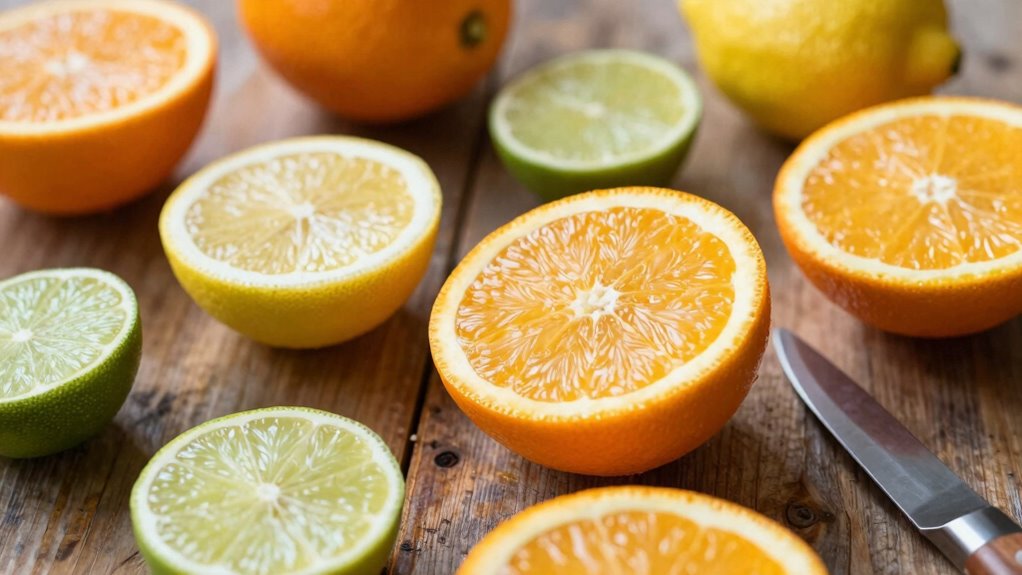

After juicing, don’t toss those citrus halves. Instead, use the peels to add vibrant flavor to salads, marinades, or desserts by zesting or drying them for later use. You can also plant the seeds to grow new citrus trees or toast them for a crunchy snack. Save the leftover halves in the fridge or freeze them for broth or infusions. Keep exploring to discover even more eco-friendly ways to maximize your citrus leftovers.

Get kitchen staples and gadgets delivered free with Prime
- Fast, free delivery on millions of items
- Prime Video, Amazon Music and more included
- Member-only deals all year
Key Takeaways
- Use the leftover halves to make flavored water or infused ice cubes for drinks.
- Rub the citrus halves on salads or grilled dishes for added zest and aroma.
- Compost or crush the peels and seeds to enrich garden soil naturally.
- Bake with the halves in cakes or muffins for subtle citrus flavor.
- Save and dry the peels for zest or use leftover pulp in smoothies and sauces.
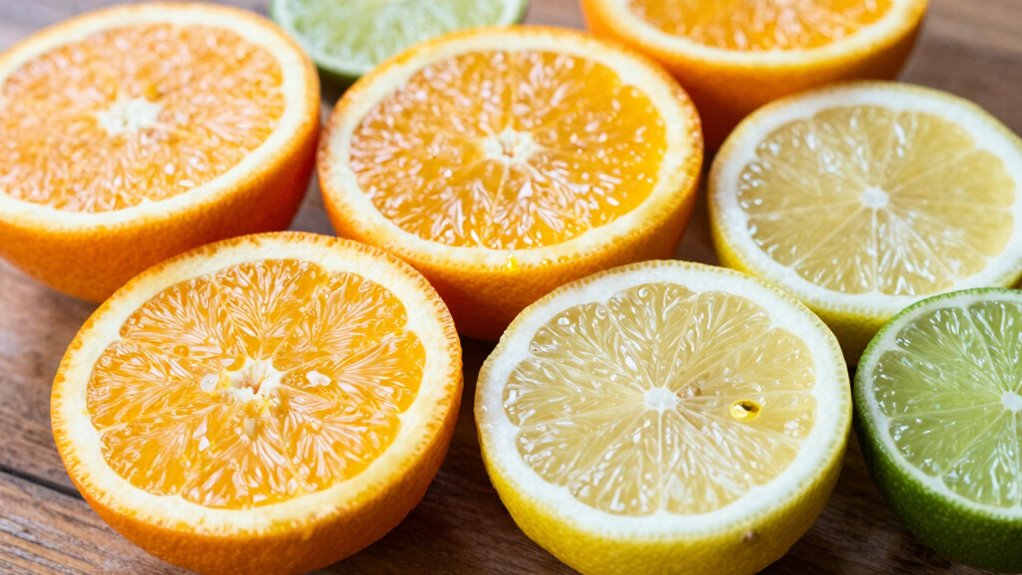
After juicing citrus fruits, you’re left with halves that might seem like waste, but they actually hold plenty of potential. Instead of tossing them out, you can turn these leftover halves into useful ingredients for your kitchen. One of the best ways to maximize their value is by focusing on citrus zest preservation. The outer peel contains aromatic oils that add flavor to many dishes and baked goods. To preserve the zest, use a microplane or fine grater to peel off the colored outer layer, avoiding the bitter white pith underneath. Once you have the zest, you can dry it for later use, store it in an airtight container in the fridge, or even freeze small portions in ice cube trays. These methods keep the zest fresh and ready to add brightness to salads, marinades, or desserts whenever you need a citrus kick. Preserving citrus zest is a simple way to extend the flavor and aroma of your fruits beyond just the initial juicing. Preserving citrus zest not only enhances flavor but also captures the aromatic oils that contain the essential fragrances of the fruit.
Beyond zest, citrus seed utilization is another smart way to make the most of your leftovers. Many people discard the seeds, but they’re actually packed with nutrients and can be used in various ways. Rinse the seeds thoroughly to remove any pulp or juice residue, then let them dry completely. Once dry, you have several options: you can toast and eat them as a crunchy snack or grind them into a powder to add to smoothies, baked goods, or homemade energy bars. Some even plant the seeds to grow new citrus trees, turning your kitchen scraps into future fruit sources. If you’re not into planting, crushing and adding the seeds to your compost can also enrich your garden soil, providing beneficial nutrients for your plants. Incorporating citrus seeds into your diet can also boost your intake of antioxidants and healthy fats, which support overall health and wellness. Additionally, understanding the nutritional benefits of citrus seeds can motivate you to incorporate them into your diet more often. Using citrus seeds creatively can reduce waste and add a nutritious boost to your meals.
Combining citrus zest preservation and seed utilization transforms what would be waste into a source of flavor, nutrition, and sustainability. The zest can elevate your cooking by adding a fresh, tangy aroma, while the seeds offer health benefits and versatile uses. Plus, these practices reduce waste and make your overall citrus juicing routine more eco-friendly. It’s a simple shift that can lead to more flavorful meals and a greener lifestyle. So next time you finish juicing, don’t toss those halves — instead, take a few extra minutes to harvest the zest and seeds. With just a little effort, you’ll be surprised how much these citrus leftovers can do for your kitchen and your health.
As an affiliate, we earn on qualifying purchases.
Frequently Asked Questions
Can Citrus Halves Be Composted Effectively?
Yes, citrus halves can be composted effectively. Citrus decomposition offers benefits like enriching your compost with nutrients and aiding soil health. However, because citrus can be acidic and slow to break down, it’s best to chop the halves into smaller pieces and mix them well with other compost materials. This promotes faster decomposition and prevents any potential pests, ensuring your compost benefits without disrupting the overall process.
How Long Do Citrus Halves Last in the Refrigerator?
Time flies when you’re busy, so you’ll want to know how long citrus halves last in the fridge. Typically, they stay fresh for about 3 to 4 days if stored properly in an airtight container or wrapped tightly. Proper storage helps with freshness preservation, preventing spoilage and mold. To get the most out of your citrus halves, use them within this timeframe or consider freezing for longer storage.
Are There Any Health Risks Using Leftover Citrus in Recipes?
Using leftover citrus in recipes generally poses minimal health risks if the fruit is fresh and properly stored. Be mindful of allergy considerations, especially if you or others are sensitive to citrus. The nutritional impact remains positive, adding vitamin C and flavor to your dishes. Just verify the citrus halves are free from mold or spoilage before using, and wash them thoroughly to avoid bacteria transfer.
What Are Some Creative Non-Food Uses for Citrus Peels?
Did you know citrus peels contain essential oils that can last for weeks? You can turn citrus peel crafts, like homemade candles or potpourri, into beautiful decor. They also make excellent aromatherapy uses, offering fresh, invigorating scents that boost your mood. Simply dry the peels or infuse them in oils for a natural, eco-friendly way to refresh your space. These creative, non-food uses help reduce waste and add a bright touch to your home.
Can Citrus Halves Be Used to Clean Household Surfaces?
Yes, citrus halves can be used to clean household surfaces. You just need to sprinkle some salt or baking soda on the cut side and scrub surfaces. The citrus peel aroma leaves your home smelling fresh, while the acidity helps with citrus mold prevention. Additionally, rubbing the citrus halves on surfaces can help remove stains and grime, making them an eco-friendly cleaning option that also boosts your space’s freshness.
Conclusion
So, next time you squeeze citrus, don’t toss those halves! Instead, try using them in recipes or as natural cleaning tools. It’s a smart way to reduce waste and get the most out of your fruit. Plus, some say the leftover rinds can even boost your mood or freshen your home. So go ahead, experiment and see what amazing things you can do—your citrus halves might surprise you!
Columbus Day / Indigenous Peoples' Day Picks
long weekend sales
As an affiliate, we earn on qualifying purchases.