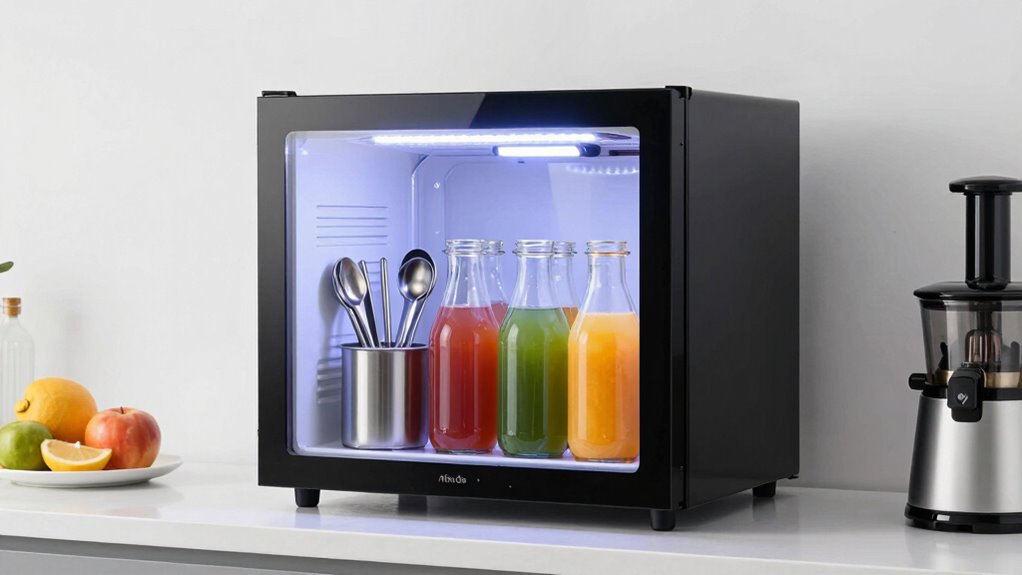

UV sanitizer cabinets are great for disinfecting small, non-porous tools and surfaces in your juice setup, but they can’t handle porous items like sponges or cloths, or liquids. Shadows and dirt can block UV rays, reducing effectiveness. Always clean items beforehand and avoid relying solely on UV for sanitation. Proper maintenance is key to safety. Want smarter tips? Keep exploring to learn more about how to maximize your UV cabinet’s benefits and limitations.

Get kitchen staples and gadgets delivered free — and shop member deals
- Fast, free delivery on millions of items
- Access to Prime Big Deal Days deals on October 6–7
- Prime Video, Amazon Music and more included
Key Takeaways
- UV cabinets effectively disinfect high-touch, non-porous items like utensils and packaging materials.
- They cannot sterilize porous items, cloths, sponges, or liquids used in juice preparation.
- Proper cleaning before UV exposure enhances sterilization results.
- Regular maintenance and correct placement inside the cabinet are essential for safety and effectiveness.
- UV sterilization should be used as a supplementary method alongside thorough cleaning, not a standalone solution.
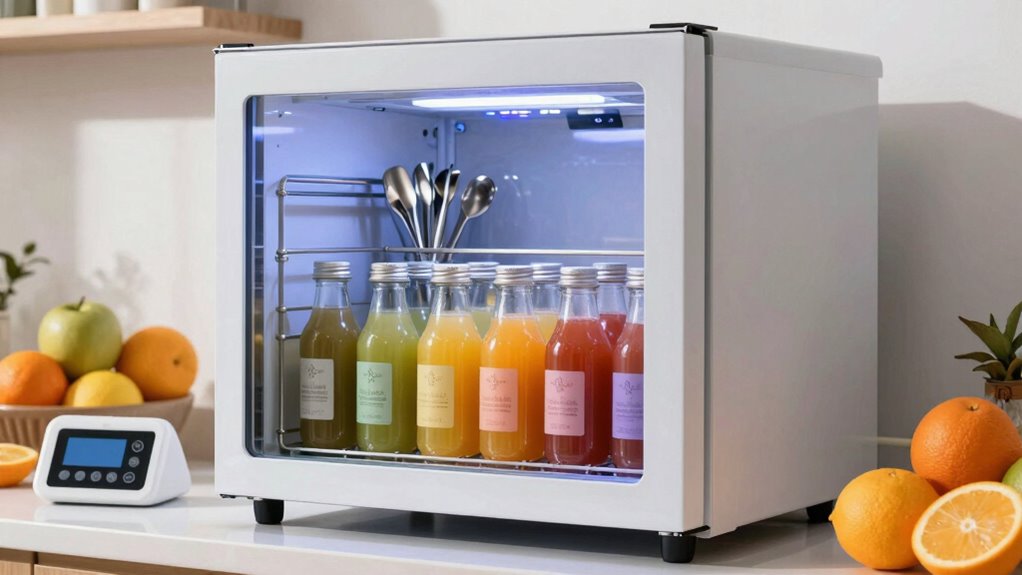
You should know that UV light only disinfects surfaces directly exposed to it. If there’s dust, dirt, or shadowed areas, the UV rays won’t reach those spots, which means thorough cleaning before UV sterilization is essential. Regular cabinet maintenance is crucial to keep the UV light functioning at its best. Dust buildup on the interior or the UV bulbs can diminish their effectiveness, so you need to clean the cabinet interior and replace bulbs as recommended by the manufacturer. Proper maintenance ensures consistent disinfecting performance, making your efforts in hygiene more reliable. Additionally, understanding the limitations of UV sterilization helps ensure you’re using the technology effectively and safely. Knowing the proper placement of items inside the cabinet is also vital for maximizing UV exposure and ensuring thorough disinfection. It’s also important to be aware of UV safety precautions to prevent accidental exposure, which can be harmful to skin and eyes. Incorporating regular inspection and calibration of the UV system can further enhance its disinfecting capabilities and safety.
While UV sanitizer cabinets excel at disinfecting small tools, utensils, and packaging materials, they aren’t suitable for sterilizing liquids or porous items like sponges, towels, or cloths. You shouldn’t rely solely on UV light to sanitize large surfaces or items that absorb liquids, as UV rays can’t penetrate deep into porous materials. You should always complement UV sterilization with traditional cleaning methods such as washing with soap and hot water for these items. Additionally, UV sterilization doesn’t remove dirt, grime, or organic matter; it only neutralizes microorganisms on clean surfaces. Hence, combining cleaning and UV exposure offers the best results.
In your juice setup, it’s tempting to think that UV sanitizer cabinets can handle everything, but they’re not a substitute for complete hygiene practices. They’re an effective supplementary tool, especially for high-touch items that are difficult to sterilize by hand regularly. Remember, UV light is effective only when used correctly, with items properly placed inside and the cabinet maintained regularly. Failing to do so can lead to reduced efficacy and potential contamination risks. To maximize safety, always follow the manufacturer’s instructions for use and maintenance. Ultimately, UV sanitizer cabinets are a valuable part of your sanitation routine, but understanding their limitations helps you avoid missteps and keeps your operation safe and hygienic.
UV sanitizer cabinet for kitchen tools
As an affiliate, we earn on qualifying purchases.
As an affiliate, we earn on qualifying purchases.
Frequently Asked Questions
Are UV Sanitizer Cabinets Safe for All Types of Juice Bottles?
UV sanitizer cabinets are generally safe for most juice bottles, but you should check glass compatibility first. Some bottles may be sensitive to UV exposure or material degradation over time. Consider material durability, especially if your bottles are made of fragile or UV-sensitive materials. Always verify manufacturer guidelines to guarantee your specific bottles won’t be damaged, and avoid exposing delicate containers to prolonged UV light to maintain their integrity.
How Long Does It Take for UV Sanitizer Cabinets to Disinfect?
UV sanitizer cabinets typically take about 5 to 10 minutes to disinfect, depending on the model and the intensity of UV light used. During this time, the UV light effectively penetrates germ elimination barriers, destroying bacteria and viruses on bottles. To guarantee proper sanitization, follow the manufacturer’s instructions for timing and placement, and make sure bottles are properly positioned for maximum exposure to UV light for ideal germ elimination.
Can UV Cabinets Remove Chemical Residues From Juice Containers?
UV cabinets can’t effectively remove chemical residue from juice containers, regardless of the container material. UV light targets microbes and viruses, but it doesn’t break down or eliminate chemical residues left from cleaning agents or contaminants. To guarantee your containers are free of chemical residues, you need proper cleaning with suitable detergents before using the UV sanitizer. UV light complements cleaning but doesn’t replace thorough washing for chemical residue removal.
Do UV Sanitizer Cabinets Require Special Maintenance or Replacement Parts?
You’ll find UV sanitizer cabinets need regular maintenance to stay effective, but they don’t typically require frequent replacement parts. Imagine your cabinet as a diligent guardian, needing periodic bulb replacements—usually every 9-12 months—to keep it shining bright. While this adds some cost considerations, routine cleaning and bulb swaps are simple, guaranteeing your setup remains protected without hefty upkeep. Staying on top of maintenance ensures your juice containers stay germ-free efficiently.
Are UV Sanitizers Effective Against All Viruses and Bacteria?
UV light in sanitizer cabinets is effective against many viruses and bacteria because it operates within the germicidal spectrum, damaging their DNA or RNA. However, it doesn’t kill all pathogens, especially those shielded by dirt, grime, or organic material. To maximize effectiveness, you should clean surfaces thoroughly before UV exposure. Keep in mind, UV sanitizers are a helpful tool but shouldn’t replace regular cleaning and sanitation practices entirely.
Conclusion
In conclusion, UV sanitizer cabinets are a handy tool for maintaining cleanliness in your juice setup, but don’t expect them to do everything. They effectively kill bacteria on surfaces, yet won’t remove organic debris or replace good hygiene practices. Think of them as your trusty knight—great for protection but not a magic wand. Use them wisely in your sanitation arsenal, and your juice bar will stay safe and sparkling—no time machine required!
NFL season / tailgating Picks
team gear
As an affiliate, we earn on qualifying purchases.